
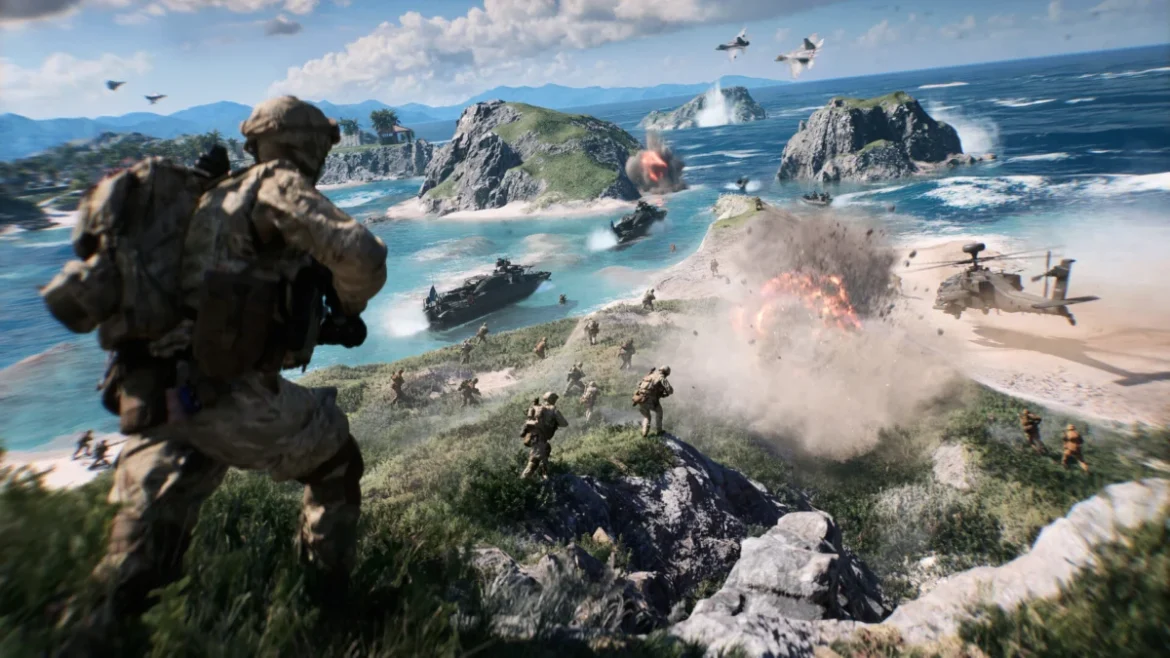
Electronic Arts (EA) has issued an unusual recommendation to players of its popular first-person shooter, Battlefield 6, urging those equipped with the latest NVIDIA GeForce RTX 50 Series graphics cards to downgrade their drivers to an older version. This directive comes in response to widespread reports of game crashes, particularly when players engage with maps featuring extensive water bodies, including the recently introduced Tsuru Reef map from the Season 4: Pacific Front update. The incident underscores the inherent complexities and delicate balance required to maintain a stable gaming experience within the diverse and constantly evolving PC hardware ecosystem.
The Emergence of the Problem: Season 4 and Tsuru Reef
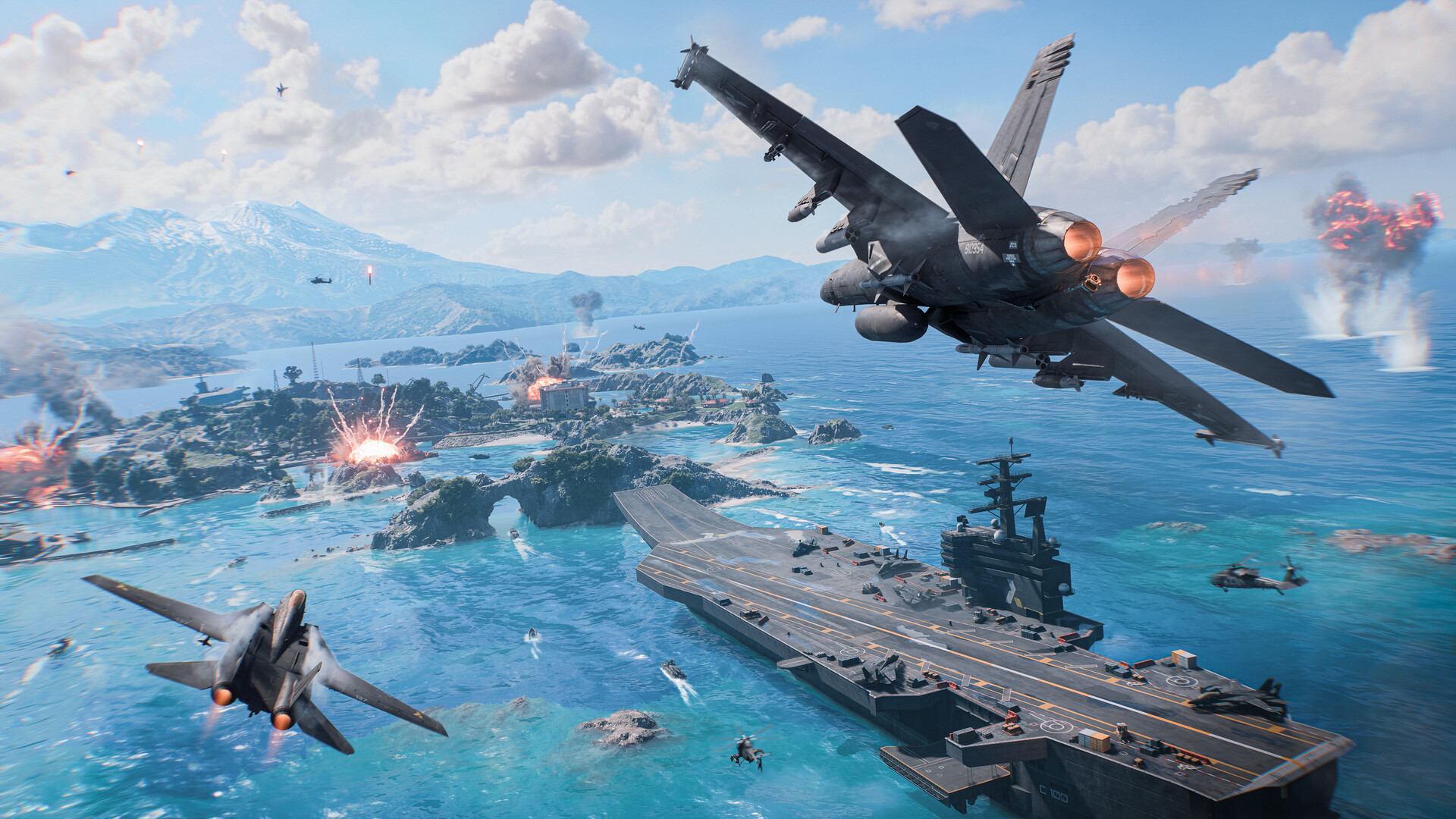
The technical instability began to surface prominently following the rollout of Battlefield 6‘s Season 4: Pacific Front update. This major content drop introduced a fresh array of features, weapons, and, critically, new battlegrounds, including the highly anticipated Tsuru Reef map. Designed with significant aquatic elements, Tsuru Reef quickly became a focal point for player complaints. Users began reporting consistent and disruptive game crashes, often occurring without warning, specifically when their characters entered or interacted with water-intensive areas of the map. While the issue was most prevalent on Tsuru Reef, similar crashes were also noted on other existing maps with large water features, suggesting a broader underlying problem related to how the game’s engine renders or interacts with water effects under certain hardware configurations.
Initial investigations by the development team at Battlefield Studios, under the EA umbrella, quickly identified a pattern. The overwhelming majority of crash reports originated from players utilizing NVIDIA’s cutting-edge GeForce RTX 50 Series graphics cards. These are the latest generation GPUs from NVIDIA, representing the pinnacle of consumer graphics technology, and their owners typically expect seamless performance. While the RTX 50 Series bore the brunt of the issues, a smaller but significant number of reports also came from users of the preceding RTX 40 Series, indicating that the problem might not be exclusive to the very newest hardware but rather a broader incompatibility or optimization challenge affecting a range of recent NVIDIA architectures.
EA’s Provisional Solution: A Step Backwards
In an attempt to provide immediate relief to its player base, Electronic Arts publicly communicated through its official Battlefield channels, confirming their active investigation into the GPU driver-related crashes. The proposed temporary solution, however, was unconventional: players were advised to roll back their NVIDIA Game Ready Driver from the latest version, 610.74, to an older, more stable iteration, specifically version 596.49. This recommendation, while offering a potential workaround, highlights the severity of the issue, as downgrading drivers can sometimes lead to performance compromises or stability issues in other titles, making it a less-than-ideal long-term fix.
Alongside this advice, EA appealed to the community for assistance, requesting players experiencing crashes to submit detailed reports. These reports were to include crucial diagnostic information such as their specific GPU model, the exact driver version installed, the map being played when the crash occurred, and any accompanying crash logs. This data collection is vital for developers and hardware manufacturers to pinpoint the root cause of complex technical issues, accelerating the investigative process and ultimately leading to a definitive patch or driver update. The collaborative nature of this request underscores the often-intricate dance between game developers and hardware manufacturers when troubleshooting such problems.
Understanding GPU Drivers and Their Critical Role
Graphics processing unit (GPU) drivers are a fundamental component of the PC gaming experience, acting as the essential software interface between the operating system, the game application, and the physical graphics card. Their primary function is to translate commands from the game into instructions that the GPU can understand and execute, enabling the rendering of complex 3D environments, textures, and effects. NVIDIA’s "Game Ready Drivers" are specifically optimized for new game releases and major updates, aiming to provide the best possible performance, stability, and new features. Developers from both game studios and GPU manufacturers work closely to ensure these drivers are fine-tuned for the latest titles.
The release cycle for GPU drivers is continuous, with NVIDIA, AMD, and Intel frequently pushing out updates to address bugs, introduce performance enhancements, and support new hardware or software technologies. Each update is a meticulously engineered piece of software, but given the sheer number of hardware configurations, operating system versions, and game titles, it’s virtually impossible to test every single permutation. Consequently, conflicts can occasionally arise, particularly with brand-new hardware generations like the RTX 50 Series, which often requires significant driver maturation and game-specific optimizations in their early lifecycle. The specific version 610.74, which is implicated in the Battlefield 6 crashes, would have been a recent Game Ready Driver, likely intended to optimize performance for a range of new titles or system updates. The recommended downgrade to 596.49 suggests that this older driver either lacks the specific code path causing the conflict or interacts differently with Battlefield 6‘s rendering pipeline, especially concerning water effects.
NVIDIA’s Position and Recent Driver Activity
NVIDIA, a global leader in graphics processing technology, maintains a strong reputation for driver quality and stability. The company dedicates substantial resources to developing and testing its Game Ready Drivers, which are often released in conjunction with major game launches to ensure optimal performance. In the context of the Battlefield 6 issue, NVIDIA had recently released a hotfix driver, version 610.82, shortly after the reported crashes began. Hotfix drivers are typically rapid-response patches designed to address specific, critical issues that cannot wait for the next full Game Ready Driver release.
However, a crucial detail in this unfolding situation is that NVIDIA’s release notes for the 610.82 hotfix did not specifically mention Battlefield 6 or address any water-related rendering issues within the game. The hotfix primarily targeted stability improvements for the RTX 50 Series in other titles and general system performance. This suggests that while NVIDIA is actively working on refining its drivers for the new RTX 50 Series, the specific interaction causing crashes in Battlefield 6 on water maps may still be under joint investigation by both NVIDIA and EA/DICE, or it might be a more complex bug that requires deeper collaboration. Without a direct acknowledgment from NVIDIA regarding the Battlefield 6 crashes, the onus of providing a workaround has temporarily fallen on EA.
The Complexity of PC Gaming Ecosystems
The challenges highlighted by the Battlefield 6 crashes are emblematic of the broader complexities inherent in the PC gaming ecosystem. Unlike closed console platforms, PC gaming thrives on its open architecture and the vast array of hardware components available. Players can combine different CPUs, GPUs, motherboards, RAM, storage devices, and operating system versions from a multitude of manufacturers. This unparalleled flexibility, while offering immense power and customization, simultaneously creates an incredibly intricate environment for game developers and hardware manufacturers to support.
Optimizing a game like Battlefield 6, known for its large-scale battles, detailed environments, and advanced physics, for such a diverse hardware landscape is a monumental task. Every new graphical feature, such as advanced water rendering, real-time ray tracing, or complex particle effects, must be carefully implemented to function across a spectrum of GPU architectures and driver versions. A bug that manifests on one specific hardware generation with a particular driver can be incredibly difficult to isolate and reproduce, requiring extensive testing and diagnostic tools. This incident serves as a potent reminder that even with rigorous testing protocols from both game studios and GPU manufacturers, unforeseen incompatibilities can arise, especially at the bleeding edge of technology with new hardware series.
Historical Precedents and Industry Challenges
Driver-related issues are not new to the gaming industry. Historically, there have been numerous instances where specific driver versions have caused performance regressions, graphical glitches, or outright game crashes in various titles. From early DirectX implementations to modern shader model complexities, the interaction between game engines and GPU drivers has always been a delicate one. Major game launches or significant hardware refreshes are often accompanied by a period of driver refinement, where initial releases might have minor kinks that are ironed out in subsequent updates.
For instance, past generations of GPUs from both NVIDIA and AMD have occasionally faced launch-day driver issues with certain high-profile games, necessitating quick hotfixes or game patches. These incidents underscore the immense pressure on both hardware manufacturers to deliver stable drivers on time for new hardware and on game developers to optimize their titles for an ever-changing landscape. The Battlefield franchise itself has, at times, experienced its share of technical challenges following major updates or new game releases, leading to a proactive approach from EA in addressing community concerns. This current situation with Battlefield 6 and RTX 50 Series drivers fits into this broader historical pattern, albeit with the added complexity of a brand-new GPU generation.

Impact on the Player Base and Game Experience
The immediate impact of these crashes falls squarely on the Battlefield 6 player base, particularly those who have invested in high-end NVIDIA RTX 50 Series graphics cards. Players who purchase top-tier hardware expect a premium, uninterrupted gaming experience, especially in a competitive multiplayer title where sudden crashes can lead to frustration, lost progress, and penalties. The recommendation to downgrade drivers can be inconvenient and, for some less technically inclined users, a daunting task. It also forces players to make a difficult choice: either play Battlefield 6 with an older driver that might not be optimal for other games or refrain from playing the game’s new content until a fix is implemented.
Beyond the individual inconvenience, such issues can erode player trust and enthusiasm for a game. For a live-service title like Battlefield 6, maintaining a consistently stable and enjoyable experience is paramount for player retention and the health of its community. Disruptions like widespread crashes, especially linked to new content, can lead to negative sentiment, impacting the game’s reputation and potentially its long-term success.
Implications for Electronic Arts and NVIDIA
This situation carries implications for both Electronic Arts and NVIDIA. For EA and its development studio, DICE, addressing technical issues swiftly is crucial for maintaining player goodwill and the integrity of the Battlefield brand. While EA’s quick communication and proposed workaround are positive steps, the ultimate resolution lies in a stable fix that doesn’t require players to compromise their system’s configuration. Delays in finding a permanent solution could impact player engagement with Season 4 content and future updates.
For NVIDIA, the incident, while not directly acknowledged by them as a specific driver bug for Battlefield 6, still contributes to the overall perception of the stability and maturity of their new RTX 50 Series drivers. Early-generation hardware often faces scrutiny regarding driver support, and any widespread issue, even if partly attributed to game-side optimization, can reflect on the hardware manufacturer. Both companies have a vested interest in resolving this quickly to safeguard their respective brand reputations and ensure a smooth experience for their shared customer base.
The Road Ahead: Collaboration and Resolution
The resolution of complex hardware-software incompatibilities like the Battlefield 6 crashes typically involves intensive collaboration between the game developer (EA/DICE) and the hardware manufacturer (NVIDIA). This process often includes:
- Data Sharing: EA provides NVIDIA with detailed crash reports, telemetry data, and insights into the game’s rendering pipeline, especially concerning the water effects.
- Driver Analysis: NVIDIA engineers analyze the reported issues in conjunction with their driver code, attempting to identify specific code paths or optimizations that might be conflicting with Battlefield 6.
- Game Engine Review: DICE engineers may also review their game engine’s implementation of water rendering and interaction with modern GPU APIs to see if any game-side adjustments can mitigate the problem.
- Iterative Testing: Both parties engage in iterative testing of potential fixes, whether they come in the form of a game patch from EA or a new driver update (e.g., a hotfix or a new Game Ready Driver) from NVIDIA.
It is highly probable that both EA and NVIDIA are actively working in tandem to diagnose and rectify the issue. Players can anticipate either a future Battlefield 6 game patch that includes specific optimizations for RTX 50 Series cards on water maps, or a new NVIDIA Game Ready Driver that specifically addresses the Battlefield 6 crashes, or potentially a combination of both. Until then, EA’s advice to downgrade drivers remains the official, albeit temporary, mitigation strategy for affected players. The incident serves as a potent reminder that even in the highly advanced world of PC gaming, the pursuit of cutting-edge performance sometimes comes with initial stability hurdles that require concerted effort from all industry players to overcome.
