
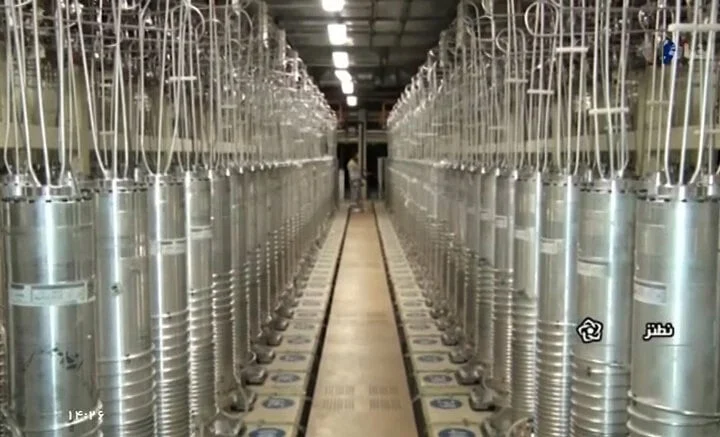
The Islamic Republic of Iran has formally rejected any proposal involving the transfer of its enriched uranium stockpiles to foreign nations, marking a significant hardening of its stance regarding the future of its nuclear program. Esmaeil Baghaei, spokesperson for the Iranian Ministry of Foreign Affairs, stated during a press briefing in Tehran that the movement of nuclear material out of the country is entirely off the table, dismissing any potential diplomatic concessions on this front. This declaration arrives at a precarious moment as international pressure mounts and the viability of future nuclear negotiations remains in question.
The Core of the Disagreement
Tehran’s refusal to export its nuclear material is a direct response to international demands, often spearheaded by Western powers, that seek to limit Iran’s nuclear capacity as a prerequisite for reviving the 2015 Joint Comprehensive Plan of Action (JCPOA). Historically, the "export" of uranium was a mechanism utilized in previous iterations of nuclear diplomacy to reduce Iran’s breakout capability. However, the current administration in Tehran views such measures as an infringement on its sovereign rights and a threat to its strategic autonomy.
Baghaei’s rhetoric emphasizes that Iran will not accept terms that undermine its technological progress. Furthermore, he articulated a strategic concern regarding the safety and security of Iran’s nuclear infrastructure, specifically addressing the threat of military intervention by the United States and its regional allies. The spokesperson highlighted that the constant threat of strikes against nuclear facilities creates an environment where international oversight becomes fundamentally compromised.
Security Concerns and the Role of the IAEA
The relationship between Iran and the International Atomic Energy Agency (IAEA) has reached a state of deep complexity. According to Baghaei, the IAEA currently lacks the specific mechanisms or protocols to conduct effective inspections at nuclear facilities that have been subjected to, or are under the threat of, sabotage and physical damage. This position serves as a protective layer for Iran, suggesting that until regional security guarantees are provided, the country will restrict access to certain sensitive sites.
The argument presented by Tehran is that the IAEA’s mandate is being weaponized to gather intelligence for potential military targets. This circular tension—where Iran restricts access due to security threats, and the West demands access to ensure compliance—has paralyzed the diplomatic track. Without a clear framework to address the security of these facilities, the IAEA’s ability to verify the peaceful nature of Iran’s nuclear program remains significantly degraded.
A Chronology of Escalation
To understand the current impasse, one must look at the trajectory of Iran’s nuclear activities over the last decade:
- 2015: The signing of the JCPOA, which imposed strict limits on Iran’s enrichment levels and stockpiles in exchange for the lifting of economic sanctions.
- 2018: The United States, under the Trump administration, unilaterally withdrew from the JCPOA, triggering a policy of "maximum pressure" and the reimposition of comprehensive sanctions.
- 2019-2020: Iran began a systematic rollback of its commitments under the deal, increasing its enrichment levels to 20% and eventually 60%, nearing the 90% weapons-grade threshold.
- 2021-2022: Negotiations in Vienna stalled repeatedly over issues of verification and the removal of the Islamic Revolutionary Guard Corps (IRGC) from terrorist watchlists.
- 2023-2024: Sabotage incidents at sites like Natanz and Parchin, combined with regional conflicts involving proxies, have led to heightened intelligence surveillance and increased rhetoric from Washington regarding the "military option" being on the table.
Supporting Data and Technical Context
As of the most recent IAEA reports, Iran continues to maintain a significant stockpile of uranium enriched to 60%. While this is below the 90% threshold typically required for nuclear weapons, it represents a technical capability that causes extreme concern among non-proliferation experts.
The process of enrichment—using thousands of centrifuges in cascading arrays—has become increasingly efficient. Iran has deployed advanced IR-6 centrifuges, which operate at higher speeds and efficiencies than the older IR-1 models permitted under the original 2015 agreement. The accumulation of this enriched material, combined with the loss of continuous monitoring by IAEA cameras at several sites, has effectively shortened the "breakout time"—the time required to produce enough fissile material for a nuclear device—to a matter of weeks, if not days.
Reactions and International Implications
The reaction from the international community, particularly the E3 (France, Germany, and the United Kingdom) and the United States, has been one of deepening skepticism. Western diplomats have long argued that without the export of enriched uranium, Iran’s stockpile remains a latent threat that can be rapidly converted for military use.
An analyst familiar with the negotiations noted, "Iran is signaling that the era of concessions is over. By framing the issue as a matter of national sovereignty and security, they are making it increasingly difficult for the current U.S. administration or European partners to find a middle ground."
Conversely, domestic hardliners in Tehran have lauded the Ministry of Foreign Affairs’ stance, arguing that the 2015 agreement was a failure because it relied on the "good faith" of Western powers that ultimately abandoned the deal. This domestic political reality limits the room for maneuver for Iranian negotiators, who are now bound by internal directives that prioritize the preservation of the nuclear infrastructure over economic relief.
The Broader Impact on Regional Stability
The refusal to export nuclear material has broader implications for Middle Eastern security. Regional neighbors, particularly Israel and Saudi Arabia, view Iran’s accumulation of nuclear material as an existential threat. Israel, in particular, has maintained a policy of preventing a nuclear-armed Iran through a variety of means, including cyber-attacks, targeted assassinations of scientists, and public declarations that it will act alone if necessary.
The intersection of the nuclear issue with the ongoing regional conflicts, such as the situation in Gaza, has further complicated the landscape. The geopolitical alignment between Tehran and various militant groups in the region means that nuclear diplomacy is no longer viewed in isolation. Western powers are increasingly linking Iran’s regional behavior to its nuclear program, making a standalone nuclear deal even more unlikely.
Analytical Perspectives: The Impasse
The current standoff is not merely a technical disagreement over uranium purity levels; it is a fundamental clash of strategic visions. From the Iranian perspective, the nuclear program is the primary leverage it possesses against a hostile international environment. For the United States and its allies, the program is a proliferation risk that threatens the global non-proliferation regime established by the Treaty on the Non-Proliferation of Nuclear Weapons (NPT).
The critique leveled by Baghaei against the IAEA underscores a lack of trust in international institutions. By questioning the legitimacy of inspections under the current security climate, Iran is effectively pushing for a new, perhaps more restricted, relationship with the IAEA. However, the IAEA maintains that it must have full, unfettered access to verify that no nuclear material is being diverted for military purposes.
Conclusion and Future Outlook
As the diplomatic horizon darkens, the international community faces a difficult choice: continue to press for a comprehensive agreement that seems increasingly unattainable, or shift toward a policy of containment and deterrence. The formal rejection of material transfer by Tehran indicates that the government is preparing for a long-term standoff.
With no clear path toward resuming formal negotiations, the status quo is likely to persist: Iran will continue its enrichment activities, the IAEA will remain constrained in its verification efforts, and the risk of miscalculation will remain high. The coming months will be critical, as the global community watches to see if any secondary channels of communication can be established to prevent a further escalation that could lead to open conflict. For now, the door to a compromise on the transfer of enriched material appears firmly closed, leaving both sides trapped in a cycle of suspicion and strategic brinkmanship.
