
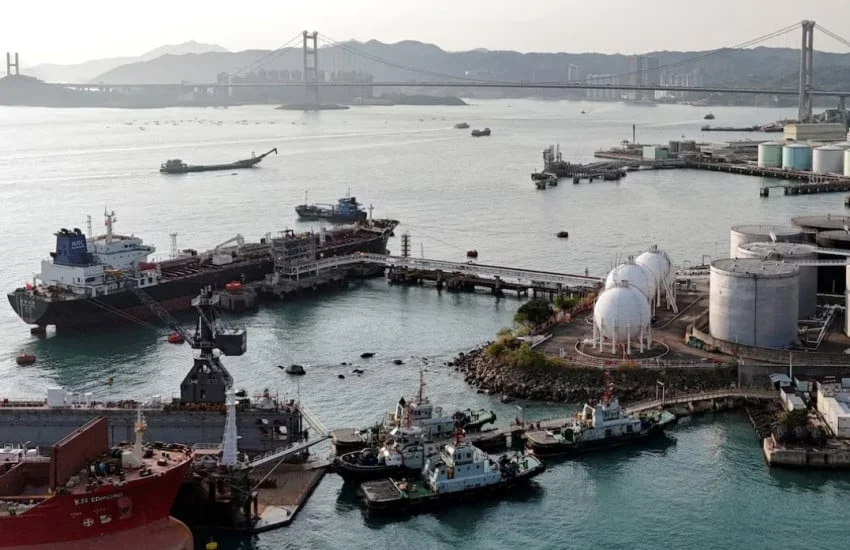
The global energy market is witnessing a strategic recalibration as Asian refineries, led by industry giants in China and South Korea, have aggressively resumed their procurement of crude oil from West Africa and Brazil. This shift in trade flows is primarily catalyzed by a dramatic correction in maritime freight rates, which have plummeted by approximately 50% from the record-breaking highs observed just last month. As logistics costs stabilize, the arbitrage window for long-haul oil imports has reopened, allowing Asian refiners to capitalize on more competitive pricing structures for Atlantic Basin crude.
The Mechanics of the Freight Correction
For much of the third quarter, the crude tanker market was defined by extreme volatility. Supply chain bottlenecks, vessel repositioning issues, and geopolitical uncertainties had pushed freight costs to historic peaks, effectively pricing out many Asian buyers from the West African and Brazilian markets. During that period, refiners in the East were largely restricted to sourcing crude from the Middle East and Russia to keep freight-to-cargo ratios viable.
However, the recent cooling of the tanker market has fundamentally altered this landscape. According to shipping brokers and market analysts, the surplus of available vessels and a stabilization in bunker fuel prices have contributed to the sharp decline in Worldscale (WS) rates. Worldscale is the industry-standard benchmark for calculating the cost of tanker charters, and the current downward trend has provided a much-needed margin buffer for refiners who were previously squeezed by high landing costs.
Strategic Procurement Moves by Asian Giants
The resurgence in activity is most evident in the behavior of major state-owned and private conglomerates. Unipec, the trading arm of the Chinese refining behemoth Sinopec, has emerged as the most prominent player in this recent procurement wave. Industry reports confirm that Unipec secured multiple cargoes of West African crude over the past week, signaling a return to its pre-peak import strategy.
Data from the chartering market shows that Unipec successfully negotiated lower rates for Suezmax-class tankers intended for December transit. Specific transactions included chartering vessels at 475 and 410 Worldscale points to transport crude from West Africa to Asian ports. In a separate move, the firm secured a Very Large Crude Carrier (VLCC) for a similar route with a loading schedule for early December at a rate of W500.
Parallel to China’s efforts, South Korean refiner SK Energy has also moved to capture value. The company chartered a Suezmax tanker to transport crude from Gabon to the industrial hub of Ulsan, South Korea, for delivery in December at a rate of W380. These logistical maneuvers underscore a coordinated effort by Asian refiners to diversify their feedstock sources while taking advantage of the temporary reprieve in transport overheads.
Market Dynamics: The Djeno Crude Arbitrage
A focal point of this procurement strategy is the Congolese Djeno crude blend. Unipec’s recent acquisition of two cargoes of Djeno crude highlights the attractiveness of the current price spread. By securing these barrels at a discount of approximately USD 22 per barrel relative to the Dated Brent benchmark on a free-on-board (FOB) basis, the company has effectively mitigated the long-haul freight risk.
The "arbitrage" in this context refers to the price differential between regional crude grades and international benchmarks, adjusted for the cost of transport. When freight rates were at their zenith, the landed cost of West African or Brazilian oil in Asia far exceeded the cost of locally sourced or Middle Eastern alternatives. With freight costs now slashed by half, the "landed cost" equation has flipped, making African and South American grades highly attractive for refiners looking to optimize their refinery output mix.
Analytical Perspective and Energy Insights
Market intelligence firm Energy Aspects noted in a research briefing on November 9 that the trend is a direct result of the improved economics of long-haul logistics. According to the firm, the reduction in VLCC freight rates for trans-Suez routes has restored the competitiveness of Atlantic Basin crudes. Analysts suggest that this trend is likely to persist as long as tanker availability remains sufficient and the current freight rate floor holds steady.
The broader implication is a shift in the balance of power within the crude oil supply chain. For producers in West Africa and Brazil, the return of Asian demand is a critical development. These nations rely heavily on exports to the East to maintain production levels and balance their national fiscal budgets. Conversely, for Asian refiners, the ability to access these markets provides essential flexibility in feedstock selection, which is vital for maximizing the yields of high-value distillates like diesel and jet fuel.
Timeline of the Freight Rate Volatility
To understand the current state of the market, it is essential to view the timeline of events that led to the recent correction:
- September – Mid-October: Tanker rates reach unprecedented levels due to a combination of seasonal demand surges, the impact of geopolitical conflicts on shipping lanes, and a shortage of active vessel supply.
- Late October: Freight rates reach a localized peak, forcing Asian refiners to scale back on long-haul imports and prioritize shorter, more expensive routes or draw down on domestic inventories.
- Early November: The market begins to correct as vessel availability increases and speculators exit positions, causing a rapid decline in Worldscale rates.
- Mid-November: Asian refiners, including Unipec and SK Energy, move quickly to secure tonnage for December and January loading, marking the official return of the West-to-East crude trade flow.
Broader Economic Implications for Asian Refineries
The implications of this shift extend beyond simple procurement costs. Refineries in Asia operate on razor-thin margins, and their ability to source diverse crude grades is a primary determinant of profitability. By diversifying their supply base, these refiners can better optimize their "cracking" capabilities—the technical process of breaking down crude oil into various products.
For instance, West African crudes are often lighter and sweeter than the heavy, sour grades common in the Middle East. Increased access to these grades allows refineries to produce a higher ratio of high-margin light distillates. Furthermore, the return of competitive freight rates reduces the overall inflationary pressure on energy prices within the region, which is a welcome development for economies currently grappling with fluctuating domestic energy costs.
Official and Industry Reactions
While official corporate statements from Sinopec and SK Energy remain limited, industry insiders suggest that the procurement surge is part of a broader "buy-on-dip" strategy. A representative from a major Singapore-based shipping brokerage stated, "The market was clearly overstretched in October. We are seeing a healthy correction that aligns with the fundamentals of supply and demand in the tanker market. Refiners are taking advantage of the window while it remains open, as no one knows how long this stability will last."
Economists monitoring the region also point out that the increased flow of oil from Africa and Brazil to Asia serves to integrate these markets more closely. As energy security becomes a paramount concern for Asian nations, establishing reliable, cost-effective trade routes with Atlantic producers is becoming a strategic priority that transcends short-term market fluctuations.
Future Outlook and Conclusion
The current volatility in freight rates serves as a reminder of the fragility of global energy logistics. While the current 50% correction has provided a massive boost to Asian refiners, the market remains susceptible to external shocks, including potential changes in oil production quotas by OPEC+, shifts in global demand, and ongoing geopolitical tensions.
However, for the immediate term, the return of West African and Brazilian oil to the Asian market indicates a stabilization of the global energy supply chain. As Unipec, SK Energy, and other regional players continue to lock in lower-cost shipping, the global crude market is expected to witness a period of increased efficiency and more balanced trade flows. Whether this trend continues through the first quarter of the coming year will depend largely on the continued availability of tanker tonnage and the evolution of the global macro-economic climate, which remains the primary driver of both energy demand and freight costs.
In summary, the interplay between freight market corrections and crude procurement strategies highlights the sophisticated nature of modern energy trading. Asian refiners have demonstrated agility in responding to market signals, ensuring that they can navigate the complexities of international logistics to secure the resources necessary to power their economies. As long as the freight cost environment remains favorable, the transatlantic and trans-Pacific crude trade routes will remain vital arteries of the global energy landscape.