JAKARTA — A member of the House of Representatives (DPR) belonging to the National Awakening Party (PKB) faction, Eka Widodo, has publicly reported a surge of deep disillusionment and direct criticism from members of Generation Z regarding Vice President Gibran Rakabuming Raka. According to Widodo, commonly known as Edo, young constituents during his recent parliamentary recess in the Central Java IX electoral district voiced intense frustration over the legal and political circumstances surrounding Gibran’s rise to power, going so far as to demand his formal impeachment.
The grievances expressed by these young voters center heavily on allegations of constitutional manipulation and nepotism. The controversy traces back to the controversial Constitutional Court ruling in late 2023 that altered age requirements for presidential and vice-presidential candidates, ultimately paving the way for Gibran—the eldest son of former President Joko Widodo—to secure the nation’s second-highest office at a historically young age. While supporters lauded the elevation as a breakthrough for youth representation in Indonesian governance, a significant segment of the younger demographic views the pathway as an institutional shortcut enabled by dynastic politics, thereby undermining meritocracy and fair competition.
This friction highlights an ongoing ideological and political battleground regarding youth involvement in Indonesian democracy. As the nation navigates the aftermath of the 2024 general elections, the legitimacy of the current administration’s ascent remains a polarizing topic, particularly among politically engaged youth cohorts who closely monitor legal ethics, constitutional integrity, and the separation of powers.
Parliamentary Recess and Direct Confrontation
The revelations made by Eka Widodo emerged from a routine constituency outreach program, known locally as reses, conducted in the Central Java IX region, which encompasses areas such as Tegal and Brebes. During these field engagements, lawmakers are mandated to absorb constituents’ aspirations, evaluate the implementation of government programs, and report local grievances back to the central legislature in Jakarta.
However, the dynamics of this specific recess session deviated from typical infrastructural or economic complaints. Edo recounted being approached and surrounded by groups of Gen Z constituents who were eager to voice their grievances regarding national political ethics. The dialogue quickly shifted toward the judiciary, the office of the vice president, and the broader implications of how political power is consolidated in contemporary Indonesia.
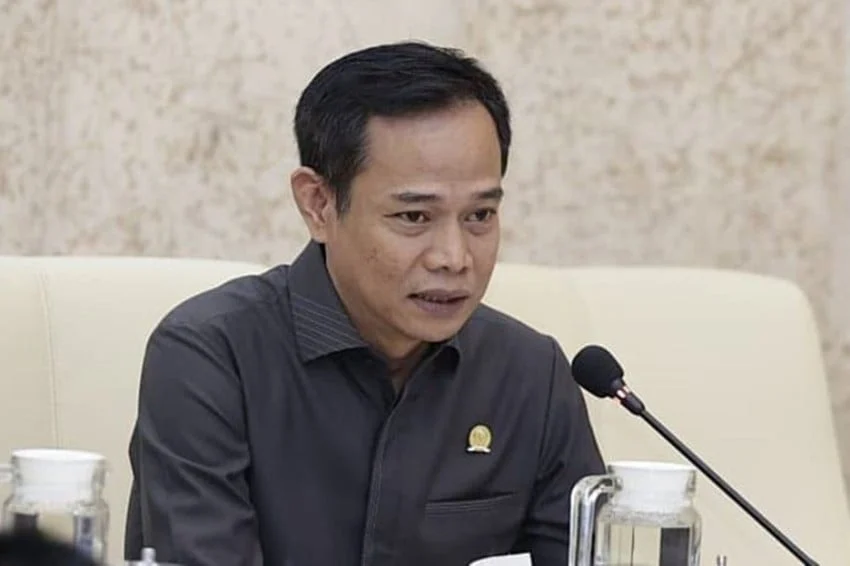
"When I was conducting my recess in the Central Java IX electoral district, I was swarmed by Gen Z youths. They expressed profound disappointment regarding the Gibran case. They feel that the constitution has been compromised and the hearts of the younger generation have been deeply wounded. This is purely the voice of the Gen Z kids conveyed to me during the recess," Edo stated in an official media release.
The lawmaker emphasized that the sentiment was not manufactured by political elites or orchestrated by opposition factions within the parliament, but rather represented an organic wave of grassroots discontent among urban and semi-urban youths. These constituents reportedly argued that Gibran’s tenure as vice president symbolizes a regression in democratic norms, suggesting that privilege and familial ties outweighed institutional rules and public trust.
Chronology of the Controversy: From Court Ruling to Impeachment Demands
To fully understand the weight of the grievances articulated by the Gen Z constituents in Central Java, it is necessary to examine the chronological sequence of events that brought Gibran Rakabuming Raka to the national stage.
The controversy began in earnest on October 16, 2023, when the Constitutional Court (Mahkamah Konstitusi or MK) issued Decision Number 90/PUU-XXI/2023. Presided over at the time by Chief Justice Anwar Usman—who is the maternal uncle of Gibran—the court ruled that individuals under the age of 40 could run for president or vice president provided they had previously or were currently serving in an elected public office, including regional leadership positions. This exception directly benefited Gibran, who was then serving as the Mayor of Solo (Surakarta).
The ruling sparked immediate nationwide outrage, academic condemnation, and protests from civil society organizations. Critics argued that the decision constituted a blatant conflict of interest and represented a clear step toward the establishment of political dynasties. Despite the intense public backlash, the General Elections Commission (KPU) swiftly adjusted its technical regulations to accommodate the ruling.
Shortly thereafter, on October 22, 2023, the Prabowo Subianto-Gibran Rakabuming Raka presidential ticket was officially announced, with Gibran selected as the vice-presidential running mate for then-Defense Minister Prabowo Subianto. The ticket went on to win the February 14, 2024, presidential election in a single round, capturing a decisive majority of the national vote.
However, legal challenges and ethical scrutiny persisted. In the months following the election and subsequent inauguration in October 2024, various civil society groups, student movements, and legal advocacy organizations continued to question the ethical validity of the administration’s formation. The recent demands for impeachment voiced by Gen Z constituents to lawmaker Eka Widodo represent a continuation of this deep-seated friction, translating months of online discourse and academic debate into direct political lobbying of elected officials.
Analyzing the Gen Z Perspective: Representation Versus Merit
The disillusionment expressed by young voters highlights a profound paradox in modern Indonesian politics. Generation Z and millennial voters constituted over 50 percent of the total electorate during the 2024 general elections, making them the most targeted demographic by political campaigns. Recognizing this immense demographic weight, political parties heavily invested in digital campaigns, youth-friendly imagery, and the promotion of young leaders to capture the youth vote.
However, the elevation of Gibran—framed by his campaign as a historic milestone for youth representation—has triggered a schism within this demographic. While some young voters appreciated having a youthful figure in the executive branch, a vocal and critical segment argues that tokenistic or systemically favored youth representation does not equate to genuine empowerment.
According to political analysts, the core of the Gen Z grievance lies in the perception of unfair play. For millions of young Indonesians competing in a challenging job market characterized by high youth unemployment and fierce competition for civil service and corporate positions, the perceived bending of constitutional rules for a political elite figure is viewed as a systemic injustice. They argue that true representation must be rooted in equal opportunity, adherence to the rule of law, and democratic meritocracy, rather than lineage.
Furthermore, the involvement of the Constitutional Court in altering the electoral rules created a lasting crisis of confidence in state institutions among politically conscious youth. For these constituents, the integrity of the constitution is non-negotiable; any perceived instrumentalization of the judiciary for political convenience is seen as an existential threat to Indonesia’s democratic gains achieved since the fall of the New Order in 1998.
Political Implications and the Role of the Legislature
The airing of these grievances during a parliamentary recess places the issue squarely within the halls of the legislature, forcing political parties to navigate a delicate path between maintaining coalition stability and acknowledging grassroots discontent.
Eka Widodo’s decision to amplify these concerns reflects the complex internal dynamics of the National Awakening Party (PKB). While PKB officially joined the broad coalition supporting the Prabowo-Gibran administration after a period of post-election realignment, individual lawmakers retain the mandate to voice constituent concerns. By bringing the voices of Gen Z into the public domain, PKB legislators are signaling that the administration cannot entirely ignore lingering legal and ethical controversies, even as the government focuses on its policy agenda.
From a broader constitutional perspective, the likelihood of a formal impeachment proceeding moving forward in the DPR remains exceedingly low. Under the Indonesian Constitution, the impeachment of a president or vice president requires an exceptionally high threshold of legal proof—such as treason, corruption, bribery, other severe criminal offenses, or moral turpitude—followed by a rigorous multi-stage review process involving the Constitutional Court and a joint session of the People’s Consultative Assembly (MPR). Given the commanding legislative majority currently controlled by the governing coalition in Parliament, any procedural push for impeachment would face near-insurmountable political barriers.
Nevertheless, political experts note that the significance of such demands lies not in their immediate parliamentary feasibility, but in their signaling power. The persistence of anti-dynastic sentiment and constitutional grievances among the youth demographic serves as a persistent soft-power check on the executive branch. It ensures that issues of governance, institutional independence, and ethical leadership remain prominent fixtures in the national discourse.
Conclusion and Future Outlook
The friction reported by Eka Widodo in Central Java IX encapsulates a critical chapter in contemporary Indonesian democracy. As the Prabowo-Gibran administration continues to roll out its national development programs, food estate initiatives, and free nutritious meal programs aimed at the youth, it simultaneously faces the challenge of repairing trust with a segment of the younger population that feels alienated by the foundational circumstances of the administration’s rise.
Whether the government can bridge this credibility gap through effective policy delivery and inclusive governance remains to be seen. However, the articulation of these demands by Gen Z constituents underscores a maturing political awareness among Indonesia’s younger generations—one that demands not only symbolic representation, but also unwavering adherence to constitutional integrity, democratic norms, and institutional accountability.