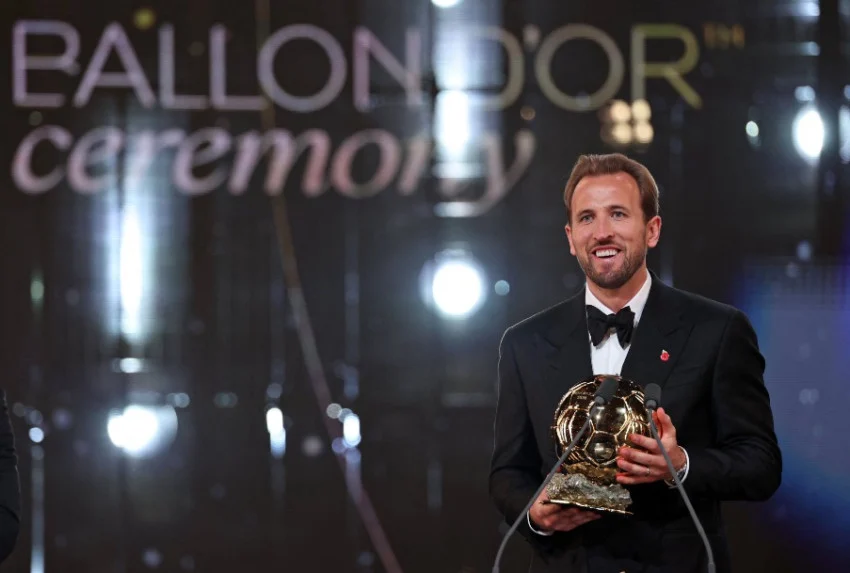
Harry Kane has been officially crowned the winner of the 2026 Ballon d’Or, marking a career-defining pinnacle for the English captain during a landmark 70th-anniversary ceremony held at the London Palladium Theatre on Tuesday, October 27, 2026. The prestigious award, widely considered the highest individual honor in professional football, recognizes Kane’s exceptional contributions to the sport over the past season. The gala, which moved away from its traditional Parisian home for the first time in its history, served as a global stage for celebrating the elite echelons of the beautiful game.
The selection of Kane follows an intense period of speculation and a minor administrative controversy that briefly clouded the lead-up to the event. As the footballing world gathered in London, the 2026 edition of the award stood out not only for its change of venue but also for the caliber of competition, with a new generation of talent pushing established icons to their limits.
A Night of Prestige at the London Palladium
The London Palladium Theatre provided an elegant backdrop for the 70th iteration of the Ballon d’Or. Organized by France Football, the ceremony honored excellence across several categories, reflecting the shifting tides of dominance in both the men’s and women’s circuits. For Harry Kane, the victory represents the culmination of a prolific period in his career, characterized by clinical finishing, leadership, and a consistent ability to perform under the highest pressure.
The award criteria, which evaluate individual performance, decisive impact in major tournaments, and fair play, saw Kane emerge at the top of the voting panel’s list. Analysts noted that his tactical adaptability and influence in high-stakes matches were instrumental in securing the votes of international journalists, national team coaches, and captains.
The Administrative Glitch: Clarifying the Chaos
The lead-up to the announcement was marked by a digital irregularity that caused widespread confusion among fans and media outlets. Hours before the official reveal, the official Ballon d’Or website inadvertently published three separate pre-drafted articles, each naming a different candidate—Harry Kane, Kylian Mbappé, and Lamine Yamal—as the winner.
The incident triggered a frenzy on social media, with fans and pundits dissecting the accidental leaks. The organizing committee moved swiftly to issue a formal clarification. In a statement released shortly after the error was discovered, the organizers explained that their digital team had prepared several templates in advance to ensure real-time reporting regardless of the final outcome. Due to a technical failure, these draft files were erroneously pushed to the live server.
"The articles in question were placeholder drafts prepared for internal use to ensure the efficiency of our coverage," the committee stated. "They do not reflect the actual voting results or the final ranking, and we apologize for any confusion caused to the public and the athletes involved." This clarification effectively quelled the speculation, allowing the focus to shift back to the meritocratic nature of the awards ceremony itself.
The Women’s Game: Alexia Putellas Continues Her Reign
While the men’s category captured headlines, the women’s Ballon d’Or highlighted the sustained excellence of Alexia Putellas. The Barcelona Femeni talisman was once again recognized as the best player in the world, further cementing her legacy in the sport. Putellas’s ability to orchestrate the midfield and contribute to critical goals has been a cornerstone of Barcelona’s continued domestic and European dominance. Her win underscores the ongoing growth and professionalization of women’s football, with the quality of play reaching unprecedented levels of tactical sophistication.
Club Achievements and Strategic Dominance
The 2026 ceremony also provided a platform to recognize collective excellence. Paris Saint-Germain (PSG) was honored with the Club of the Year award for the men’s division, a testament to their sustained efforts in restructuring their squad and achieving consistency on both domestic and continental stages.
Conversely, the women’s award for Club of the Year went to Barcelona Femeni. The Catalan side has become a benchmark for success in women’s football, maintaining an academy-to-first-team pipeline that is the envy of the sport. Their continued success is a direct result of institutional investment, strategic recruitment, and a philosophy that prioritizes technical development.
In the goalkeeping department, Unai Simon was named the Yachine Trophy winner for the best male goalkeeper of 2026. Simon’s composure and shot-stopping ability were pivotal throughout the year, marking him as the preeminent force between the posts.
Chronology of the 2026 Ballon d’Or Cycle
- January – May 2026: Candidates distinguish themselves through league campaigns and international fixtures, with Harry Kane, Kylian Mbappé, and Lamine Yamal emerging as the frontrunners.
- September 2026: The official shortlist is announced, narrowing the field to 30 candidates for the men’s award.
- October 25, 2026: Final voting closes for the international panel of journalists.
- October 27, 2026 (Morning): Technical error leads to the accidental publication of multiple winner profiles on the Ballon d’Or website.
- October 27, 2026 (Evening): The 70th Ballon d’Or ceremony takes place at the London Palladium.
- October 27, 2026 (Night): Harry Kane is officially announced as the winner, alongside other category recipients.
Impact and Implications: The Changing Landscape
The selection of London as the host city for the 70th anniversary is indicative of a broader strategy to globalize the Ballon d’Or brand. By moving the event away from its traditional home in Paris, the organizers have signaled an intent to engage with diverse footballing markets. The move also highlights the premier status of the English Premier League, which, through the success of players like Kane, continues to attract the world’s most talented athletes.
From an analytical perspective, Kane’s victory is a validation of the "number nine" role. In an era where "false nines" and high-pressing, versatile forwards have dominated tactical discourse, Kane’s ability to blend traditional center-forward play—strength, aerial presence, and precise finishing—with advanced playmaking has proven to be the most effective formula in modern football.
Furthermore, the prominence of young stars like Lamine Yamal in the final voting lists suggests a generational transition is underway. While established veterans like Kane remain at the top of the hierarchy, the rapid ascent of teenage talents indicates that the next few years of the Ballon d’Or will likely be defined by a fierce rivalry between the old guard and the new generation of wunderkinds.
Looking Toward the Future
The aftermath of the 2026 ceremony leaves the footballing world with much to ponder. For Harry Kane, this honor serves as the crowning achievement of a storied career, providing a definitive answer to any debates regarding his standing among the pantheon of footballing greats.
As the industry reflects on the ceremony, the focus will soon shift back to the pitch. The 2026-2027 season is already underway, and the race for the 2027 Ballon d’Or has effectively begun. With the bar set high by the current winners, the standard of competition is expected to rise further. The organizers of the Ballon d’Or have signaled that they intend to refine their digital protocols to prevent future leaks, ensuring that the integrity of the announcement process remains beyond reproach.
In summary, the 2026 Ballon d’Or ceremony was a celebration of consistency, talent, and institutional success. By recognizing Harry Kane and Alexia Putellas, the sport continues to celebrate the individuals who define its narrative. As football moves forward, the memories of this historic night in London will remain a significant chapter in the sport’s enduring history, highlighting the evolution of both the players and the institutions that support them.