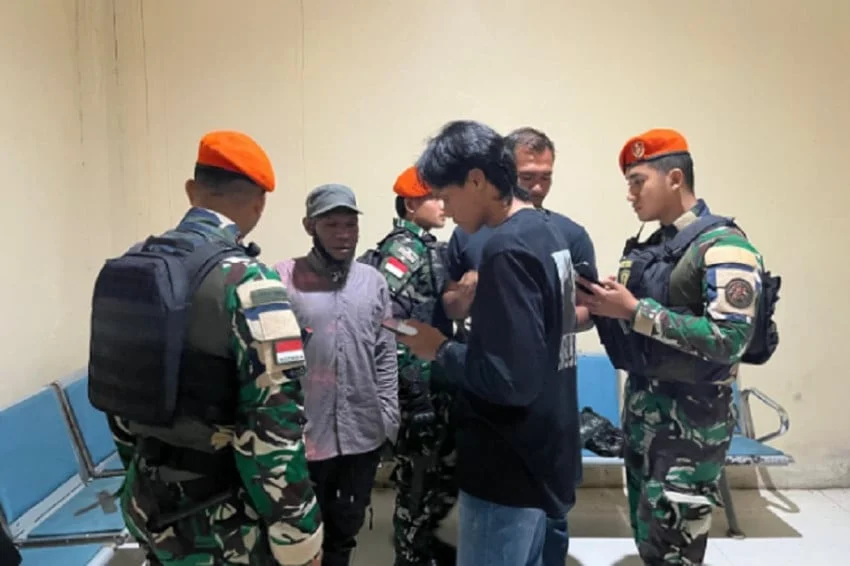
In a high-stakes security operation conducted in the remote highlands of Papua, combined forces from the Yon 462 Pasgat (Special Forces) and the Satgas Mandala Koops TNI Habema successfully apprehended Abdon Kisamdu, a prominent commander within the West Papua National Liberation Army-Free Papua Organization (TPNPB-OPM), on Saturday, September 19, 2026. The operation, executed under the command of the Joint Regional Defense Command III (Kogabwilhan III), represents a significant tactical blow to the TPNPB-OPM Kodap 35 Bintang Timur faction, which has long been a source of instability in the Pegunungan Bintang region.
The arrest occurred at approximately 14:59 WIT at the Nop Goliat Dekai Airport in Yahukimo, Papua Pegunungan. Kisamdu, who served as the Vice Battalion Commander (Wadanyon) for the Kodap 35 Bintang Timur, had been a long-standing subject of a nationwide manhunt, appearing prominently on the Indonesian National Police’s (Mabes Polri) Wanted Persons List (DPO).
Chronology of the Operation
The apprehension was the result of meticulous intelligence gathering and real-time surveillance coordinated by the Kogabwilhan III. According to official reports, security forces had received credible intelligence indicating that Kisamdu was traveling to Yahukimo via commercial air transport. Acting on this intelligence, personnel from Yon 462 Pasgat and Satgas Mandala Koops TNI Habema initiated a "cordon and search" protocol, effectively securing all ingress and egress points at Nop Goliat Dekai Airport well before the scheduled landing of the target aircraft.
Kisamdu was identified as a passenger on a Trigana Air Service flight (PK-YSC, Boeing 737-500). As the aircraft touched down and the passengers began to disembark, specialized units moved in to isolate and apprehend the suspect. The operation was executed with precision, ensuring that the surrounding civilian population remained unharmed and that the suspect had no opportunity to evade capture. Upon his immediate detention, Kisamdu was transported to a secure, isolated facility within the airport perimeter for initial processing and questioning.
The Objective: Interdicting an Arms Supply Chain
During the preliminary interrogation conducted shortly after his capture, Kisamdu admitted that his primary mission in Dekai was to facilitate the acquisition of a significant quantity of illegal firearms. Evidence recovered from the suspect—specifically, encrypted communications extracted from his personal electronic device—confirmed that he was in the final stages of coordinating a purchase with an intermediary based in the Kali Seng area of Yahukimo.
Pangkogabwilhan III, Lieutenant General Lucky Avianto, highlighted the critical nature of this interception. "The prevention of this transaction is of paramount importance to the security of the region," Lt. Gen. Avianto stated. "Had this purchase been completed, the influx of weaponry into the hands of the Kodap 35 Bintang Timur faction would have undoubtedly led to a surge in violent insurgent activities, further endangering both security personnel and the local populace."
The recovery of the digital evidence not only validates the intelligence that led to the arrest but also provides a roadmap for military intelligence to identify and disrupt the networks supporting the illegal arms trade in Papua.
Strategic Context and Regional Security Implications
The arrest of Abdon Kisamdu comes at a time of heightened tensions in the Papua Pegunungan province. The TPNPB-OPM Kodap 35 Bintang Timur, led by Ananias Ati Mimin, has been linked to a series of high-profile acts of violence, including armed attacks, arson, and intimidation of public infrastructure workers.
Security analysts note that the operational philosophy of the Kodap 35 Bintang Timur faction shares significant ideological and tactical alignments with the Command of the Third War Region (Ndugama) led by Egianus Kogoya. Kogoya is currently the most infamous figure in the ongoing Papuan conflict, recognized as the primary architect behind several high-profile kidnappings and the brutal killing of civilian transport workers, such as the murder of Aris Sanda on the Trans-Wamena-Nduga road.
The link between these two factions suggests a broader, coordinated effort by various OPM splinters to consolidate their presence in the central highlands. By decapitating the leadership structure of Kodap 35, the TNI aims to fracture these alliances and restore a baseline of security necessary for the continued economic and infrastructure development of the Papua Pegunungan region.
The Role of Koops TNI Habema
The establishment of Koops TNI Habema (Harmonization for the Advancement of Papua) represents a shift in the Indonesian government’s strategy toward handling the Papua conflict. Unlike traditional military operations that focus exclusively on kinetic combat, the Habema task force is designed to integrate security operations with community engagement and the protection of essential public services.
The operation at Nop Goliat Dekai highlights the intelligence-led approach of this task force. By focusing on disrupting logistics—specifically the flow of weapons and funding—the TNI seeks to minimize the duration and intensity of direct armed confrontations. This strategy is intended to protect civilians who are often caught in the crossfire of the skirmishes between the military and the armed insurgent groups.
Statistical Overview of Recent Security Challenges
Recent reports from the region underscore the urgency of the security situation. Within the last several months, the province has witnessed:
- A 15% increase in attempted attacks on local infrastructure projects, including bridge and road construction sites in Yahukimo and Pegunungan Bintang.
- The targeted killing of several civilian contractors, which has led to temporary suspensions of regional development projects.
- A sustained effort by security forces to identify and neutralize the supply lines that facilitate these attacks.
The arrest of Kisamdu is viewed by government officials as a test case for the efficacy of the current intelligence-sharing protocols between the TNI and the National Police. The ability to track a high-value target across regional borders and execute an arrest at a busy commercial airport without disrupting civilian traffic is being hailed as a sign of improved operational discipline and inter-agency cooperation.
Future Outlook and Legal Proceedings
Following his arrest, Abdon Kisamdu is expected to be transferred to the custody of the Indonesian National Police for formal legal proceedings. He faces charges related to illegal possession of firearms, conspiracy to commit violent acts, and involvement in a separatist movement—charges that carry heavy penalties under Indonesian law.
The Indonesian military has signaled that this arrest is not the end of the operation in the Yahukimo sector. Intelligence gathered from the suspect’s mobile device is currently being analyzed to identify the suppliers and financiers of the arms network. It is anticipated that a series of follow-up operations will target the logistical hubs that facilitate the movement of contraband into the highland regions.
For the local population in Yahukimo, the neutralization of a key commander like Kisamdu provides a temporary sense of relief. However, analysts warn that the underlying causes of the insurgency remain complex, requiring not only a robust security presence but also continued efforts in social and economic development to address the grievances of the local population.
As the situation develops, the focus for the Koops TNI Habema will remain on maintaining stability in the wake of this arrest, preventing retaliatory actions by the TPNPB-OPM, and continuing the broader objective of protecting civilian life and critical national infrastructure in Papua. The success at Nop Goliat Dekai serves as a strategic marker in the ongoing effort to manage the security landscape in one of Indonesia’s most challenging regions.