JAKARTA, July 21, 2026 – Allegations surrounding the former Deputy Attorney General for Special Crimes (Jampidsus), Febrie Adriansyah, for his suspected involvement in concealing substantial assets, have ignited a firestorm of scrutiny from legal experts and the public alike. At the heart of the controversy is the discovery of assets valued at over Rp540 billion, believed to be proceeds from major corruption cases, found across multiple locations, including a luxury residence linked to the former high-ranking official.
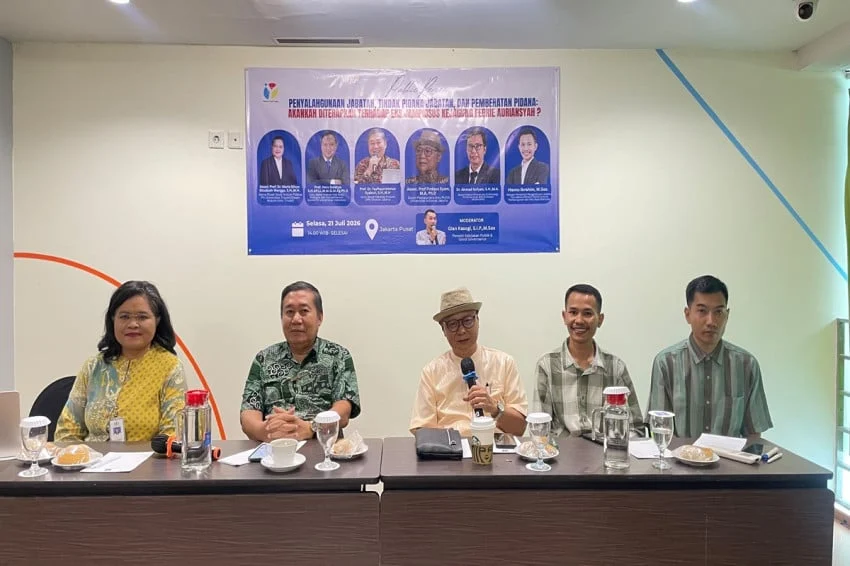
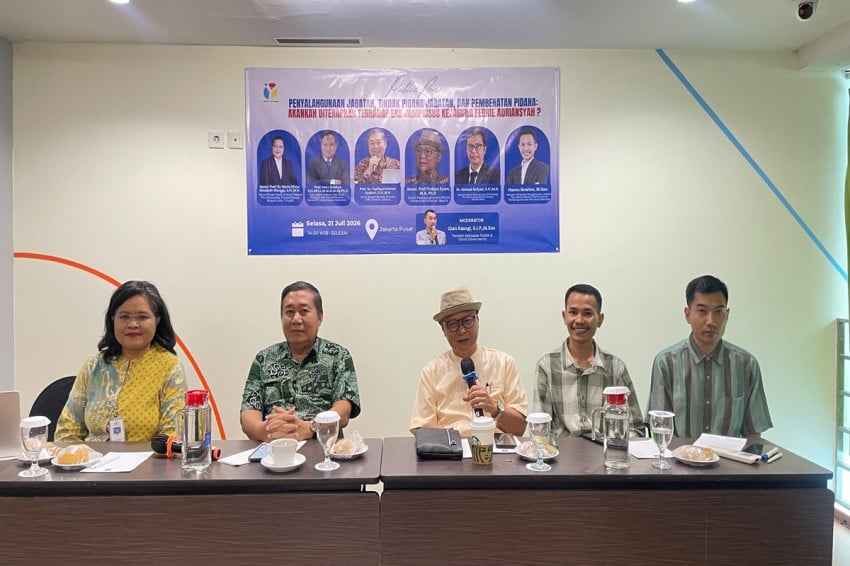
The gravitas of the situation was underscored during a recent public review titled "Abuse of Power, Official Crimes, and Aggravated Penalties: Will They Be Applied to Former Jampidsus Febrie Adriansyah?" held in Jakarta on Tuesday, July 21, 2026. Maria Silvya E. Wangga, a prominent Criminal Law Expert from Trisakti University, vehemently questioned the rationale behind a state official’s willingness to harbor assets belonging to third parties, especially when these assets are strongly suspected of originating from criminal activities. Her remarks reflect a broader concern within the legal community regarding the integrity of the nation’s justice system.
The unfolding investigation has led to a series of extensive asset seizures by law enforcement agencies, targeting 12 different locations. The scale of the alleged concealment is staggering. Among the items confiscated were Rp7.2 billion in cash, denominated in 16 different foreign currencies, recovered from a money changer. Further significant discoveries included hundreds of billions of rupiah in Singapore Dollars (SGD) and US Dollars (USD), meticulously hidden within a secret safe at the "Cafe de’Clan Signature" in Cipete, and another substantial cache found in a luxurious home situated in Sentul, Bogor. In addition to the vast sums of currency, investigators also seized tens of kilograms of gold bars, a classic instrument for money laundering due to its high value-to-weight ratio and ease of transport.
These seized assets are not merely random discoveries; they are strongly suspected of being deeply entwined with the proceeds of money laundering from three of Indonesia’s most high-profile corruption scandals. These include the massive investment management fraud at PT Asabri, the alleged corruption within the state-owned steel giant PT Krakatau Steel, and irregularities in the governance of coal supply for power plants (PLTU) between 2018 and 2026. The revelation that assets linked to these monumental cases could have been harbored by a former top prosecutor responsible for eradicating such crimes has sent shockwaves through the nation.
The Role of Jampidsus and the Weight of the Allegations
The position of Jampidsus within the Attorney General’s Office (Kejagung) is one of immense power and responsibility. The Jampidsus leads the Special Crimes division, tasked with investigating and prosecuting high-profile corruption cases, economic crimes, and other offenses that significantly impact state finances and public interest. An individual holding this office is expected to embody the highest standards of integrity and be at the forefront of the fight against corruption. Therefore, allegations of asset concealment and potential involvement in money laundering against a former Jampidsus are not just ordinary criminal charges; they represent a profound crisis of trust in the very institutions designed to uphold justice.
The Attorney General’s Office itself has a mandate to conduct transparent and impartial investigations. The current situation places immense pressure on Kejagung to demonstrate its unwavering commitment to eradicating corruption, even when it involves its own former high-ranking officials. The issuance of a new investigation warrant (Surat Perintah Dimulainya Penyidikan – Sprindik) by Kejagung, as confirmed by immigration authorities, signals the official continuation and deepening of the probe into Febrie Adriansyah. This new Sprindik reinforces the ongoing legal process, ensuring that the investigation maintains its legal footing and momentum. Furthermore, the Directorate General of Immigration’s affirmation that the travel ban on Febrie Adriansyah remains in effect underscores the seriousness of the allegations and the authorities’ intent to prevent any attempt to flee the jurisdiction.
Chronology of Events and Legal Framework
While the precise timeline leading to the current public revelations remains under wraps, a broad chronology can be inferred from the available information. The investigation likely began months prior to the public review on July 21, 2026, with initial intelligence gathering and surveillance. The significant scale of asset seizures across 12 locations suggests a meticulous and prolonged investigative effort, possibly involving multiple law enforcement agencies.
- Initial Intelligence & Investigation: Unspecified period leading up to public revelations, likely involving financial intelligence units and anti-corruption task forces gathering evidence on suspicious transactions and asset movements.
- Asset Seizures: A coordinated operation by law enforcement, resulting in the confiscation of over Rp540 billion in cash, foreign currency, and gold bars from various locations, including a money changer, a café with a hidden safe, and a luxury residence. These seizures likely occurred over a period, culminating in the major public announcement.
- Link to Major Corruption Cases: Investigators established strong connections between the seized assets and the proceeds of corruption from PT Asabri, PT Krakatau Steel, and the PLTU coal supply governance cases. This linkage elevates the gravity of the money laundering allegations.
- Public Review and Expert Scrutiny: On July 21, 2026, Maria Silvya E. Wangga and other legal experts convened a public review to discuss the legal ramifications, including potential charges of abuse of power, official crimes, and the application of aggravated penalties against Febrie Adriansyah.
- Official Legal Actions: Concurrently or shortly after, the Attorney General’s Office issued a new Sprindik (investigation warrant) for Febrie Adriansyah, formalizing the continuation of the criminal probe. The Directorate General of Immigration confirmed the ongoing travel ban, preventing him from leaving the country.
The legal framework underpinning this investigation primarily involves Law No. 31 of 1999 concerning the Eradication of Corruption Crimes, as amended by Law No. 20 of 2001, and crucially, Law No. 8 of 2010 concerning the Prevention and Eradication of Money Laundering Crimes. The latter is particularly relevant given the sophisticated methods of asset concealment observed, such as using multiple currencies, hidden compartments, and precious metals. Money laundering statutes allow for the tracing, freezing, and confiscation of assets derived from illicit activities, irrespective of who holds them, if there’s evidence they constitute criminal proceeds.
Elaborating on the Money Laundering Modus Operandi
The details of the asset seizures offer a glimpse into the sophisticated tactics often employed in money laundering schemes. The discovery of Rp7.2 billion in 16 types of foreign currency from a money changer suggests a deliberate attempt to obscure the origin of funds by converting them into various denominations and currencies, making them harder to trace. Money changers can be unwitting or complicit facilitators in such schemes, acting as a gateway for illegal funds to enter the legitimate financial system or be converted for easier illicit transfer.
The hidden safe at "Cafe de’Clan Signature" and the luxury home in Sentul, Bogor, point to the use of seemingly legitimate businesses and high-value real estate as fronts or storage facilities for illicit wealth. Such locations provide a veneer of normalcy, diverting suspicion while vast sums are stashed away. Luxury homes, often purchased with dirty money, not only serve as a place to hide physical assets but also act as an investment, appreciating in value and further legitimizing the ill-gotten gains through property transactions. The seizure of tens of kilograms of gold bars further illustrates this. Gold is a highly liquid asset, globally accepted, and relatively easy to transport across borders, making it a favored medium for those looking to move and hide large sums of illicit wealth outside traditional banking systems.
Background of the Major Corruption Cases
The three corruption cases linked to the alleged money laundering scheme are among the largest and most damaging in recent Indonesian history:
- PT Asabri Investment Fraud: This case involves staggering losses to the state-owned insurance company for military and police personnel. The fraud centered on corrupt investment practices, where funds were channeled into high-risk, non-performing stocks and manipulated assets, leading to estimated state losses in the tens of trillions of rupiah. Several high-profile individuals, including former directors and fund managers, have already been prosecuted. The case severely impacted the pensions and welfare of service members, generating widespread public outrage.
- PT Krakatau Steel Corruption: This involves allegations of corruption in various procurement projects and operational activities within the state-owned steel company. Investigations have focused on inflated project costs, kickbacks, and irregularities in the supply chain, leading to significant financial detriment to the state and hindering the company’s vital role in national industrial development.
- PLTU Coal Supply Governance (2018-2026): This refers to alleged corruption in the procurement and management of coal supplies for state-owned power plants. Such cases often involve collusion between officials and private suppliers, price manipulation, and substandard deliveries, resulting in inflated costs for electricity generation and environmental damage. Given the energy sector’s critical importance, corruption here can have far-reaching economic consequences.
The alleged connection of Febrie Adriansyah to the concealment of assets from these specific cases intensifies the public’s demand for accountability, given his former position at the forefront of prosecuting such crimes.
Expert Analysis and Public Sentiment
Maria Silvya E. Wangga’s query about a state official housing illicit assets touches upon a fundamental breach of public trust. "Why would a state official be willing to harbor assets belonging to another party, which are strongly suspected of originating from criminal acts?" she questioned during the public review. This rhetorical question encapsulates the moral and ethical dilemma faced when figures entrusted with upholding the law are themselves implicated in its subversion. Her role as the Head of the Center for Criminal Law Studies at the Faculty of Law, Trisakti University, lends significant academic weight to her critique, emphasizing the need for robust application of laws concerning abuse of power and official crimes.
The public review itself, with its focus on "Abuse of Power, Official Crimes, and Aggravated Penalties," signals a growing expectation from civil society and legal observers that the full force of the law, including enhanced penalties, should be applied to high-ranking officials found guilty of such offenses. This reflects a broader societal demand for stricter accountability for those in positions of power, especially when their actions undermine the very institutions they are sworn to protect. The discussion around "aggravated penalties" suggests that simply treating these as ordinary criminal acts might not be sufficient to deter future abuses, advocating for sanctions that reflect the severity of betraying public trust.
Broader Impact and Implications
The allegations against Febrie Adriansyah carry profound implications for Indonesia’s anti-corruption efforts and the credibility of its legal institutions.
- Erosion of Public Trust: When a former Jampidsus is implicated in asset concealment linked to major corruption, it inevitably erodes public trust in the Attorney General’s Office and the broader justice system. It can foster cynicism and a perception that corruption is deeply entrenched, even at the highest levels of law enforcement.
- Challenge to Anti-Corruption Efforts: Indonesia has made significant strides in combating corruption, but cases like this pose a serious challenge. They underscore the need for continuous internal oversight mechanisms within law enforcement agencies to prevent and detect misconduct by their own personnel.
- Precedent for Accountability: A thorough and transparent investigation, followed by appropriate legal action, would set a crucial precedent for accountability, signaling that no one, regardless of their past position, is above the law. Conversely, any perceived leniency or obstruction could severely damage the nation’s anti-corruption agenda.
- Strengthening Legal Frameworks: The case highlights the persistent challenges in combating money laundering and the need for continuous adaptation of legal and investigative strategies to counter increasingly sophisticated methods of asset concealment.
- International Reputation: Indonesia’s commitment to good governance and fighting corruption is often scrutinized by international bodies and investors. How this case is handled will undoubtedly influence perceptions of the country’s rule of law.
The coming months will be critical as the investigation progresses. The Attorney General’s Office faces the daunting task of meticulously uncovering the truth, ensuring due process, and ultimately delivering justice. The nation watches closely, anticipating a resolution that reinforces the principles of integrity, accountability, and the unwavering pursuit of justice for all. The outcome of this high-profile case will not only determine the fate of a former top prosecutor but also serve as a crucial test of Indonesia’s resolve in its ongoing battle against corruption.