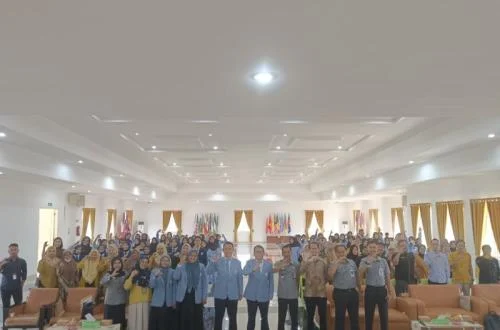
PANGKALPINANG, REPUBLIKA.CO.ID – The Regional Office of the Ministry of Law and Human Rights (Kanwil Kemenkumham) for the Bangka Belitung Islands recently conducted a comprehensive educational program focused on intellectual property (IP) protection, specifically addressing patents and music royalties, at the Institut Citra Internasional (ICI) in Pangkalpinang. The initiative, held on a Tuesday, underscores a strategic national effort to elevate public consciousness regarding the indispensable role of intellectual property in fostering innovation, safeguarding creative endeavors, and driving economic growth within the archipelago.
This specialized program was meticulously designed to equip both faculty members and students at ICI with a profound understanding of IP principles, registration processes, and the tangible benefits derived from protecting their original works. The choice of an academic institution as the venue highlights the government’s recognition of universities and colleges as crucial incubators for new ideas, research, and creative outputs that hold significant economic and societal value.
The National Imperative for Intellectual Property Protection
Indonesia, like many developing nations, is increasingly recognizing the pivotal role of intellectual property rights in transitioning towards a knowledge-based economy. The Ministry of Law and Human Rights, through its Directorate General of Intellectual Property (DGIP), has been at the forefront of national campaigns aimed at demystifying IP and making its protection more accessible across various sectors. This includes a concerted push to decentralize IP services, ensuring that regions like Bangka Belitung are not left behind in the national innovation drive.
The push for IP awareness is not merely a bureaucratic exercise; it is rooted in a broader national strategy to enhance competitiveness, attract investment, and empower local creators and innovators. In recent years, Indonesia has seen a steady, albeit still growing, trend in IP registrations. Data from the DGIP indicates an upward trajectory in patent applications, copyright registrations, and trademark filings, reflecting a burgeoning understanding of their importance. However, significant disparities in awareness and utilization persist between major urban centers and more peripheral regions. This gap is precisely what initiatives like the one at ICI aim to address, fostering a more equitable and widespread embrace of IP protection.
Bangka Belitung: A Hub for Emerging Innovation
Bangka Belitung, an archipelago province renowned for its stunning beaches, tin mining heritage, and unique cultural tapestry, presents a fertile ground for diverse forms of intellectual property. Beyond its natural beauty, the region is home to emerging sectors such as creative industries, sustainable tourism, and specialized healthcare services. These sectors inherently generate a wealth of original content, innovative solutions, and distinctive brands that stand to benefit immensely from robust IP protection.
The presence of educational institutions like Institut Citra Internasional, which offers programs in fields such as nursing, midwifery, and tourism, signifies a concentrated potential for IP creation. For instance, in healthcare, new protocols, medical devices, or educational materials could be patented or copyrighted. In tourism, unique cultural performances, local culinary innovations, or destination branding strategies could be protected as copyrights, trademarks, or geographical indications. Without proper IP education and awareness, these valuable assets risk being exploited, diluted, or remaining unrealized in terms of their economic potential. The Kanwil Kemenkumham Babel’s initiative is therefore a timely and strategic intervention to harness and safeguard this regional potential.
Deep Dive into the Educational Program at ICI
The program at ICI was structured to provide a comprehensive overview of IP, with a specific focus on patents and music royalties—two areas often misunderstood or undervalued. The event commenced with opening remarks from key officials, setting the stage for an informative and engaging session.
Johan Manurung, the Head of Kanwil Kemenkumham Bangka Belitung, delivered a compelling address, emphasizing the critical need to instill IP awareness within academic environments from the outset. "Perguruan tinggi merupakan pusat inovasi dan karya intelektual. Oleh karena itu, penting bagi sivitas akademika untuk memahami dan memanfaatkan sistem kekayaan intelektual sebagai bentuk perlindungan dan peningkatan nilai ekonomi karya," he articulated, stressing that universities are not just centers of learning but also epicenters of innovation and intellectual creation. His statement underscored the idea that for the academic community – comprising researchers, faculty, and students – understanding and utilizing the IP system is paramount for protecting their work and enhancing its economic value. This perspective aligns with the national "triple helix" model of innovation, which advocates for collaboration between academia, industry, and government to drive economic and social progress.
The session on patents likely covered the criteria for patentability (novelty, inventive step, industrial applicability), the application process in Indonesia, the rights conferred by a patent, and the duration of protection. For academics and researchers, understanding patents is crucial for commercializing their scientific discoveries and technological inventions. This knowledge empowers them to safeguard their research outcomes, potentially leading to licensing agreements, spin-off companies, and significant revenue generation for both the individual innovator and the institution.
The segment on music royalties delved into copyright protection for musical works, the different types of royalties (mechanical, performance, synchronization), and the role of collective management organizations (CMOs) in collecting and distributing these royalties. This part of the program would have been particularly relevant for students and faculty involved in creative arts, media production, or those interested in the legal aspects of the entertainment industry. It highlighted how creators can ensure they are fairly compensated for the use of their musical compositions and recordings, thereby fostering a sustainable creative ecosystem.
The event facilitated interactive discussions, allowing participants to pose questions and clarify doubts directly with IP experts from Kemenkumham. This direct engagement is crucial for demystifying complex legal concepts and making them relatable to the specific contexts of academic research and creative output.
The Academic Perspective: Nurturing Innovation at ICI
The participation of Institut Citra Internasional’s faculty and students was a cornerstone of the program’s success. As Head of Kanwil Kemenkumham Babel, Johan Manurung, aptly pointed out, universities are fertile grounds for intellectual output. This educational initiative at ICI is expected to significantly enhance the understanding and awareness of its academic community regarding the importance of IP protection. Furthermore, it aims to stimulate the creation of innovative works that are not only academically sound but also legally protected and economically valuable for the future.
The Rector of Institut Citra Internasional also provided critical insights, underscoring the strategic role of higher education institutions in promoting IP protection. The Rector highlighted that various academic disciplines offered at ICI, such as nursing, midwifery, and tourism, possess immense potential for generating intellectual property worthy of legal safeguarding. For instance, a nursing student might develop an innovative patient care protocol or a specialized medical device. A midwifery student could research and formalize traditional birthing practices or create new educational materials for maternal health. In tourism, students might devise unique cultural tour packages, develop new eco-tourism concepts, or design distinct branding for local attractions. Each of these endeavors, if properly protected, could contribute significantly to the local economy and society. The Rector’s emphasis reinforces the idea that IP is not exclusive to scientific laboratories or artistic studios but is pervasive across all fields of human endeavor.
Legal and Economic Dimensions of IP Registration
Adi Riyanto, the Head of the Intellectual Property Services Division at Kanwil Kemenkumham Babel, further elaborated on the profound importance of registering intellectual property. He unequivocally stated that IP registration serves as a crucial mechanism for protecting both the moral and economic rights inherent in a creative work or invention. "Perlindungan kekayaan intelektual tidak hanya memberikan kepastian hukum, tetapi juga memiliki nilai ekonomis yang dapat dimanfaatkan oleh pemilik karya. Hal ini penting untuk mencegah potensi sengketa di kemudian hari," he explained.
This statement encapsulates the dual benefit of IP registration. From a legal standpoint, registration provides indisputable proof of ownership, offering legal certainty and a basis for enforcement against infringement. It confers exclusive rights to the creator or owner, allowing them to control how their work is used and to prevent unauthorized exploitation. This legal certainty is invaluable in today’s interconnected world, where ideas can be easily copied or disseminated.
Economically, registered IP assets can be licensed, franchised, or sold, generating substantial revenue streams for their owners. A patent, for example, can be licensed to manufacturers, while a copyrighted musical piece can earn royalties every time it’s performed or broadcast. This economic value transforms abstract ideas into tangible assets that can contribute to an individual’s livelihood, an institution’s funding, or a nation’s GDP. Moreover, the existence of registered IP can attract investors and partners, as it signals a protected and valuable asset base.
Crucially, Adi Riyanto also highlighted the preventative aspect of IP registration: mitigating potential disputes. In the absence of formal registration, proving ownership and asserting rights can become a complex, costly, and time-consuming legal battle. A registered IP right acts as a clear public record, deterring potential infringers and providing a straightforward legal recourse if infringement occurs. This preventative measure is vital for fostering an environment of trust and fair competition in the innovation landscape.
Specific Potentials: Healthcare and Tourism IP
The Rector’s specific mention of nursing, midwifery, and tourism is particularly insightful for Bangka Belitung.
In healthcare (nursing and midwifery), IP can manifest in several ways:
- Patents: For novel medical devices, diagnostic tools, therapeutic methods, or pharmaceutical compositions developed through research.
- Copyrights: For educational materials, patient care guides, specialized training modules, or software applications designed for health management.
- Trademarks: For unique healthcare service brands, clinic names, or specialized health programs.
For example, a new, more efficient protocol for post-surgical care developed by nursing faculty could be copyrighted, or a specific device to aid in home births could be patented, offering a competitive advantage and a source of revenue.
In tourism, the potential for IP is equally vast:
- Trademarks: For unique destination branding (e.g., "The Hidden Gems of Bangka Belitung"), hotel chains, tour operators, or local product lines.
- Copyrights: For marketing materials, tourism guides, unique cultural performances, folklore, or photography and videography showcasing the region.
- Geographical Indications (GIs): While not explicitly mentioned in the original snippet, GIs are highly relevant for tourism, protecting products intrinsically linked to their geographical origin and traditional production methods (e.g., specific local foods, crafts, or textiles from Bangka Belitung).
- Industrial Designs: For unique architectural designs of resorts or distinct designs of local handicrafts.
Imagine a unique traditional craft from Bangka Belitung, if its design is protected, it prevents mass production of imitations and ensures the economic benefit flows back to the local artisans. Similarly, a specially designed cultural tour package could be copyrighted, protecting its unique itinerary and narrative.
Broader Implications for Regional Development
The Kanwil Kemenkumham Babel’s IP education program at ICI carries significant broader implications for the socio-economic development of the Bangka Belitung Islands. By fostering a culture of IP awareness and protection, the initiative contributes to:
- Economic Diversification: Moving beyond traditional resource-based economies, IP-intensive sectors can create new avenues for growth, attracting investment in creative industries, technology, and specialized services. This helps in building a more resilient and diversified regional economy.
- Increased Competitiveness: Protected innovations and brands enhance the competitiveness of local businesses and institutions in both national and international markets. Unique products and services with IP protection can command higher value and establish stronger market positions.
- Job Creation: The growth of IP-intensive industries and the commercialization of patented inventions or copyrighted works lead to the creation of high-value jobs in research and development, design, marketing, legal services, and manufacturing.
- Preservation of Cultural Heritage: Through copyrights and potentially geographical indications, unique cultural expressions, traditional knowledge, and local crafts can be protected, ensuring their authenticity and providing economic benefits to indigenous communities.
- Enhanced Research & Development: When academics and researchers know their work can be protected and commercialized, it provides a strong incentive for further innovation and investment in R&D, leading to a virtuous cycle of discovery and application.
- Prevention of Brain Drain: By providing avenues for local innovators to protect and commercialize their ideas within the region, such initiatives can help retain talent and prevent skilled individuals from seeking opportunities elsewhere.
Challenges and the Path Forward
Despite the positive momentum, several challenges remain in fully embedding IP awareness and utilization across Indonesia, including Bangka Belitung. These include:
- Limited Resources: Smaller institutions and individual innovators may lack the financial resources or legal expertise to navigate the IP registration process effectively.
- Information Asymmetry: Despite efforts, a significant portion of the population, especially in rural areas, may still be unaware of IP rights or how to access protection services.
- Enforcement Issues: While legal frameworks exist, effective enforcement against IP infringement remains a challenge, requiring continuous vigilance and robust legal mechanisms.
- Cultural Barriers: In some contexts, there may be a cultural predisposition towards sharing knowledge freely rather than protecting it, which can hinder the formalization of IP.
To overcome these challenges, a multi-pronged approach is essential. This includes:
- Continuous Education: Regular and varied educational programs targeting different sectors (academia, SMEs, creative industries, local communities).
- Streamlined Processes: Simplifying IP registration procedures and making them more user-friendly, possibly leveraging digital platforms.
- Financial Support: Exploring mechanisms for grants or subsidies to assist innovators with IP registration costs.
- Collaboration: Strengthening partnerships between government agencies (Kemenkumham), academic institutions, industry associations, and legal professionals.
- Localized Content: Developing IP educational materials that are tailored to the specific needs and industries of each region.
Conclusion: Sustaining the Momentum
The IP education program spearheaded by Kanwil Kemenkumham Bangka Belitung at Institut Citra Internasional is a commendable step towards building a more IP-savvy and innovation-driven society in the region. By focusing on academia, the initiative targets the source of future innovation, empowering the next generation of researchers, entrepreneurs, and artists. The emphasis on patents and music royalties directly addresses critical areas of intellectual creation, providing practical knowledge that can translate into tangible economic benefits.
The success of this program will not only be measured by immediate participant feedback but also by the long-term increase in IP registrations originating from Bangka Belitung, the birth of new protected innovations, and the enhanced economic value generated by the region’s creative and intellectual capital. Sustaining this momentum through ongoing engagement, policy support, and collaborative efforts will be crucial in positioning Bangka Belitung as a vibrant hub of protected innovation, contributing significantly to Indonesia’s national development goals in the knowledge economy. The commitment shown by Kemenkumham and the enthusiastic reception from ICI underscore a shared vision for a future where intellectual property is recognized, valued, and effectively leveraged for societal progress and economic prosperity.