TOKYO – Japan’s pivotal industrial sectors are grappling with a severe disruption in naphtha-based raw material supplies, forcing numerous companies to drastically cut production and halt new orders. This escalating crisis is unfolding against a perplexing backdrop where government assurances of adequate stock levels sharply contrast with the grim reality of distribution failures and scarcity on the ground. The repercussions are being felt across a wide spectrum of industries, from heavy construction to precision manufacturing, threatening to derail the nation’s economic stability.
Escalating Industrial Paralysis
Over the past week, more than a dozen companies across Japan have reported significant disruptions in deliveries or sharp price increases, stemming directly from the growing difficulty in acquiring naphtha-based materials. This critical feedstock, a fundamental building block for countless industrial processes, has become a bottleneck for one of the world’s most sophisticated manufacturing economies. The strain is not merely a logistical hiccup but points to a deeper systemic issue affecting the supply chain of vital petrochemicals.
The impact has been particularly acute in sectors like construction and manufacturing. Major industrial players such as Toto, a global leader in sanitary ware, and Asahi Kasei, a diversified chemical company, are reportedly facing severe hindrances in the distribution of essential materials, particularly naphtha-based adhesives. These adhesives are indispensable for numerous production processes, ranging from composite materials to automotive components and housing construction. Without them, assembly lines grind to a halt, and construction projects face indefinite delays.
Adding to the growing list of affected businesses, Kansai Paint, a prominent paint manufacturer, has been compelled to adjust its delivery schedules and implement price hikes for its products. The root cause lies in the severe limitation of thinner, a crucial naphtha derivative whose usage is tightly regulated due to its hazardous classification. The scarcity of this vital component has a cascading effect, impacting not only paint production but also associated industries like automotive repair, shipbuilding, and infrastructure maintenance.
A recent survey conducted by the Japan Painting Contractors Association starkly illustrates the severity of the situation. A mere 2.7% of companies reported being able to procure thinner as usual, a figure that underscores the profound pressure on Japan’s chemical industry supply chain. This abysmal percentage highlights that the issue is not isolated but widespread, affecting nearly every player reliant on these essential petrochemicals. The discrepancy between official statements regarding stock availability and the on-the-ground experience of businesses suggests either a significant breakdown in internal logistics, an underestimation of demand, or a miscommunication regarding the usable and accessible inventory.
Understanding Naphtha and Japan’s Industrial Dependence
Naphtha is a flammable liquid hydrocarbon mixture, a product of petroleum distillation. It serves as a primary feedstock for the petrochemical industry, where it is "cracked" into olefins (ethylene, propylene, butadiene) and aromatics (benzene, toluene, xylenes). These basic chemicals are then used to produce a vast array of plastics, synthetic rubbers, fibers, solvents, and other industrial chemicals that underpin modern life. Beyond petrochemicals, naphtha is also used as a solvent, a diluent for paints and coatings, and a component in gasoline blending.
Japan’s economy is heavily reliant on its robust manufacturing sector, which accounts for approximately 20% of its GDP. As a global industrial powerhouse, Japan is a leading producer of automobiles, electronics, machinery, and high-tech materials. This industrial strength, however, comes with a significant dependency on imported raw materials, particularly energy resources. Japan is the world’s fourth-largest importer of crude oil and petroleum products, making its economy highly vulnerable to disruptions in global energy markets. The petrochemical industry, in particular, is a cornerstone of this manufacturing base, transforming imported naphtha into high-value-added products that fuel both domestic consumption and export markets. Any impediment to naphtha supply directly threatens the entire value chain, from upstream chemical production to downstream consumer goods.
Background and Chronology of the Crisis
While the immediate impact of the naphtha crisis became acutely apparent in April 2026, its roots likely trace back to several preceding factors, indicating a gradual build-up of pressure rather than a sudden shock.
- Pre-Crisis Stability (Late 2024 – Early 2025): The global naphtha market generally experienced a period of relative stability, albeit with underlying sensitivities to geopolitical events and crude oil price fluctuations. Japanese industries operated on a finely tuned just-in-time (JIT) inventory system, optimized for efficiency and minimal storage costs.
- Emerging Disruptions (Mid-to-Late 2025): Subtle shifts in global energy supply chains may have begun to emerge. These could include increased naphtha demand from other regions, unanticipated refinery maintenance or outages in key producing nations, or minor disruptions to shipping lanes due to geopolitical tensions or natural events. While not immediately critical, these factors would have started to thin out global spot market availability. The broader global economic landscape, potentially influenced by ongoing conflicts like those in the Middle East as hinted by related news, could have contributed to overall market volatility and increased shipping costs.
- Initial Signs of Strain (January – February 2026): Small and medium-sized enterprises (SMEs) in Japan, typically less resilient to supply shocks than larger corporations, likely began experiencing longer lead times for naphtha deliveries and slight price increases. These early warnings might not have been widely reported or consolidated into a national concern at this stage.
- Escalation and Widespread Impact (March 2026): The situation deteriorated significantly. Reports of delayed shipments became more frequent, and price surges for naphtha and its derivatives became noticeable. Larger companies, with their more extensive supply networks, began to feel the pinch, leading to initial production adjustments. The discrepancy between government assurances and industry experiences likely began to widen, as government figures might reflect national strategic reserves or overall refinery output, which do not account for logistical bottlenecks or specific grade shortages.
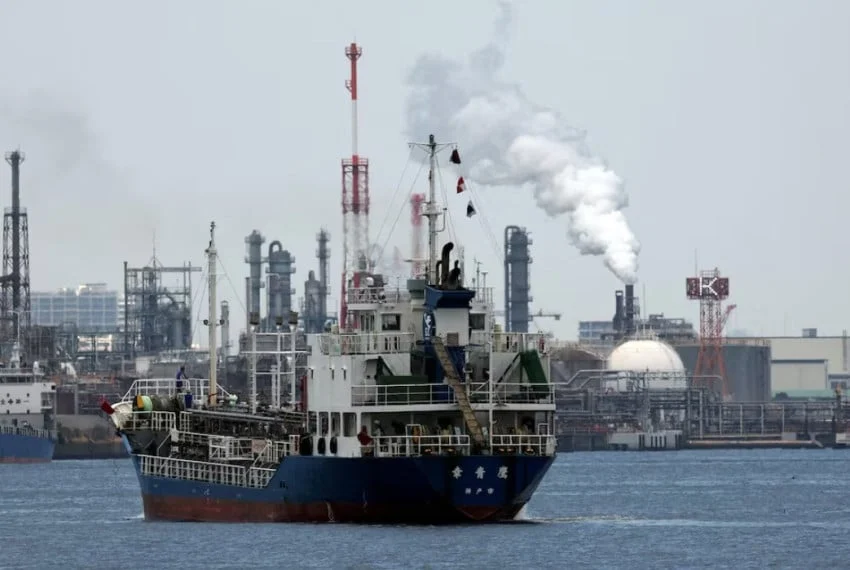
- Peak Crisis (April 2026): The crisis reached a critical point, leading to the public outcry from industry players and the stark findings of the Japan Painting Contractors Association survey. Major companies like Toto and Asahi Kasei were forced to publicly acknowledge production challenges and order halts. The small tanker pictured in Kawasaki on March 17, 2026, navigating near a refinery, visually underscores the constant, yet now troubled, flow of these vital resources.
- Immediate Outlook (Mid-2026): Industries are expected to continue struggling with supply shortages and elevated prices. Companies may further revise production forecasts, potentially leading to a slowdown in overall industrial output. The government will face increased pressure to implement more effective measures.
- Mid-to-Long Term Outlook (Late 2026 and Beyond): The crisis is likely to trigger a comprehensive review of Japan’s energy security and supply chain resilience strategies. Efforts to diversify naphtha sources, explore alternative feedstocks, and potentially boost domestic refining capacity could gain traction.
Official Responses and Industry Reactions (Inferred)
While specific real-time statements are not available, it is possible to infer the likely responses from various stakeholders based on typical governmental and corporate behavior during such crises.
- Government (Ministry of Economy, Trade and Industry – METI): Initially, METI might have issued statements downplaying the severity, emphasizing Japan’s strategic reserves and overall refining capacity, perhaps attributing delays to temporary logistical issues. As the crisis deepened, their tone would likely shift to acknowledging the "challenges" and assuring the public and industry of "close monitoring" and "active engagement" with suppliers and refiners to alleviate the situation. They might convene emergency meetings with industry leaders, explore diplomatic channels for securing additional supplies, and consider temporary regulatory adjustments to ease the burden on affected businesses. The discrepancy in stock perception might be explained as a difference between overall national inventory and the actual, accessible commercial stock for immediate use.
- Industry Associations (e.g., Japan Chemical Industry Association, Japan Federation of Construction Contractors): These bodies would likely have acted as conduits for their members’ grievances, issuing strong calls for government intervention. They would highlight the severe economic ramifications, including potential job losses, reduced competitiveness, and the erosion of Japan’s manufacturing base. Their statements would underscore the urgency of the situation and advocate for concrete measures, such as subsidies for alternative material research, emergency procurement assistance, or even temporary relaxation of import tariffs.
- Affected Corporations (Toto, Asahi Kasei, Kansai Paint): Public statements from these companies would likely focus on their commitment to minimizing disruption for customers, exploring all available options for securing supply, and adjusting production schedules to optimize existing resources. They would communicate transparently about price adjustments, attributing them directly to the increased cost of raw materials. Internally, these companies would be scrambling to diversify their supplier base, identify alternative materials where feasible, and manage inventory strategically.
- Economic Analysts and Think Tanks: Experts would likely issue reports detailing the potential impact on Japan’s GDP, forecasting inflationary pressures as higher production costs are passed on to consumers. They would highlight the vulnerability of Japan’s JIT supply chains and the need for greater resilience. Discussions would revolve around the long-term implications for Japan’s industrial policy and its position in the global manufacturing landscape.
Broader Impact and Implications
The naphtha supply crisis in Japan is more than just a temporary industrial bottleneck; it carries significant implications across various facets of the nation’s economy and strategic outlook.
- Economic Contraction and Inflationary Pressures: A prolonged crisis in naphtha supply will inevitably lead to a contraction in industrial output, particularly in the manufacturing and construction sectors. This slowdown will directly impact Japan’s GDP growth. Furthermore, the higher costs of naphtha and its derivatives will translate into increased production costs for a vast array of goods, from automotive parts and electronics to household items and construction materials. These costs will likely be passed on to consumers, fueling inflationary pressures at a time when the Bank of Japan might be navigating delicate monetary policy shifts.
- Supply Chain Resilience and Strategic Vulnerability: The crisis starkly exposes the inherent vulnerabilities in Japan’s highly optimized, lean supply chains. While efficient in normal times, these systems are fragile when faced with significant external shocks. This event will likely prompt a re-evaluation of Japan’s supply chain strategies, potentially shifting away from an exclusive focus on cost efficiency towards greater resilience, including strategic stockpiling of critical raw materials, diversification of sourcing countries, and investment in domestic production capacities.
- Policy Response and Energy Security: The government will face immense pressure to formulate a robust and long-term policy response. This could include diplomatic efforts to secure stable naphtha supplies from a wider range of international partners, potentially negotiating long-term contracts. Domestically, there might be renewed focus on enhancing refinery capabilities, exploring biomass-derived alternatives to naphtha, or investing in advanced recycling technologies to reduce reliance on virgin petrochemicals. The crisis serves as a critical reminder of Japan’s deep energy import dependency and the imperative for comprehensive energy security strategies.
- Global Competitiveness: If Japanese industries are consistently hampered by raw material shortages and higher input costs, their global competitiveness will suffer. This could lead to a shift in manufacturing bases to countries with more stable and affordable raw material access, impacting Japan’s export-driven economy.
- Technological Innovation and Material Substitution: The scarcity of naphtha may accelerate research and development into alternative, non-petroleum-based materials and processes. Industries might invest more in bio-plastics, advanced composites that require less solvent, or sustainable chemical processes. While a long-term solution, this crisis could be a catalyst for green innovation within Japan’s industrial sector.
- Consumer Impact: Ultimately, the average Japanese consumer will feel the brunt of this crisis through higher prices for everyday goods, potential shortages of certain products, and delays in major construction projects, impacting everything from housing availability to infrastructure development.
The naphtha crisis in Japan represents a significant challenge that underscores the interconnectedness of global energy markets and the fragility of modern industrial supply chains. As the nation navigates this complex issue, the ability to adapt, innovate, and formulate resilient strategies will be crucial for maintaining its industrial prowess and economic stability in the years to come.