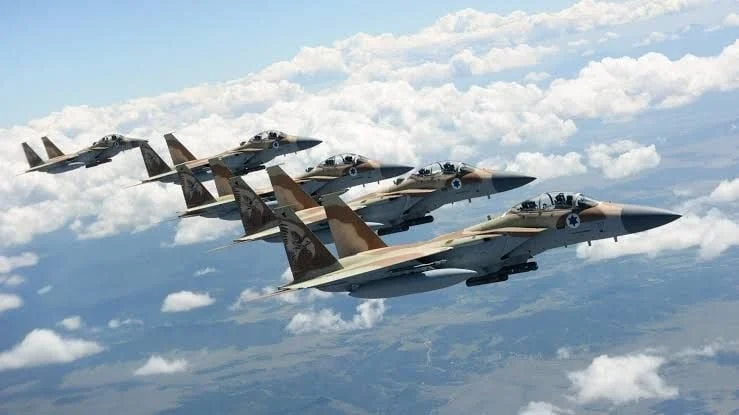
The escalating tensions in the Middle East have reached a critical juncture following reports that the head of Israel’s intelligence agency, Mossad, has signaled a willingness to pursue unilateral military action against Iran. According to recent reporting by the Israeli newspaper Yedioth Ahronoth, Mossad Chief Roman Gofman has presented intelligence suggesting that Tehran is clandestinely advancing its chemical weapons program. This assertion has sparked a significant internal debate within Israel’s security apparatus, pitting Gofman’s call for autonomous operational capability against the cautious approach advocated by top military officials like Eyal Zamir, who emphasize the necessity of strategic alignment with the United States.
The Intelligence Claims: Chemical Weapons and Strategic Concerns
The core of the current diplomatic friction stems from the intelligence dossiers recently presented by Gofman during his visit to Washington D.C. three weeks ago. While the details of these files remain classified, the briefings reportedly aimed to convince American policymakers that Iran’s pursuit of non-conventional weaponry has entered a new, more dangerous phase. Israel has long maintained a "red line" policy regarding the proliferation of weapons of mass destruction in the region, arguing that a nuclear or chemical-armed Iran represents an existential threat that cannot be managed through diplomacy alone.
For decades, international observers and the Organization for the Prohibition of Chemical Weapons (OPCW) have monitored Iran’s compliance with the Chemical Weapons Convention, which Tehran ratified in 1997. Iran has consistently denied the development of such armaments, maintaining that its activities are strictly civilian and defensive in nature. However, Israeli intelligence agencies have frequently challenged these claims, citing clandestine research facilities and dual-use industrial applications that could be repurposed for military chemical production. The current narrative from the Mossad leadership suggests that new evidence—potentially involving nerve agent precursors or advanced delivery systems—has shifted the risk assessment, prompting Gofman to advocate for a preemptive strike posture.
Divergent Paths: The Internal Debate in Israel
The friction between Gofman and Eyal Zamir, the Director-General of the Israeli Ministry of Defense and a key military strategist, highlights a fundamental divide regarding Israel’s foreign policy and security doctrine. Gofman’s position reflects a faction within the intelligence community that prioritizes operational independence. This viewpoint holds that waiting for consensus from international partners—specifically the United States—could lead to a "strategic paralysis" that allows Iran to finalize its capabilities before Israel can act.
Conversely, Eyal Zamir and other high-ranking officials in the Israeli defense establishment argue that the geopolitical risks of an independent strike are too high. Coordination with Washington is viewed as an essential buffer against the risk of a wider regional conflict. The United States provides not only intelligence and logistics support but also serves as the primary diplomatic shield for Israel at the United Nations. A unilateral strike would risk alienating the Biden administration, complicating ongoing negotiations in other theaters, and potentially leaving Israel to manage the fallout—including retaliatory strikes from Iranian proxies such as Hezbollah and various militias in Syria and Iraq—without immediate American military backing.
Chronology of Escalation: 2023–2024
To understand the urgency behind the current discussions, it is necessary to examine the timeline of the recent deterioration in relations:
- Early 2023: Increased reports of Iranian drone transfers to Russia for use in the conflict in Ukraine draw international scrutiny, placing Iran’s military industrial complex under a microscope.
- Late 2023: Intelligence intercepts suggest an acceleration in Iran’s centrifuge activity and advancements in chemical precursor management, alarming Western intelligence agencies.
- Early 2024: Following localized skirmishes in the Levant, Israel begins a series of high-level internal assessments regarding the threshold for preemptive military intervention.
- Three Weeks Ago: Mossad Chief Roman Gofman travels to Washington to present updated intelligence on alleged chemical weapon sites to U.S. counterparts.
- Current Date: Public reports emerge detailing the disagreement between the Mossad leadership and the Israeli military establishment regarding the necessity of an immediate strike.
The Washington Perspective: Caution and Containment
The Biden administration remains in a difficult position. Washington’s current strategy toward Iran has been defined by a combination of targeted economic sanctions and back-channel diplomacy intended to curb Iran’s regional influence and prevent the development of a nuclear weapon. The revelation that Iran may be actively developing chemical weapons creates a significant challenge for the White House.
If the U.S. verifies the Israeli intelligence, it could be forced to reconsider its stance on military intervention. However, the current administration has shown a preference for avoiding direct kinetic engagement in the Middle East, fearing a regional war that could draw in global powers and disrupt global energy markets. Thus far, Washington has not committed to a joint operation. The U.S. strategy appears to remain focused on intelligence sharing and diplomatic pressure, rather than the immediate authorization of a strike.
Supporting Data and Regional Implications
The region is already saturated with military assets. Iran possesses one of the most robust missile arsenals in the Middle East, including ballistic missiles capable of reaching deep into Israeli territory. Furthermore, the presence of Iranian-aligned proxy groups in Lebanon, Syria, Yemen, and Iraq creates a "ring of fire" that complicates any Israeli military operation.
A study by the Institute for National Security Studies (INSS) suggests that any military strike on Iranian soil—whether chemical or nuclear-related—would likely trigger a multi-front conflict. Unlike the precision strikes seen in past decades, a modern conflict with Iran would involve cyber-warfare, drone swarms, and the mobilization of regional proxies, potentially leading to a prolonged war of attrition.
The economic implications are equally grave. Given the volatility of global oil prices, any significant military escalation in the Strait of Hormuz, through which a substantial portion of the world’s oil transits, would likely lead to a sharp spike in energy costs. This economic reality adds another layer of complexity to the decision-making process for both Israeli and American officials.
Fact-Based Analysis: The Risks of Unilateralism
From a strategic standpoint, an independent strike by Israel, while demonstrating a commitment to "defensive preemptiveness," carries substantial long-term risks. The primary risk is the loss of legitimacy in the eyes of the international community. Without the backing of the United States, Israel would be forced to justify the strike to the UN Security Council and other international bodies. Given the lack of a global consensus on the severity of the alleged Iranian chemical threat, such a move could lead to increased diplomatic isolation for Jerusalem.
Furthermore, the efficacy of such a strike is open to debate. Historical precedents, such as the 1981 strike on the Osirak nuclear reactor in Iraq, demonstrate that while kinetic action can delay a program, it rarely eliminates the underlying scientific expertise or the desire for strategic parity. If the Iranian program is indeed as decentralized and clandestine as intelligence reports suggest, a single military strike may only serve to drive the program further underground, making future detection even more difficult.
Conclusion: A Critical Strategic Crossroads
The debate currently unfolding between Mossad and the Israeli military is indicative of the broader challenges facing security planners in the 21st century. The challenge of identifying, verifying, and neutralizing threats in a landscape defined by dual-use technology and regional proxy networks is profound.
As the situation develops, the eyes of the international community remain fixed on the diplomatic exchanges between Jerusalem and Washington. The coming months will likely see increased intelligence sharing and potentially a formal assessment from international observers regarding the claims of chemical weapons development. For now, the push for a unilateral strike appears to be tempered by the institutional caution of the Israeli military and the strategic hesitance of the United States. Whether this balance of power and caution can hold in the face of what Israel claims is an emerging chemical threat remains the most pressing question for regional stability. The outcome of these high-level deliberations will undoubtedly shape the trajectory of Middle Eastern security for the foreseeable future.