The Indonesian Directorate General of Immigration has successfully intercepted and halted the departure of 39 Indonesian citizens (WNI) who were suspected of traveling to Russia to serve as mercenary soldiers. This strategic intervention underscores the mounting challenges faced by Indonesian authorities in combating human trafficking networks that exploit vulnerable individuals with promises of high-paying military roles in foreign conflict zones. The operation, which took place ahead of the suspects’ scheduled departure, highlights a coordinated effort between immigration officials and the Indonesian National Police (Polri) to dismantle organized human smuggling syndicates.
The Operation and Official Confirmation
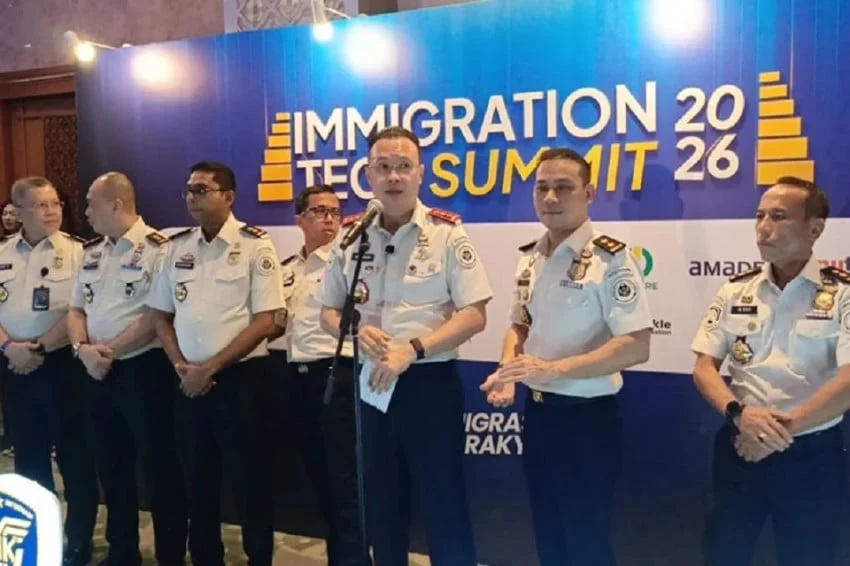
The announcement was made by the Director General of Immigration, Hendarsam Marantoko, during the Immigration Technology Summit 2026 held in Central Jakarta on Saturday, November 28, 2026. According to Marantoko, the intervention was based on substantial evidence gathered through rigorous document verification and intelligence sharing with the national police.
"There are 39 individuals whose departures we have delayed, supported by valid evidence," Marantoko stated during the summit. He emphasized that the primary motivation behind the immigration hold was to protect these citizens from falling victim to what authorities characterize as human trafficking operations.
Marantoko issued a sobering warning regarding the reality of the recruiters’ promises. He noted that the individuals were likely lured by the prospect of lucrative salaries and professional military integration. However, in reality, these recruits were being funneled into dangerous environments with little regard for their safety or legal status. "What was promised, the things they were enticed with, simply do not exist," Marantoko remarked. "In my view, they are essentially being sent as cannon fodder."
The Shadow of Human Trafficking and Recruitment Networks
The case of the 39 individuals is not an isolated incident. The Indonesian government has been grappling with a rising trend of clandestine recruitment schemes that target citizens for participation in foreign military activities. These networks often operate through social media platforms, private messaging applications, and informal community networks, promising large sums of money to individuals, often those with backgrounds in security or those seeking economic relief.
The Indonesian Ministry of Foreign Affairs and the National Police have consistently warned that such activities not only violate international law but also place Indonesian citizens at extreme risk. Individuals who join foreign military units as mercenaries lose the protection of their home country and often face severe legal consequences in both the host country and upon any potential return to Indonesia.
This incident follows a broader crackdown by the Directorate General of Immigration. In a recent, more extensive operation, immigration authorities successfully prevented the departure of 1,502 individuals, among whom 21 were specifically identified as having been recruited for mercenary roles. This demonstrates a systematic pattern of intervention, as Indonesian border control authorities enhance their scrutiny of outbound passengers traveling to regions involved in the Russia-Ukraine conflict.
Chronology of Escalating Risks
The recruitment of foreign nationals into the Russian military has been a point of international concern since the onset of the conflict in Ukraine in 2022. While initial reports focused on volunteers from various nations, the situation has increasingly evolved into organized trafficking.
- Early 2024: Indonesian authorities began noticing an uptick in suspicious travel patterns, with young men from diverse regions of the archipelago obtaining visas for Russia under the guise of tourism or technical labor.
- Mid-2025: Increased coordination between the Ministry of Foreign Affairs, the Indonesian National Police, and the Immigration office led to the establishment of a specialized task force aimed at monitoring human trafficking linked to the war in Ukraine.
- Late 2025 – Early 2026: Several public alerts were issued by the Indonesian Embassy in Moscow, warning citizens about the dangers of being lured into military service through fraudulent employment agencies.
- November 2026: The successful interception of the 39 individuals in Jakarta represents a significant milestone in the government’s "pre-emptive" immigration strategy, focusing on identifying potential victims before they exit the country.
Analyzing the Motivations and Risks
Sociological analysis of these recruitment efforts suggests that the primary driver for potential recruits is economic instability. Many of the individuals targeted by these syndicates are often young, unemployed, or underemployed, making them susceptible to promises of thousands of dollars in monthly pay—a figure that significantly exceeds the average domestic wage in Indonesia.

However, security experts point out the extreme volatility of these arrangements. Recruiters often operate in the shadows, creating a disconnect between the "contract" offered in Indonesia and the reality on the ground in Russia. Once in the foreign country, the recruits are often stripped of their passports and forced into high-risk frontline positions. Because they are technically categorized as irregular combatants or foreign volunteers, they lack the legal protections afforded to regular soldiers under the Geneva Convention.
Government Response and Legal Implications
The Indonesian government maintains a strict stance against its citizens serving in foreign military forces. Under existing laws, participating in a foreign conflict as a mercenary can lead to the revocation of citizenship or severe criminal charges upon return, depending on the nature of their involvement.
The Ministry of Manpower, in conjunction with the Ministry of Foreign Affairs, has intensified its public awareness campaigns to ensure that prospective migrants are aware of the legal and physical risks of accepting unauthorized employment offers. Immigration officials have also implemented more sophisticated biometric and travel history monitoring tools at major international airports, such as Soekarno-Hatta, to flag individuals who match the profiles of those targeted by these trafficking rings.
Broader Implications for Indonesian Diplomacy
The persistence of these recruitment efforts poses a complex challenge for Indonesian diplomacy. Indonesia maintains a policy of active neutrality regarding the Russia-Ukraine conflict, and the involvement of its citizens in the military operations of either side could complicate its international standing.
By taking a firm stance and actively blocking the departure of its citizens, the Indonesian government is not only fulfilling its duty to protect its people from human trafficking but also signaling to the international community that it will not tolerate its territory being used as a staging ground for foreign military recruitment.
The role of the Directorate General of Immigration has become increasingly critical in this context. Moving beyond simple border management, the agency is now functioning as a key national security actor, identifying and neutralizing threats before they escalate into international incidents. The Immigration Technology Summit, where this announcement was made, serves as a platform for discussing how digital transformation can further enhance these security measures. Through the use of big data, AI-driven passenger profiling, and inter-agency data sharing, the Indonesian government aims to create a more resilient barrier against human trafficking syndicates.
Looking Ahead
As the conflict in Eastern Europe continues, the pressure on human trafficking networks to find fresh recruits will likely persist. The success of the Indonesian authorities in preventing the departure of these 39 individuals serves as a testament to the importance of proactive border management. However, the government acknowledges that as long as the economic push factors exist, the demand for such high-risk, high-reward ventures will remain.
Moving forward, the Indonesian government is expected to continue its multi-pronged approach:
- Enhanced Surveillance: Continued collaboration with intelligence agencies to track recruitment platforms.
- Community Education: Strengthening outreach programs in high-risk areas to warn citizens about the realities of human trafficking.
- International Cooperation: Deepening partnerships with foreign counterparts to share information about the syndicates that facilitate these illegal movements.
The incident involving the 39 WNI is a stark reminder of the global nature of modern conflicts and the vulnerability of citizens who are caught in the crosshairs of global power struggles. For the Directorate General of Immigration, the focus remains clear: to safeguard the lives of citizens by ensuring they are not led into situations where their lives are treated as expendable, and to ensure that the rule of law is upheld at the borders of the nation. As the investigation into the recruiters of these 39 individuals continues, it is expected that further arrests will be made, potentially dismantling more layers of the networks that are currently profiting from the misery of the ongoing conflict.