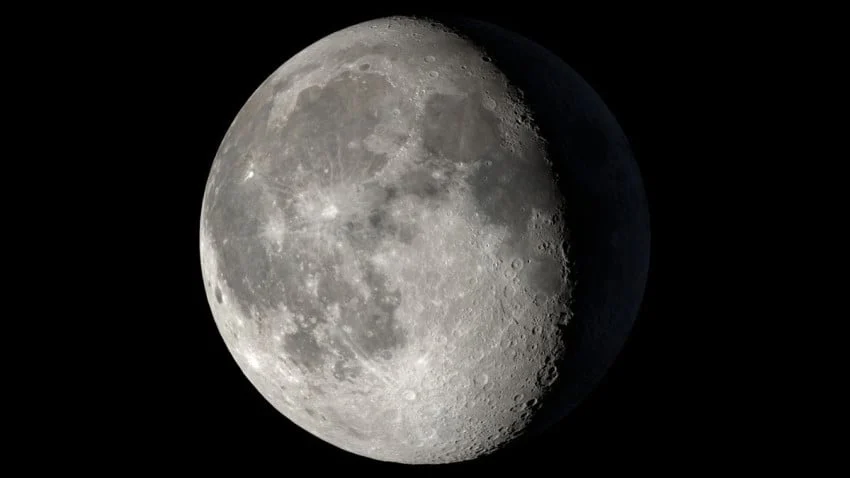
The pursuit of extraterrestrial resources has entered a new, critical phase as the Japan Aerospace Exploration Agency (JAXA) and the Indian Space Research Organisation (ISRO) solidify their collaborative efforts for the Lunar Polar Exploration (LUPEX) mission. Scheduled for a launch in the 2028 fiscal year, this ambitious venture aims to deploy a sophisticated rover to the lunar South Pole, a region identified by planetary scientists as the most promising reservoir of water ice in the Earth-Moon system. The successful demonstration of a prototype rover at JAXA’s Chofu facility in Tokyo on November 25 marked a significant technical milestone, underscoring the readiness of both nations to tackle the hostile, permanently shadowed craters that may hold the key to sustainable human exploration of the solar system.
Technical Capabilities and Recent Demonstrations
During the late November testing phase, JAXA engineers put the LUPEX prototype through a series of rigorous simulations designed to mimic the treacherous, regolith-covered terrain of the lunar surface. The rover, a marvel of modern robotics, utilizes a unique four-legged track-wheel configuration, enabling it to navigate steep inclines and overcome jagged obstacles that would immobilize traditional wheeled vehicles.
The prototype demonstrated an operational speed of approximately 3 centimeters per second, a deliberate pace chosen to ensure the precision of its onboard sensors. Beyond basic mobility, the testing regimen included stress tests for vacuum operation, thermal management, and the rover’s ability to stabilize itself on uneven surfaces. By utilizing a "walking-on-wheels" mechanism, the LUPEX rover is expected to traverse the volatile environment of the South Pole, where temperatures can drop significantly below the freezing point of water, and lighting conditions remain perpetually dark within the deep craters.
The Strategic Rationale of Lunar Water
The primary objective of the LUPEX mission is not merely scientific curiosity but strategic resource acquisition. The presence of water ice in the Moon’s permanently shadowed regions—areas that have not seen direct sunlight for billions of years—has been verified by previous orbital missions, including India’s Chandrayaan-1 and various NASA lunar orbiters.
For international space agencies, water is the "gold" of the space economy. Through a process of electrolysis, water can be split into hydrogen and oxygen. Hydrogen serves as a high-energy rocket propellant, while oxygen is essential for life support and oxidation in combustion engines. By harvesting and processing lunar water, agencies hope to establish "lunar gas stations," which would allow spacecraft to refuel in orbit. This capability would drastically reduce the cost of deep-space exploration, as rockets would no longer need to launch from Earth carrying the massive fuel reserves required for return trips or further voyages to Mars.
A Chronology of the LUPEX Partnership
The LUPEX project represents a deepening of the strategic partnership between Japan and India, a relationship that has grown increasingly robust in the aerospace sector over the last decade.
- 2017: Initial discussions between JAXA and ISRO began regarding a joint lunar polar mission.
- 2019: The formal agreement was established, outlining the division of labor: India would provide the lander module, leveraging the success of its Chandrayaan-3 mission, while Japan would provide the H3 launch vehicle and the advanced rover system.
- 2023: Successful soft landing of India’s Chandrayaan-3 near the South Pole validated the viability of landing in the target region, providing the technical confidence necessary for the LUPEX timeline.
- 2024: Completion and testing of the LUPEX prototype rover at JAXA’s Chofu facility.
- 2028 (Projected): Launch from the Tanegashima Space Center in Kagoshima Prefecture using the JAXA H3 rocket.
Division of Labor and Technical Synergies
The partnership is defined by a clear division of engineering expertise. India’s ISRO, having achieved a historic milestone as the first nation to land near the lunar South Pole, is tasked with the development of the landing craft. The lander must be capable of navigating the rugged, crater-dense terrain of the South Pole, a region notoriously difficult for landing due to the lack of visual contrast and the presence of high-rimmed craters.
Conversely, JAXA is focusing on the mobility and analytical payloads. The rover will be equipped with specialized drills—capable of penetrating the lunar regolith to a depth of several meters—and mass spectrometers designed to analyze the chemical composition of the extracted ice. This technical cooperation is considered one of the most efficient international collaborations in the current era of lunar exploration, as it allows both nations to share the massive financial and technical burdens of lunar surface operations.
Scientific Implications and Data Collection
Once the LUPEX rover touches down, it will initiate a multi-stage exploration process. First, it will use its navigation cameras and infrared sensors to map the surface, identifying "cold traps" where water ice is most likely to be concentrated. Once a site is identified, the rover will engage its drilling mechanism to extract samples.
The samples will then be analyzed in situ to determine the concentration, purity, and distribution of the ice. Scientists are particularly interested in whether the water is trapped in granular form, as frost, or buried deep within the subsurface as dense ice deposits. This data will be crucial for designing future large-scale mining operations. If the ice is found to be easily accessible and abundant, the feasibility of establishing a permanent human outpost increases exponentially.
Global Context: The Race for the South Pole
The LUPEX mission occurs within the broader context of the Artemis Accords and the renewed global interest in the Moon. While NASA’s Artemis program aims to return humans to the lunar surface, and China’s Chang’e missions are actively exploring the lunar far side, the JAXA-ISRO mission occupies a unique niche. It is a dedicated resource-mapping expedition that focuses specifically on the chemical and physical viability of the lunar poles.
Experts note that this mission is critical for the international community. "The data generated by LUPEX will essentially provide a ‘map of resources’ for the next generation of space agencies and private companies," says a spokesperson from the International Astronautical Federation. By sharing this data, Japan and India are setting a precedent for the peaceful, scientific utilization of lunar assets, adhering to the principles outlined in international space law.
Challenges and Future Hurdles
Despite the optimism surrounding the project, the mission faces significant challenges. The lunar South Pole is an environment of extreme thermal instability. The rover’s electronics must be shielded against extreme cold and the constant bombardment of micrometeoroids. Furthermore, the communication latency between Earth and the Moon, while manageable, requires the rover to have a high degree of autonomous decision-making capability.
The JAXA H3 rocket, which will be the primary vehicle for the mission, is also undergoing its own validation process. As a medium-lift, cost-effective launch system, the H3 is essential for the long-term sustainability of the Japanese space program. The success of LUPEX will serve as a key proof-of-concept for the H3’s reliability in high-stakes interplanetary missions.
Economic and Societal Impact
The broader implications of the LUPEX mission extend well beyond the scientific community. The development of advanced robotics, energy-efficient drilling techniques, and autonomous navigation systems has direct applications on Earth. Technologies developed for the harsh conditions of the Moon often find their way into the mining, disaster relief, and remote infrastructure industries.
Moreover, the mission represents a soft-power victory for both nations. By leading the search for water on the Moon, Japan and India are positioning themselves as central pillars of the global space economy. The economic impact of creating a "lunar fuel supply chain" could revolutionize the satellite industry, enabling faster, cheaper, and more frequent orbital maneuvers for telecommunications, earth observation, and space-based research.
Conclusion: A New Frontier
As the prototype rover in Chofu continues its rigorous testing, the world watches with anticipation. The collaboration between JAXA and ISRO is a testament to the fact that the challenges of space exploration are best met through shared vision and collective engineering prowess. By 2028, if the LUPEX mission succeeds, the discovery of accessible water could permanently alter our relationship with the Moon. No longer just a celestial neighbor to be observed from afar, the Moon may soon become a vital hub for humanity’s expansion into the stars. The LUPEX mission is not just a search for water; it is a search for the future of human presence in the solar system.