Tehran currently finds itself at a precarious geopolitical crossroads as ongoing negotiations to prevent a full-scale conflict with the United States reveal the complex, often opaque, architecture of Iranian decision-making. While President Masoud Pezeshkian, a reformist figure, recently announced that his administration has been granted specific authority by Supreme Leader Mojtaba Khamenei to engage in high-stakes diplomacy with Washington, the reality of power in the Islamic Republic remains firmly rooted in its security and military apparatus. This shift in domestic authority comes at a time of extreme volatility, following the catastrophic events of late February that fundamentally altered the country’s leadership structure.
The Catalyst: A Shifting Political Landscape
The current diplomatic urgency stems from the aftermath of the February 28 airstrikes conducted by United States and Israeli forces. The strikes, which resulted in the death of former Supreme Leader Ali Khamenei and several senior government officials, created a power vacuum that forced an immediate restructuring of the Iranian state. In the months since, the internal balance of power has tilted decisively toward the Islamic Revolutionary Guard Corps (IRGC) and security-oriented hardliners.
For international observers, the question of "who is in charge" is no longer a matter of protocol but a vital requirement for any potential de-escalation. President Pezeshkian, despite his mandate to pursue diplomatic avenues, operates within a framework where his every move is scrutinized by a cadre of military officials who view the current standoff not just as a border dispute, but as an existential threat to the regime’s survival.
Chronology of the Escalation
The recent timeline of events highlights the rapid descent from regional friction to the brink of total war:
- February 28: Coordinated airstrikes by the U.S. and Israel target key leadership hubs in Tehran, resulting in the death of Ali Khamenei and multiple high-ranking security officials.
- March 1–15: Immediate mobilization of the IRGC; the state enters a period of high-alert status.
- April 1–10: Intensified mediation efforts led by Qatar and Pakistan; initial back-channel communications are opened between Tehran and Washington.
- May 5: President Pezeshkian publicly discloses that he has received delegated authority from Mojtaba Khamenei to navigate the diplomatic crisis.
- Current Status: Ongoing negotiations centered on a seven-point peace plan proposed by Tehran, with significant focus on the status of the Strait of Hormuz and long-term security guarantees.
The IRGC and the Security-Military Complex
The influence of the IRGC has reached a new zenith. Sina Toossi, a senior fellow at the Center for International Policy, emphasizes that any agreement—whether regarding nuclear policy, sanctions relief, or regional security—is effectively dead on arrival unless it possesses the explicit endorsement of the Iranian security-military establishment.
This security-military block is not merely an advisory body; it is the primary stakeholder in the country’s survival strategy. The current negotiations cover issues far beyond traditional diplomacy, including the administration of the Strait of Hormuz—the world’s most critical oil chokepoint—and the implementation of a regional security architecture that would prohibit further Western military intervention. The IRGC’s involvement ensures that the "negotiation" is conducted from a position of strategic deterrence rather than purely diplomatic compromise.
Official Decision-Making Structures
While the Supreme Leader remains the ultimate arbiter of state policy, the process by which these decisions reach his desk has become increasingly consolidated. The Supreme National Security Council (SNSC) serves as the primary engine for these decisions. The council is composed of a diverse group of stakeholders:
- The Supreme Leader’s Office: Providing the final ideological and strategic guidance.
- Military Command: Including the IRGC and the regular Army, who prioritize defensive and retaliatory capabilities.
- Executive and Legislative Leadership: Including the President, the head of the judiciary, and the speaker of the parliament.
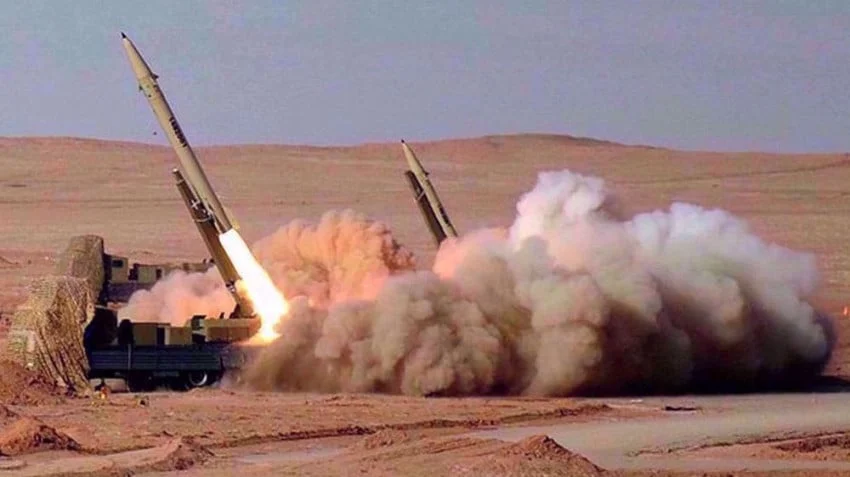
Recent intelligence suggests that Mojtaba Khamenei has been in frequent consultations with figures like Ahmad Vahidi, the high-ranking IRGC commander. The directive from these meetings is clear: the Iranian armed forces have been instructed to respond to threats without geographic limitation. This "no-limits" doctrine has complicated the diplomatic process, as the military leadership insists on expanding the list of potential targets in the event that the conflict intensifies.
The Role of Mohsen Rezaei
The appointment of Mohsen Rezaei as the Secretary of the SNSC in early August marked a significant departure from previous administrative norms. As a former commander-in-chief of the IRGC, Rezaei represents the fusion of military strategy and political governance. His role as the primary coordinator for national security issues effectively places the IRGC at the heart of every diplomatic discussion. By placing a veteran military figure in this position, the Iranian government has signaled to the international community that the lines between civil administration and military command have effectively dissolved in the face of the current conflict.
The Seven-Point Peace Plan
Central to the ongoing negotiations is the "seven-point plan" submitted by Tehran. While the specifics remain classified, sources close to the diplomatic process indicate that the plan demands:
- Immediate Cessation of Hostilities: An end to U.S.-led aerial campaigns.
- Sanctions Relief: A rollback of existing financial penalties as a prerequisite for further dialogue.
- Security Guarantees: A binding commitment that no further targeted strikes will occur on Iranian soil.
- Freedom of Navigation: Regulations regarding the Strait of Hormuz, contingent upon the lifting of maritime blockades.
Western analysts note that this plan is a test of U.S. resolve. If Washington accepts these terms, it effectively acknowledges the current Iranian power structure as a stable, legitimate negotiating partner. If it refuses, the risk of a regional conflict involving global energy markets increases exponentially.
Global Implications and Economic Impact
The implications of these domestic power shifts extend far beyond the Middle East. The global energy market remains highly sensitive to the stability of the Strait of Hormuz. Any disruption in transit through this corridor could lead to a surge in global oil prices, potentially destabilizing economies already struggling with inflation.
Furthermore, the shift toward a more militarized government in Tehran presents a challenge to regional stability in the Persian Gulf. Neighboring states, many of whom have previously engaged in rapprochement efforts with Iran, are now watching the internal power struggle with trepidation. The consolidation of power within the IRGC may signal a more assertive, and potentially more confrontational, foreign policy in the years to come.
Analysis of the Diplomatic Standoff
The current situation is characterized by a "dual-track" strategy. On one track, the Pezeshkian administration utilizes the language of diplomacy to buy time and maintain international legitimacy. On the second track, the IRGC continues to fortify its positions and prepare for an escalation that would test the limits of its current military capabilities.
The primary hurdle for the U.S. and its allies is that they are not dealing with a monolithic political entity. When the Iranian government makes a concession, it is often subject to a veto or an override by the security apparatus. This structural reality makes long-term agreements notoriously difficult to enforce. For the U.S., the choice is between negotiating with a moderate face that may lack real leverage, or engaging directly with a military establishment that remains ideologically opposed to Western influence.
Conclusion: A New Era of Iranian Governance
As the world watches the developments in Tehran, it is clear that the Iran of today is fundamentally different from the one that existed prior to the February crisis. The transition to a more centralized, security-heavy governance model is not merely a temporary measure but a strategic realignment. Whether this realignment will facilitate a peaceful resolution to the current conflict or harden the resolve for further confrontation remains to be seen.
For now, the international community must navigate a diplomatic landscape where the President holds the megaphone, but the military commanders hold the map. The next few weeks of negotiations will likely determine the trajectory of the region for years to come, with the fate of both the government’s stability and regional peace hanging in a delicate, shifting balance. As the deadline for the current negotiation window approaches, the silence from the office of the Supreme Leader suggests that the final decision will not be made in the parliament or the presidential palace, but in the war rooms of the IRGC.