
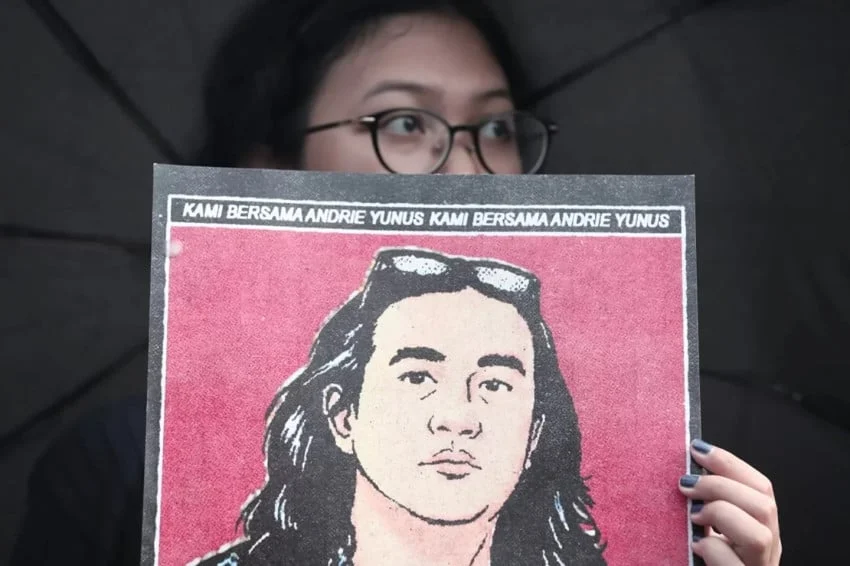
The legal proceedings regarding the assault on KontraS activist Andrie Yunus have reached a significant milestone as the Military Oditurate 07-II Jakarta prepares to officially hand over the case files to the Military Court II-08 Jakarta. Head of the Military Oditurate 07-II Jakarta, Colonel Chk Andri Wijaya, confirmed on Wednesday, April 15, 2026, that the administrative transfer is slated for Thursday, April 16, 2026, at approximately 10:00 AM WIB. This move signals the transition of the case from the investigative and prosecutorial preparation phase to the judicial stage, where the accused—reportedly members of the military—will face trial for their alleged involvement in a chemical splashing attack that has drawn widespread condemnation from domestic and international human rights organizations.
The decision to move forward with the trial comes after months of intense investigation and public pressure. Colonel Andri Wijaya emphasized that the process would be conducted with transparency, inviting the media and the public to monitor the transfer of the case files. The involvement of the military justice system is a direct consequence of the suspects’ status as active personnel within the Indonesian National Armed Forces (TNI), a factor that has historically sparked debate regarding the impartiality and openness of such proceedings when involving crimes against civilians.
The Incident and Its Aftermath: A Blow to Human Rights Advocacy
The case centers on a harrowing incident involving Andrie Yunus, a prominent figure within the Commission for the Disappeared and Victims of Violence (KontraS). Known for his vocal stance against human rights abuses and his work on cold cases involving state actors, Yunus became a target of a physical assault that many believe was intended to silence his advocacy. The attack, which involved the splashing of a corrosive liquid, left Yunus with significant injuries and sparked a national conversation about the safety of activists in Indonesia.
The assault occurred amidst a climate of heightened tension regarding land rights and past human rights violations, areas where Yunus was particularly active. In the wake of the attack, civil society groups rallied to demand a thorough and transparent investigation, fearing that the case might languish in the same obscurity as previous attacks on activists. The identification of military personnel as the primary suspects shifted the focus toward the Military Oditurate and the specialized legal framework that governs crimes committed by members of the armed forces.
Political Will and the Call for Ad Hoc Judges
The gravity of the Andrie Yunus case has reached the highest levels of the Indonesian government. Vice President Gibran Rakabuming Raka has notably intervened by calling for the inclusion of Ad Hoc judges in the military court proceedings. The Vice President’s request is seen as an attempt to ensure that the trial meets civilian standards of transparency and to mitigate public skepticism regarding the military’s ability to judge its own members fairly.
Responding to this high-level request, Yusril Ihza Mahendra, acting in his capacity within the administration, has confirmed that the proposal for Ad Hoc judges will be formally discussed with the Supreme Court (Mahkamah Agung). The inclusion of civilian judges or specialized legal experts in a military tribunal is a rare but not unprecedented move in Indonesia, often reserved for cases of significant public interest or those involving serious human rights implications. Yusril noted that the administration is committed to ensuring that the judicial process is seen as credible and legitimate by the public.
The debate over the composition of the bench highlights a long-standing push by legal reformers to amend the Military Court Law (UU Peradilan Militer). Currently, the law generally dictates that military personnel who commit crimes—even against civilians—are tried within the military court system rather than civilian courts. Critics argue that this creates a "dualism" in the justice system that can lead to impunity. The Andrie Yunus trial is being viewed as a litmus test for whether the current system can adapt to demands for modern accountability.
Chronology of the Case and Investigative Milestones
The timeline leading to the upcoming file transfer is marked by several key developments:
- The Attack (Late 2025): Andrie Yunus was targeted by unidentified assailants while returning from a meeting. The use of a chemical substance suggested a premeditated attempt to cause permanent physical harm and intimidation.
- Initial Investigation: Following the incident, the National Police and Military Police (POM) launched a joint investigation due to early leads suggesting the involvement of individuals with military backgrounds.
- Suspect Identification: After several weeks of forensic analysis and witness testimony, several active-duty personnel were detained and named as suspects.
- Public Protests: The case became a focal point for the "Aksi Kamisan" (Thursday Protests). On April 2, 2026, the 902nd Kamisan protest held in front of the Merdeka Palace specifically highlighted Yunus’s case, demanding that the President and Vice President ensure the perpetrators do not escape justice through the "dark corridors" of military law.
- Evidence Compilation: The Military Oditurate 07-II Jakarta spent the first quarter of 2026 finalizing the dossier, ensuring that the evidence—including CCTV footage, chemical analysis, and digital communications—was sufficient for a conviction.
- Formal Transfer (April 16, 2026): The scheduled handover of the "Berkas Perkara" (case files) to the Military Court II-08 Jakarta marks the official start of the trial phase.
Legal Analysis: The Role of the Military Oditurate
The Military Oditurate (Oditurat Militer) functions as the prosecutorial arm of the military justice system. In the case of Andrie Yunus, the Oditurate’s role is critical. They are responsible for presenting the charges and ensuring that the military code of conduct, as well as relevant articles of the Indonesian Criminal Code (KUHP), are applied.

Because the victim is a civilian, the prosecution must balance military disciplinary standards with the broader requirements of the national criminal law. Legal experts suggest that the charges will likely include aggravated assault under Article 354 or 355 of the KUHP, which carries heavy prison sentences. The involvement of multiple suspects could also lead to charges of conspiracy.
The transparency promised by Colonel Andri Wijaya is a response to years of criticism from organizations like Amnesty International and KontraS itself, which have documented cases where military trials were closed to the public or resulted in lenient sentences that did not match the severity of the crimes. By inviting the media to the file transfer, the Oditurate is signaling a departure from the traditionally insular nature of military legal proceedings.
Broader Implications for Human Rights and Judicial Reform
The Andrie Yunus trial is unfolding at a pivotal moment for Indonesian democracy. The protection of human rights defenders (HRDs) has become a central theme in domestic policy discussions. According to data from various human rights monitors, attacks on activists have seen a fluctuating but persistent trend over the last decade, often involving digital doxxing, physical intimidation, or judicial harassment.
The outcome of this trial will likely influence:
- Trust in the Military Justice System: If the trial is perceived as fair and results in appropriate sentencing, it could bolster the argument that the military court system is capable of internal reform. Conversely, a lack of transparency or a perceived "slap on the wrist" for the defendants would likely reignite calls for the immediate repeal or revision of the Military Court Law to allow civilian courts jurisdiction over soldiers who commit crimes against civilians.
- The Safety of Activists: A successful prosecution would serve as a deterrent against future attacks on activists. It would send a message that state affiliation does not grant immunity from the law.
- Legislative Momentum: The discussion between the Vice President and the Supreme Court regarding Ad Hoc judges could set a precedent for future legislation. It may pave the way for a permanent "Human Rights Court" mechanism or a hybrid system that bridges the gap between military and civilian justice.
The Significance of Aksi Kamisan 902
The mention of the 902nd Aksi Kamisan in the context of this case is significant. For nearly two decades, survivors and families of victims of human rights abuses have gathered every Thursday in front of the Presidential Palace, wearing black and holding umbrellas. Their persistence has made the protest a symbol of the fight against impunity.
The fact that Andrie Yunus’s case has become a primary demand of the 902nd protest underscores the continuity of the struggle for justice in Indonesia. It links the contemporary attack on Yunus to the historical grievances of the 1998 activists and other victims of state violence. For the participants of Kamisan, the upcoming trial is not just about one man, but about the integrity of the state’s commitment to "Reformasi" (the era of reform) that began after the fall of the New Order.
Anticipation for the Trial
As the files are handed over tomorrow, the legal community and human rights advocates will be watching closely for the announcement of the trial date. The Military Court II-08 Jakarta will be under intense scrutiny to ensure that the proceedings are accessible to the victim’s legal team and that witness protection measures are robust, given the potential for intimidation.
The case of Andrie Yunus has moved beyond a simple criminal matter; it has become a symbol of the ongoing tension between traditional military autonomy and the modern demand for universal legal accountability. As the files transition from the Oditurate to the Court, the eyes of the nation remain fixed on the pursuit of justice for an activist who sacrificed his safety for the principles of transparency and human rights.
The scheduled transfer at 10:00 AM on Thursday is merely the beginning of what is expected to be a high-profile and potentially transformative legal battle. The presence of the media and the potential for Ad Hoc judges suggest that this will not be a standard military proceeding, but a landmark case that could redefine the boundaries of justice in 21st-century Indonesia.
