
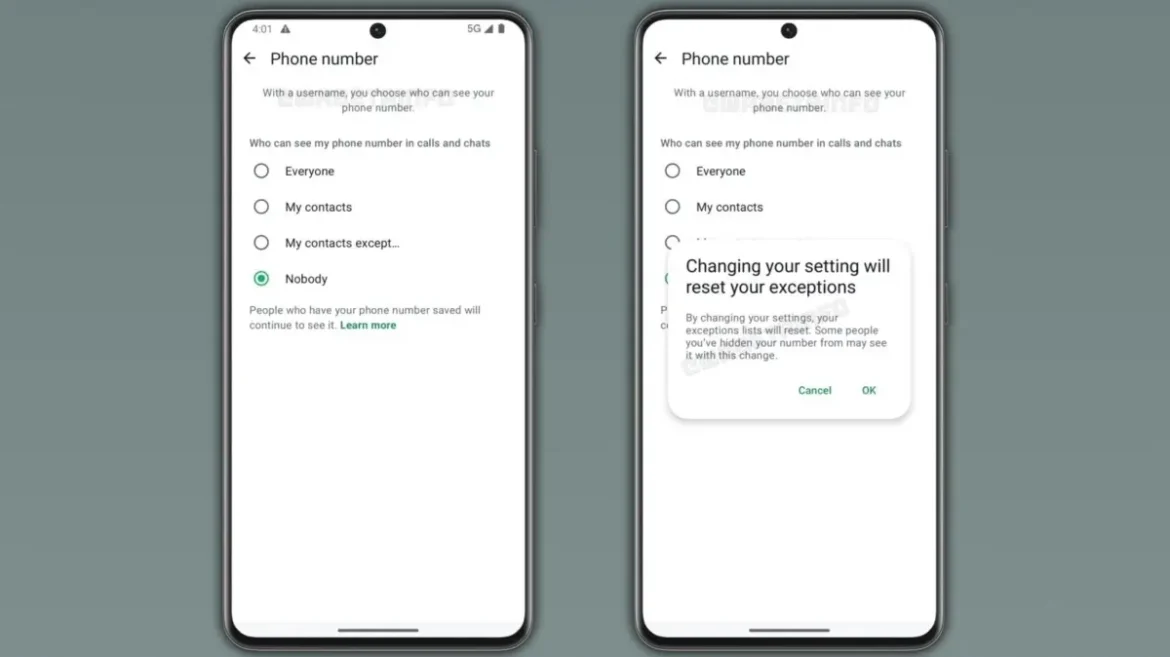
WhatsApp is developing a sophisticated privacy enhancement designed to give users unprecedented control over their personal contact information, specifically regarding how and with whom their phone numbers are shared through the platform’s upcoming username ecosystem. Identified within recent beta builds for Android, the impending feature set introduces a granular four-tiered visibility system that empowers individuals to curate their digital footprint more precisely than ever before. This development marks a significant milestone in WhatsApp’s ongoing evolution from a strictly phone-number-dependent utility into a more flexible, privacy-centric communication network.
For years, the foundational architecture of WhatsApp required every registered account to be inextricably linked to a physical mobile telephone number. While this ensured high accountability and seamless contact discovery through native address books, it also presented notable privacy hurdles. Users frequently found themselves forced to disclose their personal phone numbers to casual acquaintances, e-commerce vendors, professional contacts, and public forum members simply to initiate a conversation. Recognizing the inherent security and privacy vulnerabilities of this model, Meta—WhatsApp’s parent company—has steadily worked toward rolling out a username system, mirroring features long utilized by competing platforms like Telegram and Signal.
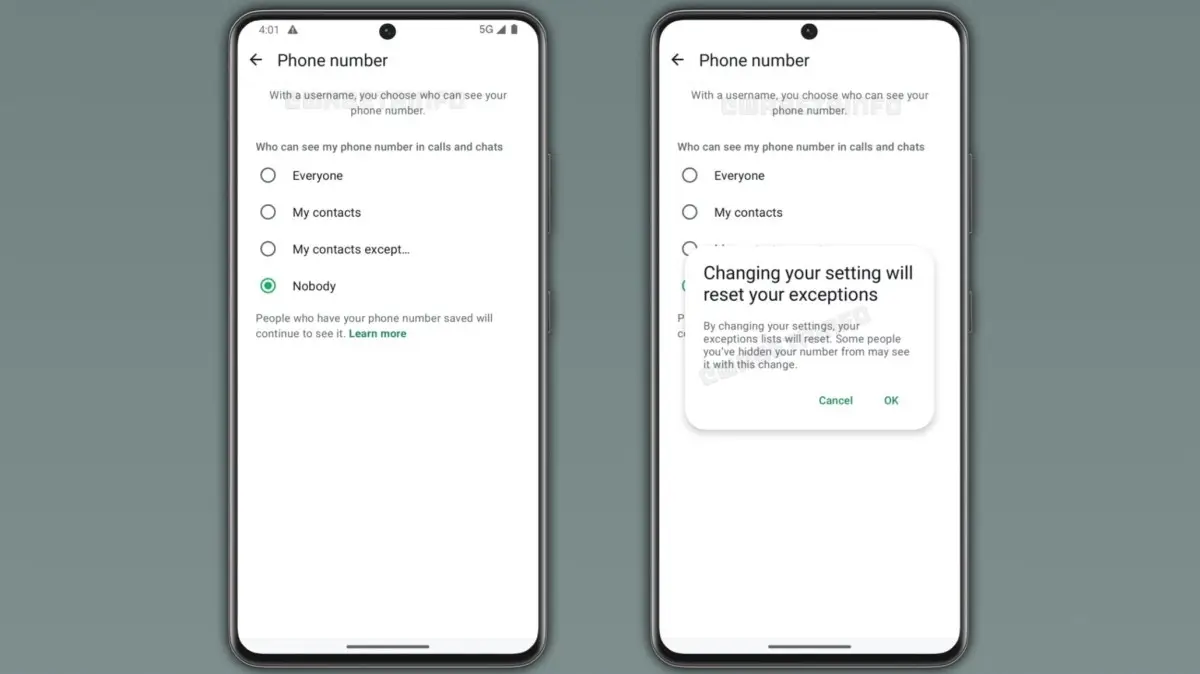
The newly uncovered privacy settings build directly upon this username foundation. According to code analysis from early Android beta iterations, specifically version 2.26.45.1 discovered by industry trackers such as WABetaInfo, the platform will soon introduce four distinct visibility configurations for user telephone numbers. These options will encompass Everyone, My contacts, My contacts except…, and Nobody. By implementing a selective exclusion mechanism akin to the platform’s existing privacy controls for profile pictures, "Last Seen" statuses, and "About" information, WhatsApp aims to bridge the gap between open connectivity and personal data protection.
Under the forthcoming framework, when a user engages with a new contact via a newly minted username, their phone number will remain entirely masked by default. This core functionality ensures that individuals can converse with strangers or professional acquaintances without ever surrendering their private numeric identifiers. However, the new update expands these capabilities by allowing users to tailor exemptions manually. For instance, a user might choose to share their phone number with the vast majority of their address book while strategically barring specific individuals from viewing it, even if those individuals reside within their contact list or have previously established a chat thread.
To safeguard user experience and prevent accidental security vulnerabilities, the development team has also engineered built-in system warnings. When an individual attempts to alter their phone number privacy configurations, WhatsApp will generate an explicit notification alerting them that modifications may reset or overwrite previously established exception lists. This preventative measure ensures that users remain fully cognizant of how their security parameters are shifting in real time, minimizing the risk of accidental exposure.
Despite the high level of anticipation surrounding the feature, industry insiders and beta testers must exercise patience. Current reports indicate that the phone number privacy controls for usernames are still undergoing early-stage internal development. As a result, the feature is not yet accessible to public beta testers enrolled in the Google Play Beta Program. Furthermore, platform engineers have clarified that these advanced visibility settings will be deployed exclusively to accounts that have successfully generated and integrated a custom username, meaning traditional phone-number-first interactions will continue to operate under existing operational guidelines.
Contextualizing the Shift in Messaging App Security
The imperative for enhanced telephone number privacy has escalated dramatically across the global telecommunications and tech landscapes. In an era marked by rising digital fraud, unsolicited marketing campaigns, doxxing, and targeted social engineering attacks, the personal phone number has transformed into a high-value data asset. Historically, handing over a WhatsApp number carried implicit risks, as malicious actors could leverage that numeric sequence to cross-reference social media profiles, track individuals across disparate digital databases, or execute sophisticated financial scams.
By decoupling the initial point of contact from the primary phone number, WhatsApp is addressing a long-standing vulnerability that privacy advocates have flagged for over a decade. Competitor platforms have successfully demonstrated that pseudonymity through usernames fosters safer digital environments, particularly for gig economy workers, online creators, activists, and everyday consumers who frequently interact with unfamiliar parties. However, WhatsApp’s sheer scale—housing over two billion active monthly users globally—presents unique scaling and architectural challenges. Integrating a username-based infrastructure requires a complete overhaul of end-to-end encryption key distribution, contact synchronization protocols, and server-side routing mechanisms.
The evolution toward username integration has been a gradual, multi-phased engineering undertaking by Meta. Initial hints of the username feature surfaced in late 2023 and early 2024 through various developer traces in Android and iOS beta packages. As the infrastructure matured, developers began laying the groundwork for discovery tools, unique identifier generation, and safety barriers. The introduction of selective visibility controls represents the logical next phase of this rollout, ensuring that the feature is not merely a novelty, but a robust enterprise-grade privacy tool.
Analysis of Broader Implications for Users and Businesses
The implementation of granular phone number privacy controls carries profound implications for both individual privacy rights and commercial communications on the platform. For the average consumer, the psychological comfort of knowing that a phone number can be permanently shielded—even from individuals with whom an ongoing chat exists—dramatically changes how people utilize digital messaging. Users can engage in marketplace transactions, community group discussions, and customer service inquiries with the reassurance that their private mobile lines remain strictly safeguarded against unwanted intrusion.
Conversely, the commercial sector must adapt to these shifting paradigms. Small businesses, independent entrepreneurs, and corporate customer support channels that rely on WhatsApp Business will need to evaluate how username adoption alters customer acquisition and relationship management. When customers interact with a business via a username rather than a direct phone number exchange, trust-building mechanisms may shift toward verified business badges and structural authentication rather than numeric familiarity. Nevertheless, because the privacy settings allow users to consciously grant visibility to trusted contacts, long-term commercial partners and verified clients will still retain seamless access to direct communication lines when authorized.
Technical Timeline and Future Outlook
While code strings identified in version 2.26.45.1 confirm that active development is underway within Meta’s engineering labs, no definitive timeline has been officially announced for a public release. The path from internal testing to public beta deployment, and subsequently to a stable global rollout, typically spans several months. During this incubation period, quality assurance teams will rigorously test the feature across varied hardware configurations, operating system versions, and network conditions to ensure zero data leakage or synchronization errors.
As digital privacy regulations continue to tighten globally—exemplified by frameworks such as the European Union’s General Data Protection Regulation (GDPR) and similar stringent data protection mandates across Latin America and Asia—tech conglomerates are under mounting pressure to bake privacy-by-design principles directly into their core architectures. WhatsApp’s proactive step in offering multi-layered, customizable visibility settings for usernames underscores a broader industry pivot toward user-empowered data sovereignty.
Ultimately, the impending capability to conceal phone numbers from specific contacts even after establishing communication represents a maturation of digital communication etiquette. By granting individuals absolute autonomy over who can pierce the veil of their digital anonymity, WhatsApp is poised to redefine the boundaries of personal privacy in modern messaging, striking a critical balance between open global connectivity and uncompromising personal security.
