
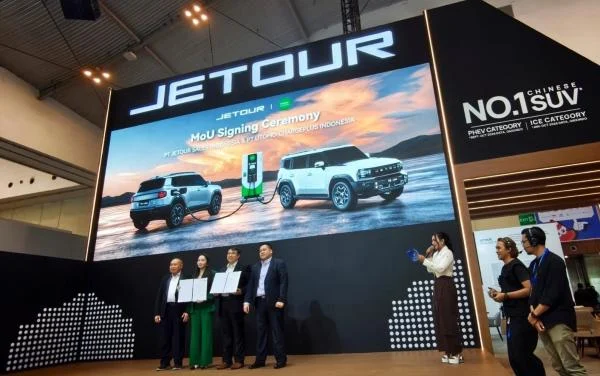
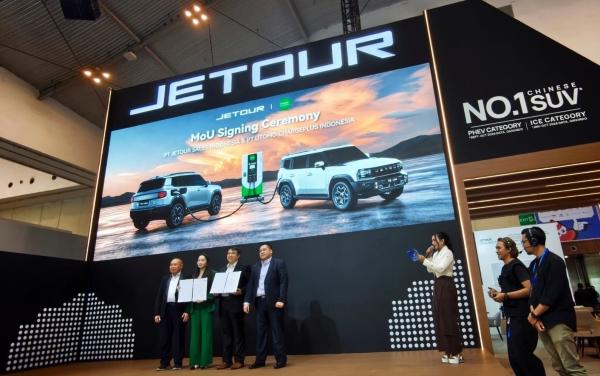
Jetour, the rapidly expanding Chinese automotive manufacturer, has officially announced a strategic partnership with Utomo Charge Plus to bolster the electric vehicle (EV) charging infrastructure across Indonesia. This collaboration, unveiled during the Gaikindo Auto Week (GAW) 2026 at ICE BSD City, Tangerang, marks a significant milestone in the brand’s commitment to supporting the Indonesian government’s net-zero emission goals. The initiative centers on the deployment of Ultra Fast Charging Stasiun Pengisian Kendaraan Listrik Umum (SPKLU) facilities, which are slated for installation across eight key Jetour dealership locations by the end of 2026.
The Strategic Rationale Behind the Partnership
The adoption of electric and electrified vehicles in Indonesia has faced a persistent hurdle: "range anxiety" and the scarcity of high-speed charging points outside major metropolitan hubs. By integrating SPKLU facilities directly into their dealership network, Jetour aims to provide a seamless ownership experience for its customers.
Caroline Ling, President Director of Jetour Indonesia, emphasized that the transition to sustainable mobility requires more than just high-performance vehicles; it necessitates a robust and reliable supporting ecosystem. "In our journey toward electrification, we recognize that innovation in vehicle technology must be matched by equally sophisticated infrastructure," Ling stated during the GAW 2026 event. She noted that the partnership with Utomo Charge Plus is a foundational step in ensuring that Jetour’s "Travel+" philosophy—which prioritizes comfort, technology, and comprehensive travel experiences—is accessible to every EV and Plug-in Hybrid Electric Vehicle (PHEV) driver in the country.
Technical Specifications and Infrastructure Capability
A critical aspect of this development is the technical capacity of the charging stations. The agreement specifies that the installed units must have a minimum capacity of 120 kW. This "Ultra Fast Charging" designation is essential for modern electric vehicles, as it significantly reduces downtime for owners.
For many contemporary EVs, a 120 kW charger can restore a significant portion of a battery’s capacity—often from 20% to 80%—in less than 45 minutes. This capability is specifically designed to accommodate Jetour’s current and upcoming fleet, particularly those utilizing the Intelligent Dual Mode (i-DM) technology. By supporting both battery electric vehicles (BEVs) and PHEVs, these stations act as a versatile hub for diverse consumer needs, ensuring that hybrid owners can also benefit from rapid charging intervals during long-distance travel.
The Role of Gaikindo Auto Week 2026
The announcement at Gaikindo Auto Week (GAW) 2026 carries symbolic and practical weight. GAW has evolved into a premier venue for manufacturers to demonstrate their readiness for the Indonesian market’s shift toward sustainable energy. By making this announcement in the presence of industry stakeholders, regulators, and the public, Jetour has signaled its intention to be a top-tier player in the Indonesian automotive landscape.
The timing of this announcement is also crucial. As the Indonesian government continues to offer incentives for EV adoption, including tax breaks and local manufacturing support, companies like Jetour are positioning themselves to capitalize on a burgeoning market. The infrastructure project is not merely a service add-on; it is a competitive differentiator that influences purchasing decisions for potential EV buyers who are wary of limited charging availability.
Contextualizing the EV Landscape in Indonesia
Indonesia has set an ambitious target to reach net-zero emissions by 2060, with the automotive sector playing a central role in this strategy. The government’s roadmap involves incentivizing the domestic production of electric vehicles and the widespread rollout of charging stations. Currently, the national charging network is undergoing a phase of rapid expansion, transitioning from sparse, low-power chargers to a nationwide grid of fast-charging stations.
Data from the Ministry of Energy and Mineral Resources (ESDM) indicates that the number of SPKLU units has grown exponentially over the last three years. However, the geographic distribution remains skewed toward the island of Java. The Jetour and Utomo Charge Plus partnership is expected to contribute to the densification of this network, specifically in urban corridors where Jetour dealerships are strategically located.

Analyzing the Impact on the Consumer Journey
For the average consumer, the presence of an Ultra Fast Charging station at a dealership changes the ownership dynamic. Beyond the initial purchase, the dealership transforms into a hub of activity. This strategy mirrors global trends observed in Europe and China, where automotive brands have successfully integrated charging services into their retail footprint.
- Accessibility: Customers no longer need to rely solely on public utility-operated stations, which may be located in high-traffic or inconvenient areas.
- Reliability: Dealership-managed stations are typically better maintained, ensuring a higher uptime rate for charging hardware.
- Synergy with PHEV Technology: As Jetour promotes its i-DM technology, the ability to charge on-site reinforces the value proposition of the hybrid powertrain, allowing users to switch between electric and combustion modes with the assurance that charging infrastructure is readily available.
Challenges and Future Outlook
While the deployment of eight stations by 2026 is a positive step, industry analysts suggest that the real challenge lies in the scalability of this model. As the volume of electric vehicles on the road increases, the demand for charging will spike. Future phases of this project will likely need to address power grid limitations and the potential for off-peak energy management.
Furthermore, the collaboration between Jetour and Utomo Charge Plus sets a precedent for other manufacturers. Competitors are likely to observe the success of this model, potentially leading to a wave of similar infrastructure investments. If successful, this could create a competitive environment where the availability of charging stations becomes as critical a factor in sales as engine performance, design, or price.
Corporate Strategy: The "Travel+" Philosophy
The integration of charging infrastructure is a tangible manifestation of Jetour’s corporate philosophy. "Travel+" is built on the premise that a vehicle should be an extension of one’s lifestyle. By removing the friction associated with battery management, Jetour is attempting to secure brand loyalty. In the automotive industry, brand loyalty is rarely built on the vehicle alone; it is built on the "ecosystem of care" that surrounds the vehicle.
By partnering with a specialized firm like Utomo Charge Plus, Jetour leverages external expertise in energy management and hardware installation. Utomo Charge Plus, known for its focus on sustainable energy solutions, brings the necessary technical proficiency to ensure that the infrastructure meets international safety and efficiency standards. This division of labor allows Jetour to focus on its core competency—vehicle manufacturing—while ensuring that the supporting technology is handled by specialists.

Broader Economic Implications
The transition to an electrified fleet has profound implications for the Indonesian economy. By investing in charging infrastructure, Jetour is contributing to the creation of a local green economy. This includes the demand for specialized technicians to install and maintain charging units, the integration of smart-grid technologies, and the potential for increased domestic electricity consumption.
Moreover, as global supply chains shift, having a robust EV infrastructure makes Indonesia a more attractive destination for foreign direct investment (FDI) in the automotive sector. The government’s focus on nickel processing for battery production, combined with the efforts of private entities to build charging networks, creates a comprehensive value chain that strengthens the country’s position as a regional hub for EV production in Southeast Asia.
Conclusion and Future Steps
The announcement by Jetour and Utomo Charge Plus represents a calculated, long-term approach to the Indonesian EV market. While eight stations by 2026 may appear as a modest starting point, the focus on "Ultra Fast" technology and the strategic placement within dealerships suggests a focus on quality and customer satisfaction over sheer volume.
As the project unfolds, the industry will be watching closely to see how quickly these stations are commissioned and whether the usage rates align with the projected growth of the EV market. If the rollout is successful, it could pave the way for a more aggressive expansion, further anchoring Jetour as a pivotal player in the transformation of Indonesia’s transportation sector. The coming months will likely see further details regarding the specific locations and the rollout schedule, providing a clearer roadmap for what is shaping up to be a defining period for electric mobility in the archipelago.
As consumers weigh their options in an increasingly crowded EV market, the availability of such dedicated, high-speed infrastructure will undoubtedly play a critical role in shaping the future of individual mobility in Indonesia, bridging the gap between current limitations and a fully electrified future.
