
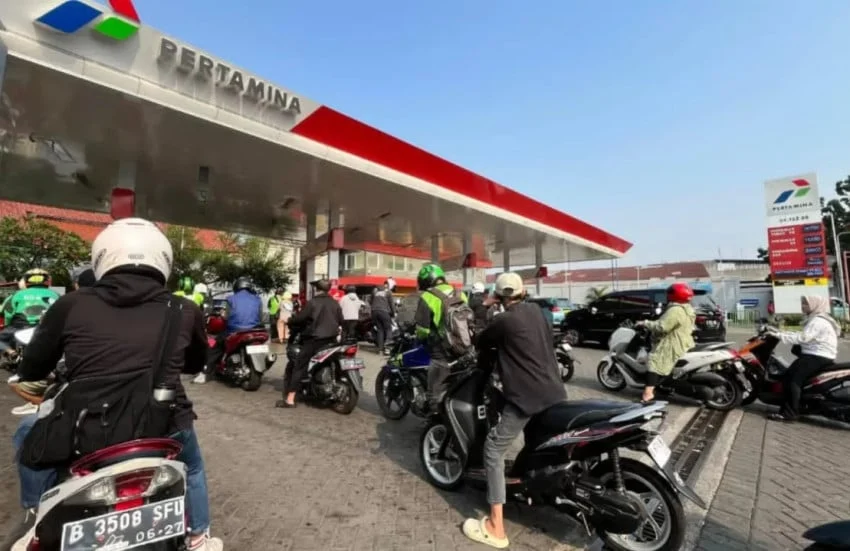
The stability of national energy distribution has once again taken center stage as energy experts and policymakers evaluate the robustness of Indonesia fuel supply chain. Following isolated incidents of supply tightness and localized long queues at public refueling stations—most notably observed in regions such as Bali and select urban pockets—stakeholders are pressing for structural improvements in how fuel reserves and logistics are managed. The core of the discourse centers on transitioning from reactive measures to proactive, technology-driven oversight that can anticipate disruptions before they translate into consumer panic and operational bottlenecks at fuel pumps.
Energy policy observers and industry analysts emphasize that safeguarding the nation’s energy security requires a multi-layered approach. This strategy involves not only the state-owned energy enterprise, PT Pertamina (Persero), but also various government ministries, regional administrations, regulatory bodies, and law enforcement agencies. As Indonesia continues to navigate fluctuating global crude oil prices, domestic consumption spikes, and infrastructure distribution challenges across its vast archipelago, maintaining a seamless pipeline from refineries to retail stations remains a paramount national priority.
The Imperative of Real-Time Monitoring and Logistical Resilience
Sofyano Zakaria, an energy policy observer and the Director of the Center for Public Policy Studies (Puskepi), has articulated a compelling argument for enhanced technological integration in fuel monitoring. According to Sofyano, PT Pertamina and the central government must rigorously strengthen real-time monitoring of fuel stocks to preempt any supply chain irregularities that could spark localized shortages and subsequent long queues at gas stations.
This real-time oversight framework extends far beyond simple inventory tallies at central storage facilities. It encompasses the operational readiness of tanker trucks, the reliability and redundancy of distribution routes, and the active service capacities of individual public refueling stations (SPBU). By utilizing advanced telemetry, Internet of Things (IoT) sensors on transport fleets, and digital inventory tracking at the retail level, stakeholders can identify potential bottlenecks hours or even days before they impact the general public.
Furthermore, Sofyano stresses that the central government must actively assist Pertamina in conducting root-cause analyses whenever localized scarcity occurs. Identifying the precise trigger—whether it stems from primary product availability, logistical bottlenecks, infrastructural limitations, or sudden, unseasonal surges in local consumption—is critical for deploying targeted remediation. Without accurate diagnostics, interventions risk being misallocated, leading to prolonged recovery times for affected regions.
Historical Context and Recent Distribution Disruptions
The urgency behind these recommendations is not unfounded; it is informed by recent logistical stress tests experienced across the country. In recent years, specific tourist-heavy provinces and densely populated urban centers have witnessed sudden spikes in fuel demand that briefly outpaced localized delivery schedules. A prominent example cited by industry observers is the distribution anomaly previously recorded in Bali, where temporary logistical constraints and surging post-holiday demand created localized friction points.
Such incidents, while often resolved swiftly through emergency supply rerouting, expose the vulnerability of localized distribution networks. Indonesia’s geographical composition—spanning thousands of inhabited islands—inherently complicates fuel logistics. Maritime transport schedules, weather-dependent shipping lanes, and heavy reliance on land-based tanker fleets mean that any disruption at a single node, such as a major refinery or a primary fuel terminal, can trigger a cascading effect downstream.
To mitigate these systemic risks, recent national infrastructure milestones have provided a cushion. For instance, the optimization and upgrading phases of domestic refining facilities, notably the Balikpapan Refinery development project which has reached advanced operational completion with high national stock capacities, are designed to secure primary supply volumes. Reports indicating that national fuel reserves remain structurally secure at high operational thresholds demonstrate that the challenge is rarely a macro-level scarcity of crude oil or refined products, but rather the micro-level execution of logistics and distribution.
Multi-Stakeholder Collaboration and Regulatory Oversight
Addressing the complex web of fuel distribution requires a synchronized effort that transcends the operational purview of Pertamina alone. Analysts argue that institutional synergy between Pertamina, the Ministry of Energy and Mineral Resources (ESDM), regional administrations (Pemda), law enforcement agencies, and the Downstream Oil and Gas Regulatory Agency (BPH Migas) must be perpetually intensified.
Regional governments, possessing granular knowledge of local demographic shifts, economic activities, and infrastructure constraints, play an indispensable role in forecasting demand anomalies. Local authorities can alert national distributors to upcoming regional events, agricultural harvest seasons, or tourism surges that typically correlate with elevated fuel consumption.
Simultaneously, the active involvement of law enforcement is deemed non-negotiable, particularly regarding the protection of subsidized energy products. Subsidized fuels, such as Pertalite and Solar, remain constant targets for arbitrage and illegal hoarding by opportunistic actors seeking to exploit price differentials between subsidized retail rates and industrial or commercial pricing. Law enforcement agencies must proactively monitor distribution channels, clamp down on illegal storage facilities, and prosecute individuals engaged in the diversion of subsidized quotas away from rightful consumers.
Sofyano reiterated that preventing a recurrence of the distribution hiccups observed in regions like Bali serves as the primary benchmark for institutional success. The key performance indicators for this collaborative framework include:
- Maintenance of robust, resilient stock levels across all distribution tiers.
- A measurable reduction in consumer queues at retail fueling stations.
- Strict adherence to precise, on-time delivery schedules for fuel tankers.
- Continuous improvement in front-line customer service and station-level readiness.
- A noticeable decline in public grievances and complaints lodged regarding fuel availability.
Economic Implications and the Broader Energy Landscape
The broader economic implications of maintaining an airtight fuel distribution network cannot be overstated. Energy is the lifeblood of Southeast Asia’s largest economy; any perceived or real instability in fuel supplies immediately reverberates across the national transportation, logistics, manufacturing, and retail sectors. Uncertainty at the pump can trigger inflationary expectations, drive up logistics costs for perishable goods, and erode consumer confidence.
Moreover, as Indonesia balances its fiscal commitments toward energy subsidies with the global transition toward cleaner, more sustainable energy sources, the efficiency of fossil fuel distribution remains a critical transitional bridge. Ensuring that subsidized fuels reach targeted lower-income segments without systemic leakage not only protects state finances but also ensures social equity.
As regulatory bodies like BPH Migas and policymakers evaluate ongoing structural reforms, the emphasis on digital transformation, transparent data sharing, and stringent legal enforcement will continue to define the nation’s energy policy trajectory. By heeding the recommendations of industry experts to fortify real-time monitoring and inter-agency coordination, Indonesia aims to fortify its energy architecture against future shocks, ensuring uninterrupted mobility and economic stability for millions of citizens nationwide.
