
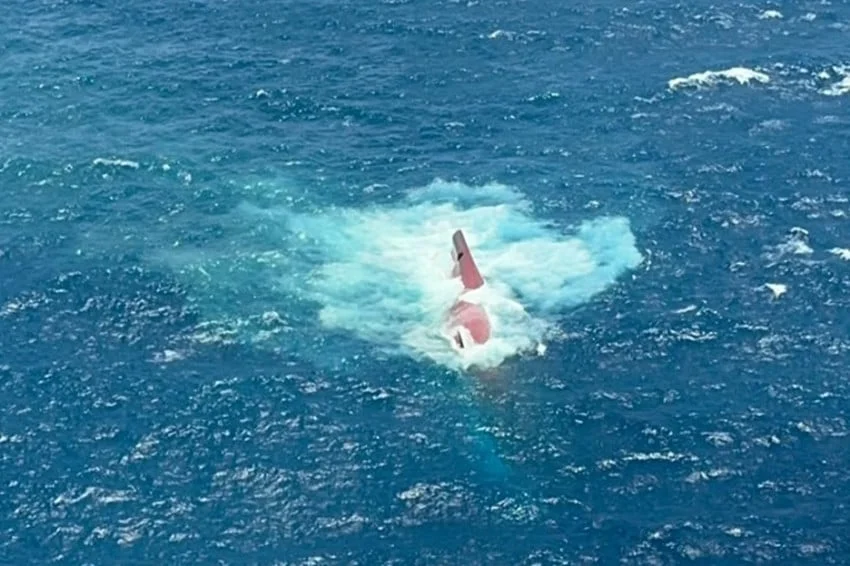
JAKARTA — The ongoing search and rescue operation for the ill-fated KM Virgo Transport 8 encountered new physical and logistical complications on Monday, September 14, 2026. Maritime authorities confirmed that the vessel has drifted approximately 1.6 nautical miles from its initial location recorded when it was first spotted following the maritime disaster. Despite the spatial displacement, the ship remains in an inverted position, complicating the deployment of specialized dive teams tasked with searching the interior compartments for missing passengers and crew members.
The update was delivered during an official press briefing by the Head of the National Search and Rescue Agency (Basarnas), Marshal Madya TNI Mohammad Syafii. Addressing reporters on Monday, September 15, 2026, Syafii provided detailed technical insights regarding the behavior of the sunken vessel and the myriad hazards confronting rescue personnel at the disaster site.
Main Facts of the Operation
According to data released by Basarnas, the identification of the positional shift came during routine morning sweeps on the second day of the intensive SAR operation. The vessel, which remains completely capsized, was tracked moving across the seabed under the influence of underwater currents.
"The location of the Virgo Transport 8 has shifted from what I reported yesterday; currently, it has moved approximately 1.6 nautical miles while remaining in a capsized condition," Syafii stated during the briefing.
This unexpected mobility has forced incident commanders to recalculate search grids, deploy additional sonar equipment, and continuously monitor the surrounding maritime boundaries to ensure that search zones remain aligned with the drifting hull. Furthermore, the physical state of the ship introduces complex hydrodynamic challenges that dictate the pace and methodology of the rescue mission.
Technical Analysis: Buoyancy, Compartments, and Current Dynamics
The 1.6-nautical-mile drift is not merely a logistical annoyance; it serves as a critical physical indicator of the vessel’s internal structural integrity. Syafii explained that the movement strongly suggests the presence of trapped air pockets and sealed bulkheads within the hull.
"This means the ship still contains bulkheads or empty spaces, allowing it to shift and remain partially buoyant while submerged," Syafii elaborated.
In naval architecture and marine salvage, a capsized vessel that drifts rather than settling immediately on the seabed often retains pockets of trapped atmospheric air within enclosed spaces, cargo holds, or unflooded superstructure compartments. While this buoyancy keeps the wreck unstable and prone to movement along underwater currents, it creates severe hazards for diving operations.
Basarnas safety protocols dictate strict boundaries for underwater penetrations, particularly when dealing with unstable, drifting wrecks. The existence of internal air pockets creates potential pressure differentials. If divers inadvertently breach or enter a sealed compartment containing pressurized air or unstable structural elements, sudden shifts in air pockets can cause violent water displacement, structural collapses, or rapid decompression events that endanger the lives of the rescue divers. Consequently, the operational command has had to temper the urgency of entering the wreck with stringent risk-mitigation measures to protect the lives of the search personnel.
Chronology of the Disaster
To understand the gravity of the ongoing search operations, it is essential to review the timeline of the KM Virgo Transport 8 tragedy. The disaster unfolded over the weekend, drawing immediate national and international attention as maritime authorities mobilized emergency response protocols.
The vessel, operating as a commercial passenger and cargo carrier, encountered catastrophic distress under severe weather conditions off the maritime routes managed by regional transport authorities. While preliminary investigations into the exact meteorological triggers are still underway, initial reports indicate that high waves and strong winds compromised the ship’s stability, leading to a rapid capsize before a comprehensive distress signal could be fully acknowledged by shore stations.
On the first day of operations, emergency responders managed to rescue numerous survivors while recovering the initial casualties. Official figures released following the first 24 hours of the crisis highlighted the massive scale of the humanitarian emergency: out of the total manifest and estimated persons onboard, 108 individuals were successfully rescued, while 6 confirmed fatalities were pulled from the waters. However, an alarming 129 individuals remained officially unaccounted for, sparking a massive, multi-agency search operation involving Basarnas, the Indonesian Navy (TNI AL), the Water Police (Polairud), and local volunteer maritime groups.
By the second day, Sunday, September 14, 2026, search efforts transitioned from surface rescue to subsurface location and containment. It was during these coordinated sweeps that the main hull of KM Virgo Transport 8 was positively identified, setting the stage for the technical complications regarding its stability and subsequent drift.
Comprehensive Casualty and Manifest Data
The human toll of the KM Virgo Transport 8 disaster ranks it as one of the most significant maritime incidents in recent Indonesian transportation history. The statistical breakdown of the disaster underscores the immense pressure under which Basarnas and allied agencies are operating:
- Total Survivors Rescued: 108 individuals, many of whom received immediate medical attention for hypothermia, exhaustion, and minor trauma at regional health facilities.
- Confirmed Fatalities: 6 victims recovered during the initial surface search and early recovery phases.
- Missing Persons: 129 individuals still unaccounted for, whose families remain gathered at designated crisis information centers awaiting news.
- Total Persons Involved: Over 240 individuals estimated to have been aboard the vessel, prompting intensive inquiries into manifest accuracy and passenger ticketing protocols.
The vast discrepancy between the number of survivors and the missing passengers emphasizes the urgency with which rescue divers are attempting to access the interior of the capsized hull. Authorities acknowledge that time is of the essence, yet they remain bound by the physical laws governing underwater diving safety.
Official Responses and Multi-Agency Coordination
In the wake of the vessel’s movement, the crisis command center has ramped up coordination between various governmental bodies. The Ministry of Transportation, the National Transportation Safety Committee (KNKT), and regional disaster management agencies are working in tandem with Basarnas to manage both the rescue operation and the unfolding investigation.
Maritime traffic in the surrounding sector has been temporarily restricted to prevent commercial and local vessels from interfering with sonar mapping and diving deployments. Furthermore, exclusion zones have been established around the shifting position of the wreck to safeguard civilian vessels from potential navigational hazards posed by floating debris or unexpected structural shifts.
Family assistance centers have been established at key ports to provide psychological support, accurate daily briefings, and logistical assistance to relatives of the missing passengers. Government representatives have pledged transparency, ensuring that updates regarding the position of the ship, retrieval efforts, and investigation findings are communicated regularly to the public.
Broader Impact and Implications for Maritime Safety
The incident involving KM Virgo Transport 8 has triggered renewed national discourse regarding maritime safety standards, weather monitoring compliance, and passenger manifest management across Indonesian archipelagic routes.
Transport analysts and safety advocates have pointed out several systemic challenges that plague inter-island commercial transport:
- Manifest Transparency: Discrepancies between physical passengers onboard and official ticketing manifests continue to complicate rescue and recovery efforts, making it difficult to ascertain the exact number of missing individuals.
- Weather Resilience: The increasing unpredictability of extreme weather events driven by regional climate shifts necessitates stricter enforcement of sailing bans and enhanced meteorological coordination between port authorities and vessel captains.
- Emergency Preparedness: The structural complexities encountered by Basarnas—such as dealing with drifting, inverted hulls and trapped air pockets—highlight the need for advanced salvage training and specialized equipment designed for deep-water subsurface penetrations.
As operations enter their subsequent phases, Basarnas has reiterated its commitment to exhausting all viable options to locate the remaining victims. While the shifting position and internal hazards of KM Virgo Transport 8 present formidable obstacles, rescue authorities remain steadfast in their mission, balancing humanitarian urgency with absolute adherence to operational safety standards.
