
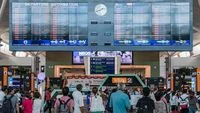
The landscape of international travel into Malaysia has undergone a significant shift in enforcement, with official data revealing that citizens from Indonesia, Bangladesh, and India represent the highest volume of denied entries at the country’s borders over the past three years. This trend, which highlights a rigorous approach to national border control, was confirmed by the Director General of the Malaysian Immigration Department, Datuk Zakaria Shaaban. As Malaysia continues to balance its role as a premier tourism destination in Southeast Asia with its mandate for national security, the implementation of the "Not-to-Land" (NTL) policy has become a focal point for international travelers.
A Breakdown of the Statistics: Trends in NTL Issuances
Recent data released by the Malaysian immigration authorities paints a clear picture of the scale of these denials. According to figures cited from the publication The Star, Indonesian nationals topped the list with 34,650 NTL notices issued between January 2024 and October 2026. Bangladesh followed closely with 27,504 cases, while Indian nationals accounted for 22,350 denials during the same period.
The NTL status serves as a formal rejection at the point of entry, whether it be at international airports or land border crossings. Once a traveler is issued an NTL notice, they are legally obligated to return immediately to their point of origin at their own expense or via the airline that transported them.
Looking at the broader picture, South China Morning Post reports that in the first ten months of 2025 alone, more than 41,600 foreign tourists were denied entry. This figure equates to an average of nearly 140 individuals per day being turned away by immigration officers. When observing year-on-year growth, the trend is clearly upward: authorities reported 34,528 denials in 2024, a figure that surged to 49,522 by the end of 2025. This steady increase suggests that the Malaysian government has empowered its frontline officers to exercise higher levels of scrutiny, likely in response to evolving regional migration patterns and security concerns.
The Mechanism of Enforcement: Why Travelers Are Turned Away
The reasons for such a high volume of entry denials are diverse, but they generally fall under a few primary categories of administrative and security failure. Under Malaysian immigration law, officers at the point of entry are granted the discretion to deny access if a traveler fails to satisfy specific criteria during the screening process.
The most common grounds for rejection include:
- Invalid Documentation: The absence of a valid visa where one is required, or the possession of a passport with less than six months of validity.
- Lack of Financial Solvency: Travelers unable to prove they have sufficient funds to sustain their stay in Malaysia are often denied entry. This is a common tactic used by border authorities globally to prevent individuals from seeking unauthorized employment.
- Ambiguous Intent: Failure to provide a clear, logical reason for the visit. If an immigration officer perceives that a traveler’s stated itinerary does not match their behavior or documentation, they may suspect the individual of intending to overstay or work illegally.
- Security and Blacklisting: Individuals who have previously overstayed their visas, those who have violated local laws during prior visits, or those flagged as "personae non gratae" are automatically denied.
- Interpol Red Notices: As confirmed by Datuk Zakaria Shaaban, Malaysia’s immigration systems are fully integrated with international law enforcement databases. Any traveler identified as a fugitive or a person of interest under a Red Notice issued by Interpol is immediately flagged, leading to detention, investigation, and subsequent deportation.
Regional Context and the Global Shift in Border Policy
The tightening of Malaysia’s borders occurs within a broader regional context. Southeast Asian nations, particularly those with high tourism volumes like Thailand, Singapore, and Malaysia, have faced increasing pressure to manage the balance between open-door tourism policies and the prevention of human trafficking, illegal labor migration, and the entry of high-risk individuals.
For Indonesia, the high number of NTL notices is particularly noteworthy given the cultural and geographical proximity between the two nations. The sheer volume of travelers moving across the Malaysia-Indonesia border—for work, medical tourism, and leisure—naturally creates a larger statistical base. However, the consistent appearance of Indonesia at the top of the rejection list also reflects a concerted effort by the Malaysian government to curb undocumented workers, a recurring issue in the bilateral labor market.
Similarly, for citizens of Bangladesh and India, the Malaysian government has been increasingly wary of "visa-free" or "visa-on-arrival" abuse. By ensuring that travelers meet stringent requirements—such as having a confirmed return ticket and proof of accommodation—Malaysia is attempting to professionalize its entry process to match international standards in countries like Australia and the United Kingdom.
Essential Compliance: How Travelers Can Avoid NTL Status
To mitigate the risk of being turned away, the Malaysian Immigration Department has disseminated clear guidelines for international visitors. Compliance is no longer treated as a suggestion but as a fundamental requirement for entry.
Key prerequisites for entry include:
- The Digital Arrival Card (MDAC): All foreign visitors, unless specifically exempted, must complete the Malaysia Digital Arrival Card online within three days prior to their arrival. This digital record allows authorities to pre-screen travelers and streamline the immigration process.
- Passport Validity: A minimum of six months of validity on a passport is a non-negotiable standard. Travelers with damaged passports or those nearing expiration are highly likely to face rejection.
- Confirmed Itineraries: Immigration officers frequently request proof of onward or return travel. A return flight ticket or proof of transportation out of Malaysia is often demanded at the immigration counter.
- Demonstrable Means: Travelers are often required to show they have sufficient financial resources to cover their stay, which can be evidenced through bank statements, credit cards, or sufficient cash on hand.
Implications for the Future of Malaysian Tourism
While the high rate of entry denials may appear alarming, the Malaysian government maintains that these measures are essential for the long-term integrity of the country’s visa system. By enforcing these rules, Malaysia aims to ensure that its infrastructure—ranging from public transport to housing—is not overwhelmed by undocumented individuals, and that the national security landscape remains stable.
However, there is an economic implication. Tourism is a critical pillar of the Malaysian economy. If the process of entry becomes too burdensome or if legitimate, high-spending tourists are frequently subjected to intensive questioning or turned away due to minor administrative errors, the tourism sector may suffer. The challenge for the Malaysian government moving forward will be to refine its screening processes so that they are efficient and hospitable to genuine tourists while remaining impenetrable to those attempting to bypass immigration laws.
Furthermore, the diplomatic implications of these statistics are significant. Malaysia’s immigration authorities will likely continue to engage in dialogues with their counterparts in Jakarta, Dhaka, and New Delhi to improve transparency regarding entry requirements. Education campaigns aimed at potential travelers before they reach the airport could potentially reduce the number of NTL notices, sparing travelers the cost and distress of immediate deportation.
In conclusion, the data from 2024 to 2026 serves as a definitive signal: Malaysia has shifted into a more protective and rigorous era of border management. For travelers from Indonesia, Bangladesh, India, and beyond, the message is clear: thorough preparation, absolute compliance with digital requirements, and the ability to demonstrate legitimate travel intent are no longer optional—they are the prerequisite for entry into the country. As Malaysia continues to refine its digital and physical border infrastructure, the reliance on automated systems and international security data sharing is expected to increase, further solidifying the state’s capacity to regulate its borders in real-time.
