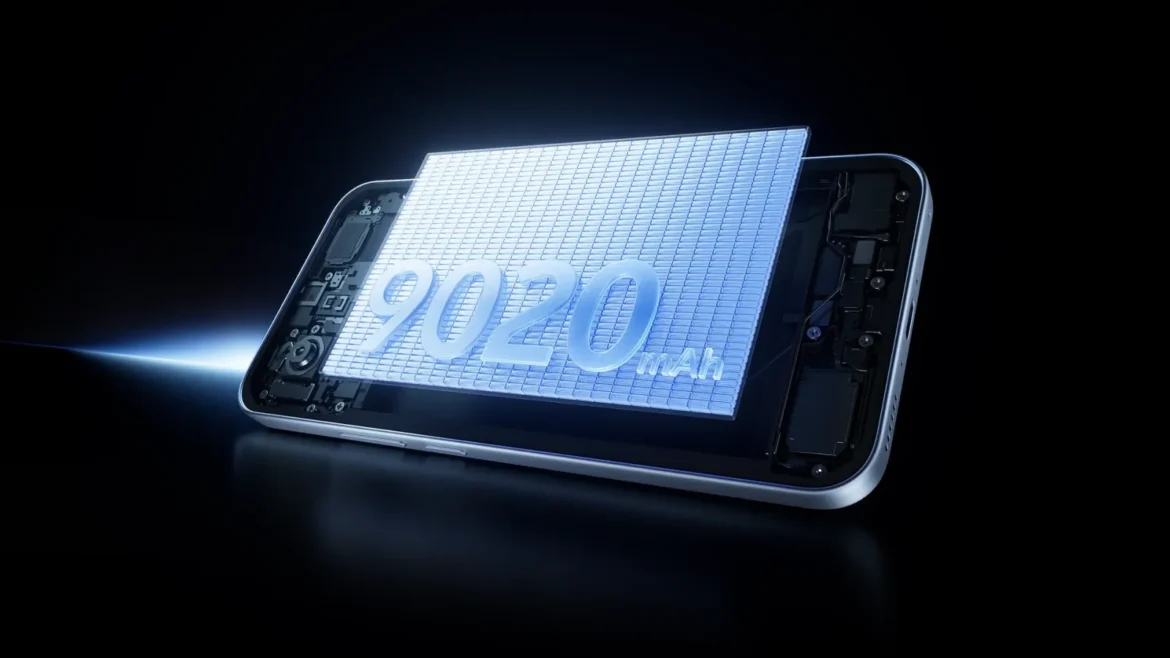
The race for longer smartphone battery life is entering a new technological phase as major manufacturers in China reportedly begin experimenting with structural design concepts pioneered by Apple. While smartphones equipped with massive 10,000mAh batteries are no longer an unprecedented novelty in the East Asian market, engineering teams are constantly seeking innovative methodologies to push energy density boundaries even further. According to recent supply chain leaks, top-tier Chinese smartphone brands are currently testing advanced battery casings inspired by the structural architecture utilized in recent iPhone models, signaling a potential shift in how high-capacity mobile power units are manufactured.
The technological pursuit of larger smartphone batteries has historically faced severe physical limitations. Traditional smartphone batteries rely on a conventional winding or "jelly-roll" construction method, which, while reliable, leaves unused microscopic gaps within the internal chassis. As consumers demand slimmer profiles alongside multi-day battery endurance, manufacturers have continually searched for engineering solutions to maximize spatial efficiency. The latest intelligence indicates that these challenges are being directly addressed through a combination of metallurgical casing upgrades and internal cell reorganization.
Steel-Case and Stacked-Cell Engineering Explained
Industry insider Digital Chat Station recently revealed that a prominent Chinese smartphone manufacturer is actively evaluating batteries encased in steel or specialized metal shells, coupled with stacked-cell technology. This departure from conventional manufacturing aims to optimize the internal volume of handheld devices. Unlike the standard rolled configuration, stacked-cell technology arranges battery components in layered tiers, utilizing the available physical dimensions of a smartphone chassis with significantly greater efficiency.
The implementation of metal battery casings is not entirely unprecedented in the global market. Apple originally introduced a stainless steel-cased battery design with the iPhone 16 Pro lineup. This engineering choice was primarily designed to provide robust structural rigidity, enhance thermal dissipation, and deliver a more densely packed power unit. Apple’s ongoing research and development in this sector suggest continued refinement; industry projections indicate that upcoming iterations, such as the rumored iPhone 18 Pro Max equipped with a physical SIM slot, could house a 5,391mAh battery—representing an approximate 12 percent capacity increase over preceding generations.
By adopting similar metal-encased, stacked-cell architectures, Chinese hardware developers hope to replicate these space-saving advantages. When paired with advanced chemical compositions, such structural enhancements could redefine the standard baseline for mobile power capacity.

The Silicon-Carbon Anode Revolution
The pursuit of higher battery capacities by Chinese brands is not solely reliant on structural redesigns; it is heavily supported by ongoing breakthroughs in battery chemistry. Over the past few years, the commercialization of silicon-carbon (Si/C) anode technology has fundamentally transformed the mid-range and flagship smartphone segments in China.
Traditional graphite anodes have largely reached their theoretical limits regarding energy storage capacity. Silicon-carbon anodes, conversely, offer a substantially higher theoretical energy density by integrating silicon into the anode structure, allowing the battery to store significantly more lithium ions within the same physical footprint. This chemical advancement is the primary driver behind the proliferation of commercial smartphones featuring massive 7,000mAh to 8,000mAh batteries while maintaining relatively thin and ergonomic profiles.
The convergence of silicon-carbon chemistry and metal-cased stacked-cell architecture creates a synergistic effect. Industry analysts suggest that if these two technologies are successfully mass-produced and integrated, consumer devices boasting 9,000mAh to 10,000mAh batteries could become commonplace without requiring an unacceptable increase in device thickness or weight. Brands recognized for pushing the envelope in battery innovation—such as Honor, Realme, iQOO, and Xiaomi—are viewed as the most likely early adopters of these advanced manufacturing pipelines.
Chronology of High-Capacity Mobile Power Development
To understand the current trajectory of smartphone battery innovation, it is essential to examine the chronological progression of energy density milestones over the past decade.
In the mid-2010s, standard flagship smartphones typically operated with battery capacities ranging from 3,000mAh to 3,500mAh, largely constrained by power-hungry processors and less efficient display technologies. By 2019 and 2020, advancements in lithium-ion manufacturing allowed capacities to routinely reach 4,500mAh to 5,000mAh, often accompanied by the introduction of rapid wired charging standards exceeding 65 watts.
The turning point for ultra-high-capacity power units occurred between 2023 and 2025, marked by the commercial viability of silicon-carbon anodes. During this window, several Chinese OEMs began releasing specialized device lineups featuring 6,000mAh and 7,000mAh batteries without compromising device ergonomics. Simultaneously, Apple’s introduction of metal-enclosed batteries in the iPhone 16 Pro series in late 2024 established a new precedent for structural battery safety and spatial management.

By late 2026, the focus shifted from purely chemical enhancements to structural integration. The current reports of Chinese manufacturers testing steel-cased, stacked-cell configurations represent the logical next step in this timeline, bridging the gap between chemical innovation and mechanical space optimization.
Industry Implications and Market Outlook
The potential widespread adoption of iPhone-inspired battery casing designs by major Chinese manufacturers carries significant implications for the global consumer electronics market. From a manufacturing perspective, transitioning to metal-cased, stacked-cell batteries introduces complex production challenges. Steel and specialized metal enclosures require precise laser welding, rigorous quality control to prevent internal short circuits, and advanced thermal management systems to ensure long-term device safety during high-wattage fast charging.
Furthermore, regulatory bodies worldwide are increasingly scrutinizing smartphone battery durability, serviceability, and longevity. Stacked-cell configurations and rigid metal casings can improve structural durability and drop-test resilience, which aligns with emerging right-to-repair and hardware longevity standards. However, recycling and dismantling tightly packed, metal-encased batteries present distinct environmental and mechanical hurdles for electronic waste processing facilities.
Despite these engineering hurdles, the competitive pressure to deliver superior battery life remains a primary differentiator in the smartphone industry. As consumers increasingly prioritize multi-day autonomy over marginal processor speed increases or ultra-slim profiles, manufacturers are heavily incentivized to invest in next-generation battery architectures.
It is crucial to note that all information regarding these ongoing tests remains within the realm of supply chain rumors and industry leaks, with no official corporate confirmations issued by Honor, Xiaomi, Realme, iQOO, or other major stakeholders as of yet. Nevertheless, the historical tendency of these brands to rapidly prototype and commercialize bleeding-edge technologies suggests that consumers may soon witness the arrival of a new class of ultra-high-capacity mobile devices. As research and development continue to accelerate, industry observers are left speculating on where the physical ceiling for smartphone battery capacity will ultimately settle in the coming hardware generations.