
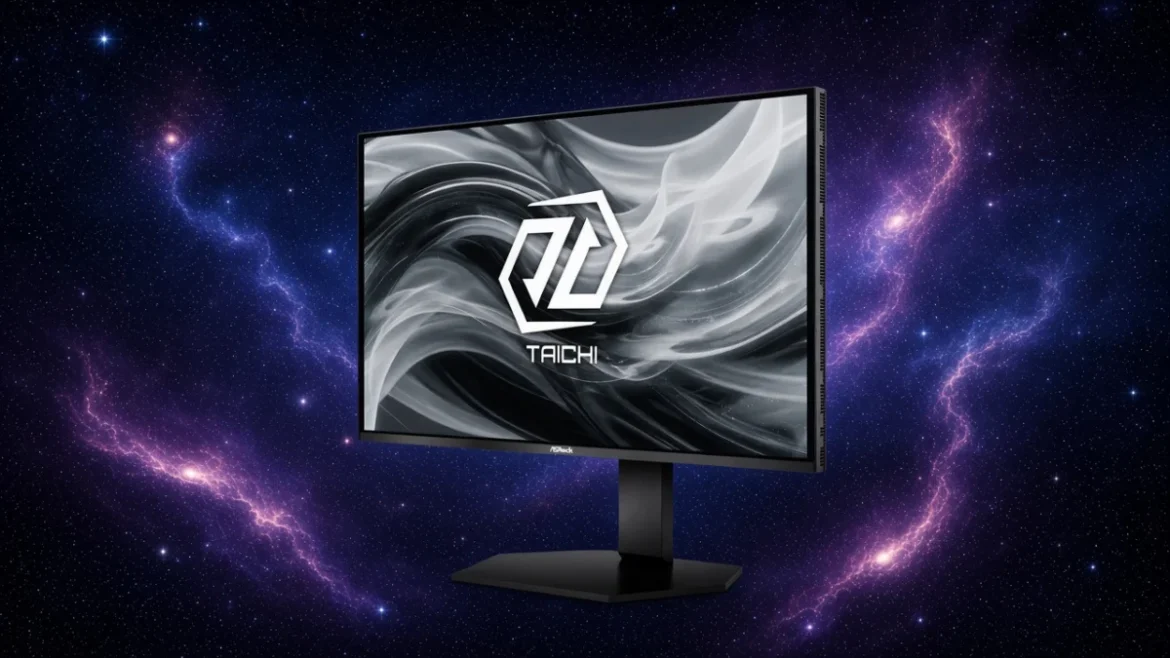
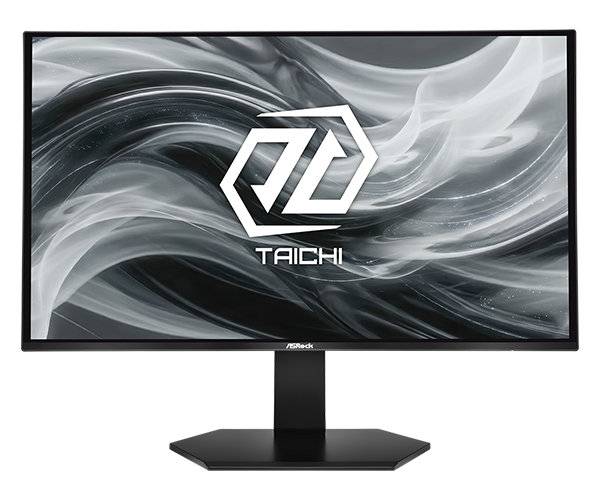
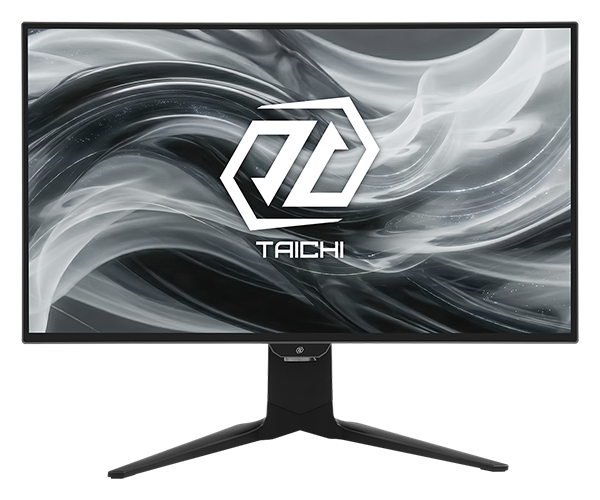
ASRock, traditionally recognized across the global technology sector as a reliable manufacturer of foundational PC components such as motherboards and graphics cards, has officially announced the expansion of its display hardware portfolio. Building upon its established Phantom Gaming and Challenger product lines, the company has introduced a new flagship monitor family bearing its prestigious Taichi moniker. Unveiled to the public, the initial lineup consists of three distinct 27-inch OLED gaming monitors: the TCO27USA, the TCO27QXA, and the TCO27QXB. This new generation of displays incorporates cutting-edge panel technologies aimed at catering to both high-fidelity visual enthusiasts and hyper-competitive esports athletes.
The introduction of the Taichi display series marks a strategic pivot for ASRock, elevating its presence in the competitive gaming peripherals market. By integrating advanced display topologies—including Penta Tandem OLED, QD-OLED, and Tandem WOLED—the company is positioning itself to compete directly with established display giants at the ultra-premium tier of the hardware ecosystem.
Chronology and Product Evolution
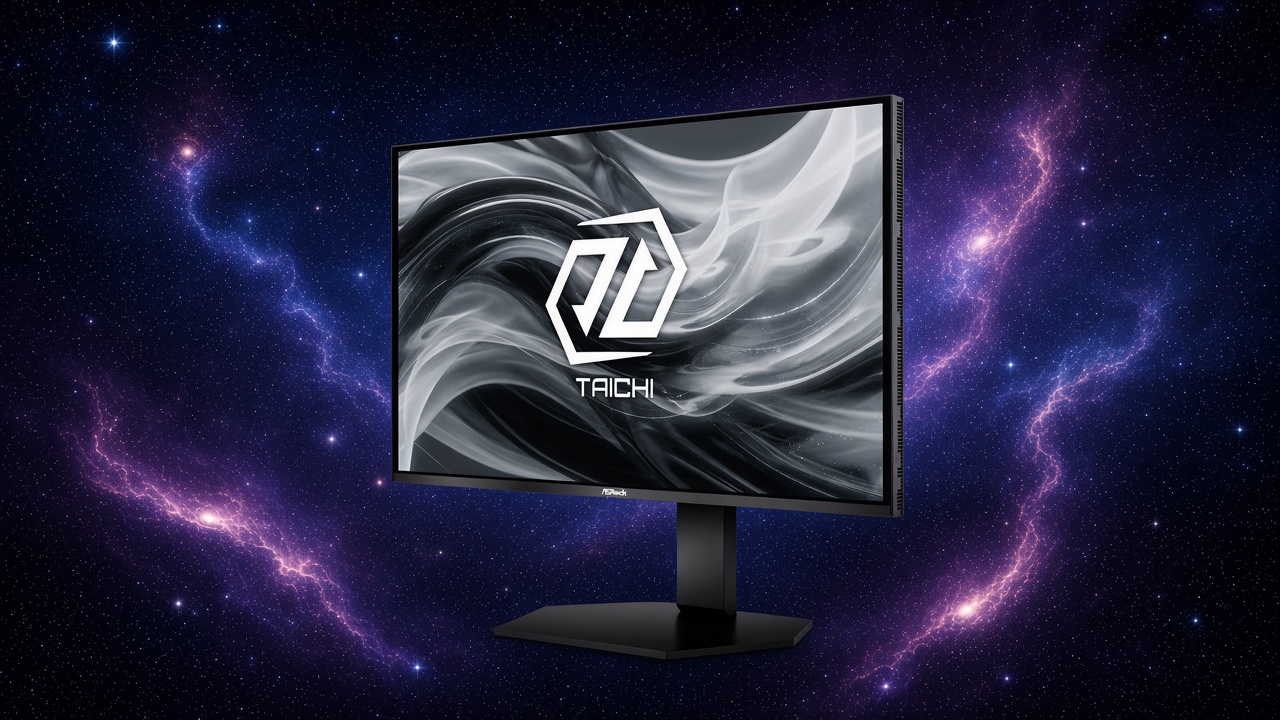
The genesis of the ASRock Taichi monitor line can be traced back to initial prototype demonstrations earlier in the year. During the Consumer Electronics Show (CES) in January 2026, industry observers and attendees were given an early glimpse of ASRock’s ambitions to enter the high-end OLED display market. At the time, the manufacturer showcased foundational concepts of the Taichi OLED technology, signaling a departure from its more mainstream and budget-friendly monitor offerings.
Following months of refinement and engineering optimization, ASRock officially formalized the lineup in September 2026, transitioning the prototypes into three distinct commercial models. Each model has been tailored to target specific segments of the high-performance consumer market, ranging from ultra-high-resolution content creation and gaming to extreme-refresh-rate competitive esports. Despite the public rollout and the activation of official product pages on the manufacturer’s website, comprehensive regional pricing and exact retail availability schedules have yet to be disclosed by corporate representatives.
Technical Specifications and Model Breakdown
The newly announced Taichi monitor family comprises three sophisticated 27-inch variants, each utilizing a unique panel technology designed to achieve specific performance metrics:

-
ASRock Taichi TCO27USA: Positioned as the resolution and visual fidelity flagship of the trio, the TCO27USA features a 4K UHD Penta Tandem OLED panel. It delivers a native 3840 x 2160 resolution paired with a 240Hz refresh rate. Crucially, the model boasts a blistering 0.03ms response time, a wide color gamut covering 99% of the DCI-P3 color space, and a high color accuracy rating with a Delta E of less than 2. Furthermore, it holds VESA DisplayHDR True Black 400 certification and features a peak HDR brightness capability of up to 1,000 nits. Connectivity options are exceptionally robust, including dual DisplayPort 2.1 UHBR20 ports and dual HDMI 2.1 ports operating at the full 48Gbps bandwidth.
-
ASRock Taichi TCO27QXA: Geared toward competitive gamers who prioritize frame rates over pixel density, the TCO27QXA utilizes a QHD (2560 x 1440) QD-OLED panel. This model achieves an impressive 500Hz refresh rate, complemented by VESA DisplayHDR True Black 500 certification and a peak HDR brightness of 1,000 nits. The combination of quantum dot color reproduction and extreme refresh capabilities makes this monitor a formidable option for fast-paced title execution.
-
ASRock Taichi TCO27QXB: Representing the most technically extreme configuration in the lineup, the TCO27QXB employs a Tandem WOLED panel and introduces an innovative dual-mode operational design. Users can switch between a QHD resolution at 540Hz for balanced visual clarity and speed, or drop the resolution to HD while scaling the refresh rate to a staggering 720Hz. Additionally, this model pushes luminance limits further, boasting a peak HDR brightness of up to 1,500 nits.
Practical Ecosystem Integration and Ergonomics
Beyond raw display performance, ASRock has integrated a suite of productivity and convenience features into the Taichi monitor series to ensure versatility in daily multi-use environments. All three models incorporate AMD FreeSync Premium Pro technology to mitigate screen tearing and stuttering during variable framerate gaming sessions.
For users managing multi-system workflows, built-in KVM (Keyboard, Video, Mouse) functionality is included as a standard feature. Connectivity is further streamlined through the inclusion of a USB Type-C port supporting up to 65W Power Delivery. This enables single-cable interfacing for laptops and compatible mobile devices, simultaneously transmitting display data, peripheral inputs, and sufficient electrical power to maintain operation and charge the connected hardware.
Industry Analysis and Market Implications
The launch of the Taichi monitor series carries several notable implications for the high-end PC hardware market. Historically, the Taichi brand has served as ASRock’s flagship tier, traditionally associated with top-tier motherboards featuring heavy-duty power delivery systems and distinct aesthetic designs. Bringing this branding to monitors underscores the company’s commitment to building a cohesive, ultra-enthusiast ecosystem.
From a technological standpoint, the inclusion of DisplayPort 2.1 UHBR20 on models such as the TCO27USA highlights a broader industry shift toward next-generation display interfaces capable of handling uncompressed 4K video streams at high refresh rates without reliance on Display Stream Compression (DSC). This ensures future-proofing as next-generation graphics architectures become more widely adopted by consumers.
However, market analysts note that pricing will dictate the commercial viability of these displays. Given the advanced nature of Penta Tandem OLED, QD-OLED, and high-refresh Tandem WOLED panels—coupled with premium I/O configurations—the Taichi monitors are expected to occupy the highest pricing brackets upon release. They will directly challenge established display solutions from tier-one monitor specialists, testing consumer brand loyalty toward ASRock in a product category outside its historical core competencies.
As official release dates and pricing structures are finalized in the coming weeks, the industry will closely monitor how these specifications translate into real-world performance benchmarks, particularly regarding thermal management, pixel longevity, and burn-in mitigation features inherent to advanced OLED technologies.
