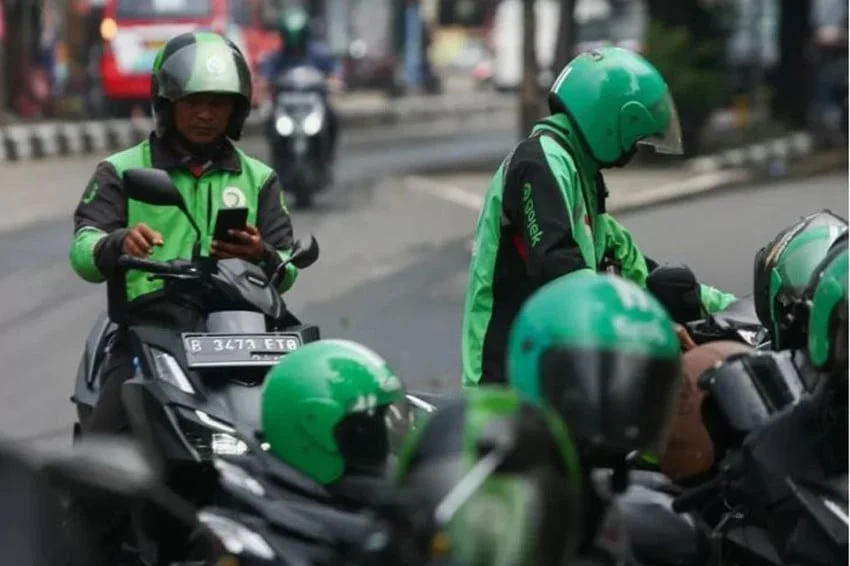
The landscape of Indonesia’s ride-hailing and online transportation sector is currently undergoing a period of significant transition, marked by a shift in commission structures and the seasonal fluctuations of the urban market. While the recent adjustment of application commissions to 8 percent has become a primary topic of debate among driver-partners, emerging evidence and field reports suggest that external factors—most notably the school holiday season—exert a far more profound influence on daily earnings than the revised fee schedules. This phenomenon highlights the complex interplay between platform policy, consumer behavior, and the cyclical nature of urban mobility in major Indonesian metropolitan areas like Jakarta.
For several weeks, driver communities across various digital platforms have been dissecting the implications of the 8 percent commission rate. However, seasoned practitioners within the industry argue that the perceived decline in income during this period is not a direct consequence of the commission change itself, but rather a result of a sharp contraction in demand. As educational institutions close for the mid-year break, the massive volume of daily commutes associated with students, teachers, and parents—often referred to as the "school run" economy—temporarily vanishes, leaving a void that the standard corporate or leisure segments struggle to fill.
The Dynamics of the 8 Percent Commission Scheme
The transition to an 8 percent commission fee was initially framed as a move to improve the take-home pay of drivers. Under previous models, many platforms operated on a 20 percent commission basis, which often drew criticism from labor advocates and driver unions who argued that the high overhead hampered the financial sustainability of the gig workforce. The reduction to 8 percent was intended to provide a more equitable distribution of revenue, theoretically allowing drivers to retain a larger share of each fare.
Despite this reduction in the platform’s cut, many drivers reported a stagnant or even declining daily revenue. Analysis of these reports reveals a critical distinction between "rate per trip" and "total daily volume." While a driver might earn more per individual kilometer under an 8 percent scheme, the total number of kilometers driven in a day is heavily dependent on market demand. When demand drops—as it does during school holidays—the benefits of a lower commission are often neutralized by the increased "dead mileage" and longer waiting times between orders.
The Impact of School Holidays on Urban Mobility
Jakarta, a city where the transportation ecosystem is deeply intertwined with the academic calendar, experiences a visible shift in traffic patterns and digital order frequency during the months of June and July. According to Saidah Anwar, a veteran online transportation partner based in Jakarta, the current narrative surrounding the 8 percent commission requires a more nuanced perspective that accounts for these seasonal realities.
"If you ask me, the decline in income isn’t because of the 8 percent commission cut, but because of other factors. It just so happens that this is school holiday month," Anwar stated during a discussion on the matter in mid-July 2026. Her observation points to a broader trend where the absence of student commuters significantly reduces the "base load" of orders during the morning and afternoon peak hours.
During a typical school week, the period between 06:00 and 08:00 and again between 14:00 and 16:00 represents a guaranteed window of high demand. Parents utilize ride-hailing services to send children to school safely, and older students utilize motorbikes (ojek online) to navigate through morning congestion. When schools are in recess, this entire segment of the market disappears. Furthermore, the ripple effect extends to ancillary services, such as food delivery (GoFood/GrabFood), as school-based orders and lunch deliveries for faculty also cease.
Chronology of the Commission Debate
The debate over commission structures in Indonesia has a long history, characterized by a tug-of-war between platform profitability, driver welfare, and government regulation.
- The 20 Percent Era: For years, a 20 percent commission was the industry standard, justified by platforms as necessary to cover operational costs, technological development, and marketing subsidies.
- Regulatory Intervention: The Indonesian Ministry of Transportation (Kemenhub) has periodically stepped in to set floor and ceiling prices (Tarif Batas Bawah and Tarif Batas Atas) to prevent predatory pricing and ensure drivers earn a living wage.
- The Shift to 8 Percent: In a bid to remain competitive and respond to driver grievances, certain platforms and regional pilots began implementing an 8 percent commission model. This was met with optimism but also skepticism regarding the long-term sustainability of the platforms.
- The July 2026 Assessment: As of July 17, 2026, the 8 percent scheme is being tested against the reality of a low-demand season. The current period serves as a stress test for the new commission model, revealing that volume is the ultimate king of the gig economy.
Supporting Data: The Scale of the Gig Economy
To understand why a shift in school attendance affects the economy so deeply, one must look at the sheer scale of the digital transportation sector in Indonesia. As of the mid-2020s, it is estimated that over 4 million Indonesians are registered as active driver-partners across various platforms. The sector contributes billions of dollars to the national GDP.
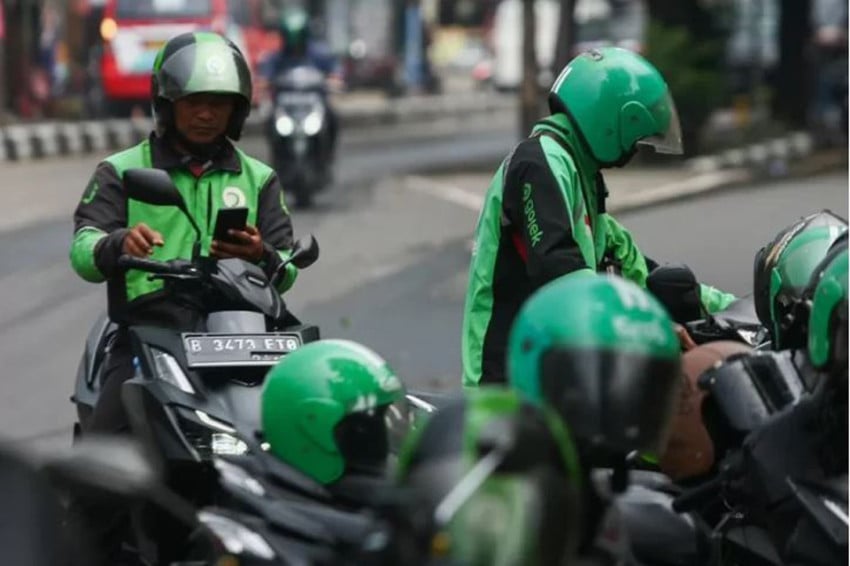
Data from urban mobility studies indicates that school-related travel accounts for approximately 15 to 22 percent of all morning peak-hour traffic in Jakarta. When this volume is removed from the ride-hailing ecosystem, the "supply" of drivers remains constant while the "demand" drops by nearly a quarter. This imbalance leads to what drivers call "anyep" (a slang term for a lack of incoming orders), regardless of what the commission percentage might be.
Strategic Adaptations and Driver Behavior
The current situation has forced drivers to become more strategic in their operations. Experienced partners, like Saidah Anwar, emphasize that income is often a result of "pola kerja" or work patterns rather than just platform settings. Drivers who successfully navigate the holiday slump often employ several tactics:
- Geographic Shifting: Moving away from residential areas and school zones toward shopping malls, tourist attractions, and transportation hubs (airports and train stations) where holiday travelers are more likely to congregate.
- Time Optimization: Adjusting work hours to capture the late-evening leisure crowd rather than the early-morning school crowd.
- Multi-Platform Usage: Utilizing multiple apps simultaneously to minimize downtime, although this remains a point of contention with some platform policies.
The disparity in experiences between drivers often boils down to these micro-decisions. While one driver may see a 30 percent drop in income by staying in their usual "school zone" neighborhood, another may maintain their earnings by relocating to a high-traffic commercial district.
The Argument for Sustainability
While the 8 percent commission is popular among drivers for its immediate perceived benefit, some analysts and government officials urge caution. A "Read Also" perspective from earlier in the year suggested that the government might need to maintain or advocate for a 20 percent commission in some contexts to ensure the long-term sustainability of the platforms.
The rationale behind this is that platforms require significant capital to maintain the digital infrastructure, provide insurance for drivers, and offer the discounts that attract customers in the first place. If the commission is too low, platforms may reduce their marketing spend, leading to fewer customers and, ironically, fewer orders for the drivers. The current 8 percent debate is therefore not just about driver pay, but about the survival of the entire digital ecosystem.
Official Responses and Future Implications
The Ministry of Transportation continues to monitor the situation closely. Officials have noted that while they support initiatives to increase driver income, they are also concerned with "predatory pricing" where platforms might cut commissions to unsustainably low levels to drive out competitors, only to raise them later once a monopoly is established.
The current holiday season serves as a vital data point for regulators. It proves that the "problem" of low driver income cannot be solved by commission adjustments alone. It requires a holistic approach that includes:
- Demand Generation: Platforms need to find ways to stimulate demand during off-peak seasons.
- Fare Flexibility: Allowing for slightly higher fares during low-demand periods to compensate for the lack of volume, though this risks alienating price-sensitive consumers.
- Driver Education: Providing data-driven insights to drivers about where and when to work during seasonal shifts.
Conclusion: A Lesson in Market Realities
The case of the 8 percent commission versus the school holiday impact is a classic study in market dynamics. For the millions of drivers in Jakarta and beyond, the lesson is clear: while the rules of the platform (commissions and fees) are important, the laws of supply and demand remain the dominant force.
As schools prepare to reopen in late July and August, it is expected that order volumes will surge back to their normal levels. At that point, the true impact of the 8 percent commission will be easier to measure. If drivers see a significant increase in take-home pay once the volume returns, the new scheme will be hailed as a success. However, if the increased volume still results in struggles due to platform competition or rising fuel costs, the conversation will likely shift once again toward the need for a more comprehensive regulatory framework.
For now, the focus remains on navigating the final weeks of the holiday season. As Saidah Anwar and many others have demonstrated, the ability to adapt to the rhythm of the city is perhaps the most valuable skill a driver can possess in the ever-evolving world of online transportation. The 8 percent commission is a welcome change for many, but it is the return of the ringing school bell that will truly restore the balance of the digital marketplace.