
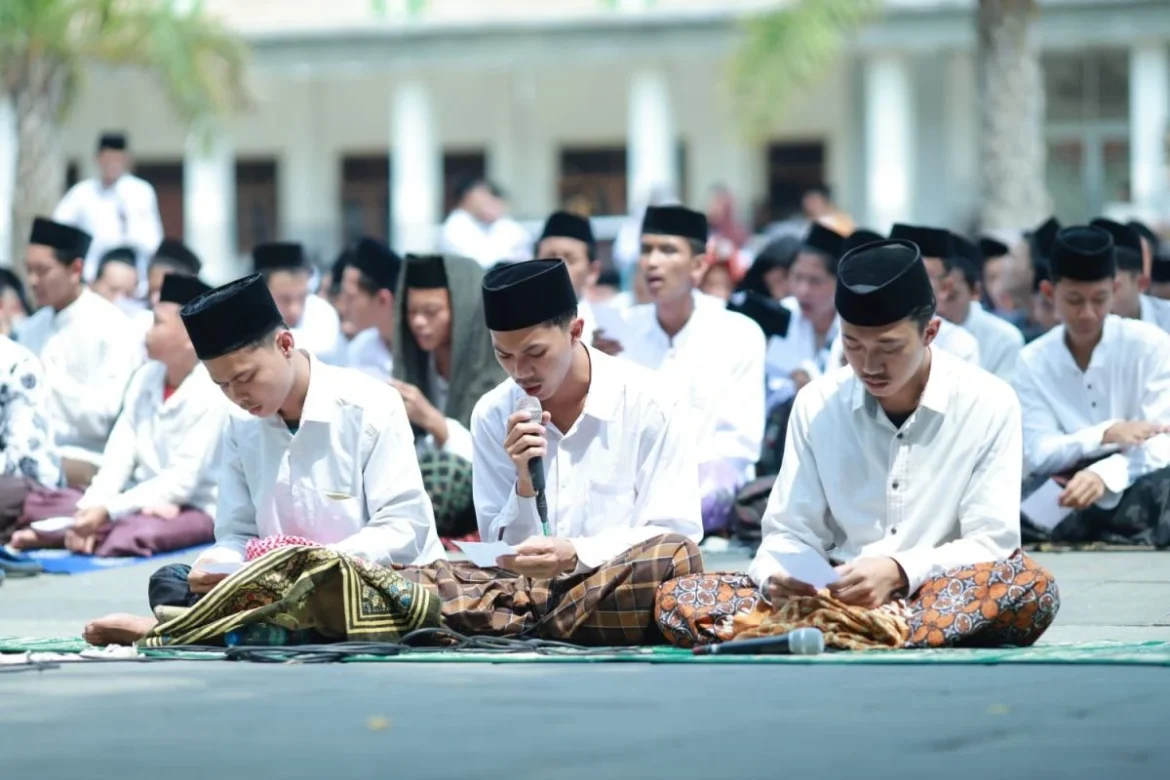
In the contemporary high-pressure work environment, where tight deadlines, back-to-back meetings, and unrelenting performance targets define the daily rhythm, the challenge of maintaining religious discipline has become increasingly complex for many Muslim professionals. A common dilemma frequently surfaces in corporate and industrial settings: the struggle to reconcile professional productivity with the fixed temporal requirements of the five daily prayers. As workers navigate the balance between career advancement and spiritual commitment, questions regarding the legality and flexibility of prayer timing under Islamic jurisprudence have gained renewed attention in both religious and secular discourse.
The tension between professional duty and religious observance is not a new phenomenon, but it has intensified as the global workforce becomes more integrated and fast-paced. In many cases, employees report deferring their prayers until the conclusion of the workday, often inadvertently allowing the prescribed time for a specific prayer—such as Dhuhr or Asr—to expire. While the pursuit of a livelihood is considered an act of worship and a responsibility in Islam, the obligation of the five daily prayers remains a non-negotiable pillar of faith.
The Theological Framework of Prayer Timings
The fundamental principle governing Islamic prayer is found in Surah An-Nisa verse 103, which states: "Indeed, prayer has been decreed upon the believers a decree of specified times." This Quranic injunction establishes the immutable nature of prayer windows. The interpretation of this verse by classical and modern scholars emphasizes that the sanctity of these time slots is central to the practice of faith.
From a jurisprudential perspective, the classification of "delaying" prayer depends entirely on whether the act is performed within the allotted timeframe. The Islamic scholarly consensus distinguishes between "takhir" (delaying within the permitted window) and the abandonment of prayer until the window has elapsed. The Dar Al-Ifta in Egypt and other authoritative bodies have clarified that while it is highly recommended to perform prayer at the earliest possible time, there is a degree of permissible flexibility. An employee is not necessarily required to cease all work immediately upon the adhan (call to prayer), provided they complete the ritual before the window for that specific prayer closes.
Chronology of the Modern Workplace Conflict
The evolution of this issue mirrors the broader changes in labor laws and corporate culture. During the mid-20th century, the traditional "nine-to-five" model allowed for predictable breaks that could be synced with prayer times. However, the rise of the "always-on" digital economy has eroded these boundaries.
- Morning Phase: The Fajr prayer occurs before the start of the typical business day, usually posing the least conflict.
- Mid-day and Afternoon: The Dhuhr and Asr prayers present the most significant hurdles. In many corporate environments, these times coincide with peak operational hours, client meetings, or conference calls.
- Evening: The Maghrib and Isha prayers often overlap with extended hours or late-afternoon shifts, leading many to resort to joining prayers—a practice known as jamak—if they are traveling or experiencing severe duress.
Navigating the Permissibility of Jamak
The practice of jamak, or combining prayers, is often cited by professionals as a potential solution to workplace constraints. It is essential, however, to understand that jamak is not a universal permission granted for mere busy schedules. According to the majority of Islamic legal schools, this concession is generally reserved for travelers, those in states of extreme physical necessity, or, in some interpretations, during specific moments of crisis.
Professional fatigue or a heavy meeting schedule is generally not viewed by leading scholars as a sufficient justification for combining prayers. The prevailing view among experts at the Islam Question & Answer portal is that employers and employees must find a balance through scheduling. The onus is on the individual to optimize their workflow so that the few minutes required for prayer can be accommodated without disrupting business operations.
Case Studies in Extreme Necessity: Critical Sectors
While routine office work does not typically justify missing prayer times, specialized sectors face unique ethical and operational dilemmas. The medical field serves as the most prominent example. Surgeons engaged in complex, hours-long operations or emergency room physicians managing life-critical interventions are often unable to pause their duties.
In these instances, fatwas issued by the Committee for Scientific Research and Ifta in Saudi Arabia have provided specific guidance. For professionals in life-saving roles, the concept of "necessity" (darurah) is invoked. If an act of worship cannot be performed without endangering a patient’s life, the physician is encouraged to prioritize the life-saving mission, subsequently making up the missed prayers once the immediate danger has passed. This nuance is crucial: it differentiates between a "preference for convenience" and a "genuine state of emergency."
Statistical and Practical Implications
Though comprehensive data on the number of workers who miss prayers due to work is difficult to quantify due to the private nature of the act, HR surveys in various Middle Eastern and Southeast Asian markets suggest that "prayer accessibility" is increasingly becoming a factor in employee retention. Companies that provide dedicated prayer rooms and flexible scheduling report higher levels of employee morale and lower burnout rates.
From an organizational standpoint, the integration of faith-based needs into workplace policy is seen as a component of Diversity, Equity, and Inclusion (DEI). By recognizing that a significant portion of the global workforce adheres to these religious obligations, firms can implement "inclusive scheduling," which avoids booking critical meetings during the mid-day prayer window.
Strategic Recommendations for the Professional Muslim
To effectively navigate this environment without compromising professional standing or religious integrity, the following strategies are widely recommended:
- Proactive Communication: Transparency with management is key. By framing prayer as a brief, scheduled period of focus—similar to a standard coffee or lunch break—employees can demystify the practice for non-Muslim supervisors.
- Time Blocking: Utilizing digital calendar tools to "block out" the necessary time for prayer allows colleagues to see when an individual is unavailable, preventing the scheduling of meetings during those windows.
- Efficiency and Prioritization: Adopting productivity methodologies, such as the Pomodoro technique or time-batching, can help ensure that critical tasks are completed ahead of prayer windows, reducing the anxiety of having work "hanging over one’s head" during prayer.
- Environment Preparation: Maintaining a clean, designated space or having a portable prayer mat ready allows for a swift transition into prayer, minimizing the time spent preparing and maximizing the focus of the ritual.
The Question of Compensation and Repentance
A significant concern for many who have historically neglected prayer due to work is how to account for missed obligations. The consensus among scholars, citing Hadith from both Bukhari and Muslim, is that if one misses a prayer due to genuine sleep or forgetfulness, they should pray as soon as they remember.
However, intentional neglect—choosing a task over prayer without a valid Sharia-based excuse—is viewed with gravity. For those seeking to rectify past lapses, repentance (tawbah) and a commitment to future consistency are the mandated paths. While there is scholarly debate on whether missed prayers must be "made up" (qada) beyond the immediate requirement of the current time, the overarching advice from religious authorities is to consult with a local, qualified scholar who can provide personalized guidance based on the individual’s specific history of neglect.
Conclusion
The intersection of modern labor demands and religious observance requires a dual approach: personal discipline from the employee and a culture of accommodation from the employer. The Islamic tradition is clear that prayer is a non-negotiable obligation, but it is equally clear that the religion is one of ease, providing mechanisms for managing extraordinary circumstances.
As the professional landscape continues to evolve, the ability of Muslims to integrate their faith into their working lives serves as a testament to the flexibility of Islamic practice in the modern age. By treating prayer not as an interruption to work, but as a vital, scheduled reset, professionals can maintain both their career trajectories and their spiritual well-being. Ultimately, the goal is to cultivate a professional identity that is enriched, rather than diminished, by the disciplined practice of faith.
