
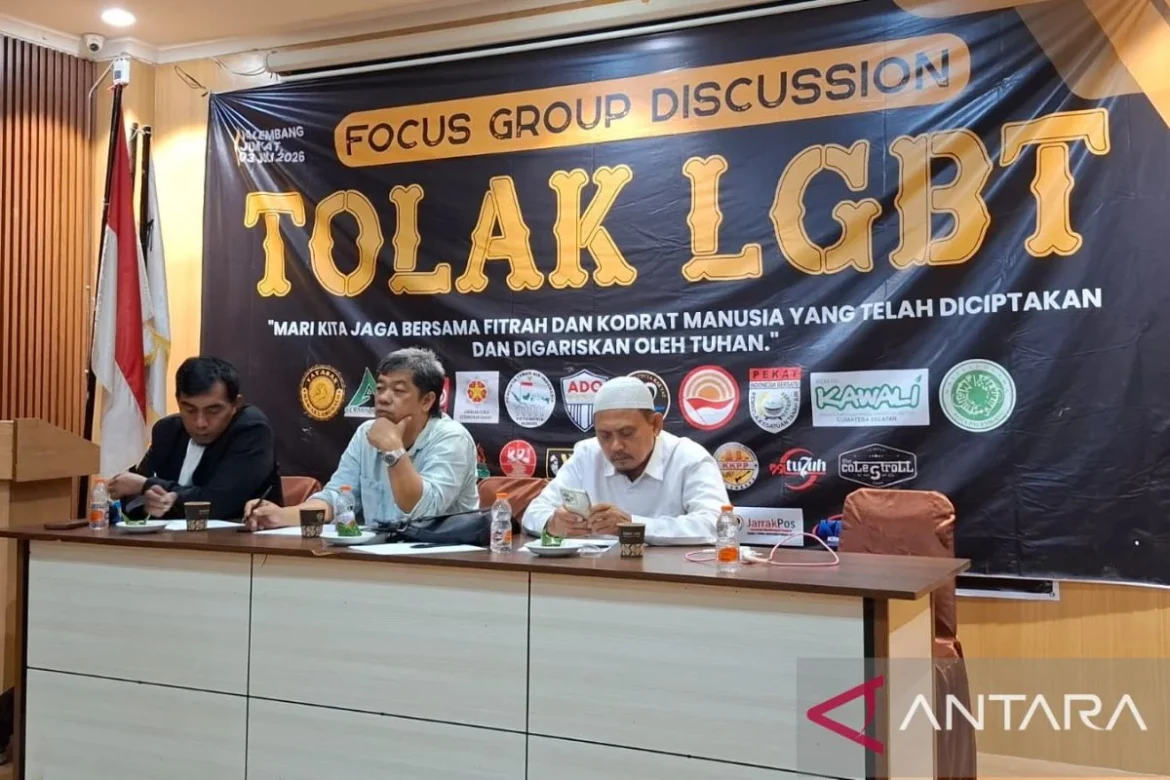
The socio-political landscape of Indonesia has recently been marked by a resurgence of intense public debate regarding the status and activities of the LGBT community. This discourse was reignited following a series of reports concerning alleged private same-sex gatherings and the perceived intensification of LGBT-themed advocacy campaigns across various social media platforms. As the world’s most populous Muslim-majority nation, Indonesia often finds itself at a crossroads between global human rights trends and deeply rooted religious traditions. In this context, the Islamic perspective on same-sex relations has once again moved to the forefront of national conversation, serving as a primary lens through which a significant portion of the population evaluates these contemporary social shifts.
In the framework of Islamic jurisprudence (Fiqh), the practice of same-sex relations is viewed as a departure from the established Sharia (Islamic law). This stance is not merely a matter of cultural preference but is rooted in the foundational texts of the faith—the Quran and the Hadith. For the majority of Indonesian Islamic scholars and organizations, these texts provide a definitive moral and legal compass. While the theological condemnation of the act is clear, modern Islamic discourse in Indonesia also grapples with the complexity of maintaining social order, upholding human dignity, and preventing extrajudicial violence or persecution against individuals.
The Theological Foundation: The Narrative of Prophet Lut
The primary scriptural basis for the prohibition of same-sex relations in Islam is found in the narrative of the Prophet Lut (Lot), which is recounted in several chapters of the Quran. Unlike contemporary secular views that may categorize sexual orientation as an innate identity, traditional Islamic interpretation views the act of same-sex intercourse as a behavioral choice that contradicts the "fitrah" or the natural, divinely ordained state of humanity.
One of the most frequently cited passages is Surah Al-A’raf, verses 80 and 81. In verse 80, the Quran states: "And (We also sent) Lut (to his people). (Remember) when he said to his people, ‘Do you commit a shameful deed such as no one in all the world has done before you?’" This rhetorical question posed by the Prophet Lut is interpreted by scholars as a clear indication that the practices of his people were seen as an unprecedented transgression against the moral order.
The following verse, Surah Al-A’raf 81, provides more specific context regarding the nature of this transgression: "Indeed, you approach men with desire instead of women. Rather, you are a transgressing people (musrifun)." The term "musrifun" is particularly significant in Islamic exegesis; it refers to those who exceed the limits set by God. In this context, the "limit" is the heteronormative structure of human sexuality and procreation. For the majority of ulema (scholars), this passage serves as an eternal prohibition, establishing that sexual fulfillment is only sanctioned within the bounds of a marriage between a man and a woman.
The Role of Hadith and Jurisprudential Consensus
Beyond the Quranic narrative, the Hadith—the recorded sayings and traditions of the Prophet Muhammad—provide further clarity on the legal status of same-sex acts. A prominent narration often cited in Indonesian religious circles is the Hadith reported by Al-Baihaqi. In this tradition, Abu Musa reported that the Messenger of Allah (peace be upon him) said: "When a man approaches a man, they are both committing adultery (zina), and when a woman approaches a woman, they are both committing adultery."
The classification of same-sex acts as "zina" (illicit sexual relations) carries heavy legal and moral weight in Islamic law. It places these acts in the same category as extramarital or premarital heterosexual intercourse, both of which are strictly forbidden. The consensus (ijma) among the four major schools of Sunni Islamic thought—Hanafi, Maliki, Shafi’i, and Hanbali—unanimously views homosexual acts as a grave sin (kabirah), though they differ on the specific earthly punishments that should be applied. In the Indonesian context, where the Shafi’i school is most influential, the emphasis remains on the moral prohibition and the necessity of repentance.
The Institutional Stance: MUI Fatwa No. 57 of 2014
In Indonesia, the Indonesian Ulema Council (MUI), the country’s highest clerical body, plays a pivotal role in translating scriptural mandates into contemporary guidance. In 2014, the MUI issued Fatwa Number 57, which specifically addresses "Lesbian, Gay, Sodomy, and Sexual Abuse." This document serves as the formal theological and legal position of the council and, by extension, a significant portion of the Indonesian Muslim community.
The fatwa asserts that sexual orientation toward the same sex is not a "given" or a "natural" state that must be accommodated, but rather a challenge or a deviation that should be addressed through spiritual and psychological means. The MUI maintains that sexual activity is only legitimate within the confines of a valid marriage between a man and a woman. Consequently, the fatwa declares that homosexual acts, lesbianism, and sodomy are "haram" (forbidden) and constitute a violation of both religious law and the national philosophical foundation of Pancasila, which emphasizes "Belief in the One and Only God."
The fatwa also calls upon the government to take active measures to prevent the spread of LGBT movements and to provide "rehabilitation" for those who identify as LGBT. This institutional stance has significant implications for public policy, as government agencies often look to the MUI for guidance when drafting regulations related to morality and social conduct.
Governmental and Social Reactions: A Tightening Environment
The recent surge in LGBT discourse has prompted various reactions from Indonesian officials and civil society organizations. In West Java, one of the country’s most populous and religiously conservative provinces, the Vice Governor has previously taken a hardline stance, even suggesting that civil servants (ASN) found to be involved in LGBT "networks" could face dismissal. Such statements reflect a broader trend in several regions where local governments have attempted to pass "anti-immorality" bylaws (Perda Syariah) that specifically target same-sex behavior.
On a national level, the Communication Body of Mosque Youth (BKPRMI) has voiced strong support for governmental efforts to shield Indonesian culture from what they term "LGBTQ threats." They point to Presidential Decree (Perpres) No. 111 of 2025 as a strategic tool in this cultural preservation effort. From their perspective, the promotion of LGBT rights is often viewed as a form of "cultural imperialism" that seeks to undermine the traditional family structure and religious values that form the backbone of Indonesian society.
The chronology of these events shows a pattern: reports of a "same-sex party" or a social media campaign often trigger a "moral panic," leading to calls for stricter policing of private spaces and more robust digital censorship. This environment creates a challenging situation for human rights advocates who argue that the Indonesian Constitution guarantees the right to privacy and freedom from discrimination for all citizens, regardless of their sexual orientation.
The Ethics of Treatment: Balancing Prohibition and Human Dignity
Despite the strict prohibition of the act, Islamic teachings in Indonesia also emphasize the importance of "akhlak" (moral character) and "dakwah" (inviting others to the faith) with wisdom and kindness. Leading scholars often remind the public that while the behavior is condemned, the individuals themselves must be treated with dignity.
The Sharia forbids perundungan (bullying), physical violence, and the humiliation of individuals. Islamic ethics dictate that if a person is seen to be in error, the community’s response should be one of "amar ma’ruf nahi munkar" (enjoining what is good and forbidding what is wrong) through persuasive and educational means, rather than through vigilantism or coercion. This nuanced approach seeks to separate the "sin" from the "sinner," advocating for a path of repentance and social reintegration rather than total ostracization.
However, the practical application of this "compassionate" approach is often tested. In many communities, the social stigma associated with being LGBT is so profound that individuals face significant risks of losing their jobs, being expelled from their families, or facing social isolation. The challenge for modern Indonesian Islam is to navigate the tension between maintaining its theological boundaries and ensuring that the rights of all citizens to live free from violence are upheld.
Broader Implications and Fact-Based Analysis
The ongoing debate over LGBT issues in Indonesia has several long-term implications for the nation’s domestic and international standing. Domestically, the push for stricter regulations—such as those seen in the revised Criminal Code (KUHP)—reflects a move toward the "legalization of morality." While the new code does not explicitly criminalize homosexuality, it does criminalize sex outside of marriage, which effectively targets same-sex couples since marriage is only legally recognized between a man and a woman in Indonesia.
Internationally, Indonesia’s stance has occasionally led to friction with Western nations and international human rights organizations. In 2023, for instance, the cancellation of a planned ASEAN queer advocacy event in Jakarta due to security concerns and public backlash highlighted the deep-seated resistance to LGBT visibility in the public sphere.
From a sociological perspective, the LGBT issue in Indonesia has become a symbolic battleground for the identity of the nation. For conservatives, resisting LGBT advocacy is seen as a way to protect the country’s sovereignty and moral integrity. For progressives, the treatment of the LGBT community is a litmus test for the health of Indonesia’s democracy and its commitment to pluralism.
In conclusion, the Islamic view on same-sex relations in Indonesia is characterized by a firm scriptural prohibition reinforced by institutional fatwas and widespread social consensus. However, this religious stance exists within a complex modern state that must balance tradition with the realities of a globalized world. As the discourse continues to evolve, the focus remains on how the nation can reconcile its deep religious convictions with the universal need for social harmony and the protection of human rights. The path forward will likely involve continued dialogue between religious leaders, the government, and civil society to find a middle ground that respects the country’s "fitrah" while preventing the marginalization of any of its citizens.
