
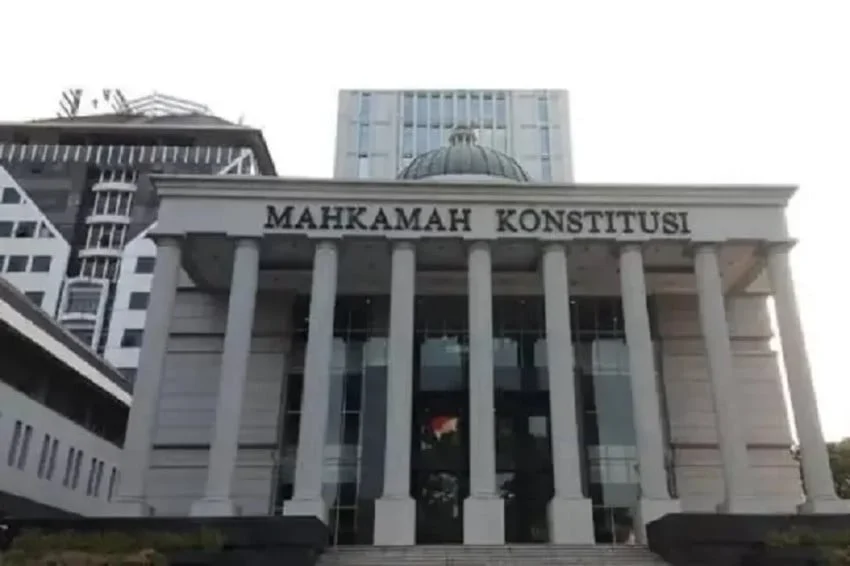
JAKARTA — The legal battles surrounding the 2024 Indonesian Presidential Election continue to evolve as fresh controversies reach the nation’s highest constitutional judicial body. Andi Azwan, the Chairman of the volunteer organization Militan Gibran 08 Nusantara, has officially announced his intention to register as a related party in the ongoing lawsuit filed by prominent legal expert and constitutional analyst Denny Indrayana at the Constitutional Court (Mahkamah Konstitusi or MK). The impending legal contest centers on a persistent dispute over the General Election Results (PHPU) for the 2024 Presidential Election, specifically targeting the academic credentials and diploma of Vice President Gibran Rakabuming Raka.
The announcement sets the stage for a high-stakes legal confrontation as the Constitutional Court prepares to hear arguments from multiple factions. While Denny Indrayana and his co-petitioners press forward with their legal challenges regarding the validity of the vice president’s educational background, supporters of the administration are mobilizing to defend the legitimacy of the current executive leadership. The development highlights the enduring polarization of political factions in Indonesia even years after the conclusion of the general election cycle, demonstrating how legal mechanisms continue to serve as a primary arena for political contestation.
Chronology and Legal Background of the Constitutional Court Challenge
The legal challenge spearheaded by Denny Indrayana has been formally registered on the official docket of the Constitutional Court under case number 01/PHPU.PRES-XXIV/2026. According to the official scheduling published by the judicial institution, the preliminary examination hearing for the case is slated to take place on Monday, September 21, 2026, commencing at 19:00 Western Indonesian Time (WIB). This hearing marks the official opening of courtroom arguments where the justices will review the formal compliance of the petition, examine the legal standing of the applicants, and listen to preliminary statements from both the petitioners and any recognized related parties.
The dispute itself is built upon contentions raised by Denny Indrayana and associated legal figures concerning the authenticity and procedural acquisition of Vice President Gibran Rakabuming Raka’s diploma. Questions surrounding the vice president’s educational background have intermittently surfaced throughout the campaign season and into the post-inauguration period, driven by critics who argue that specific documentation requirements and institutional accreditations require rigorous judicial scrutiny. Petitioners in such cases typically seek remedies that range from formal administrative clarifications to broader rulings regarding the eligibility parameters of elected officials under electoral laws.
However, the legal strategy of the respondents and intervening defense groups relies heavily on procedural law rather than solely addressing the substantive merits of the educational claims. Civil society organizations and pro-government legal teams argue that the petition suffers from foundational flaws regarding who possesses the legal capacity to initiate such litigation before the Constitutional Court.
Legal Standing and Defense Strategy of Militan Gibran 08 Nusantara
Speaking to the press regarding the upcoming proceedings, Andi Azwan confirmed that his organization would formally submit documentation to the court to be recognized as a related party (pihak terkait). "Tomorrow, we will go to the Constitutional Court to submit our letter as a related party," Andi stated in a telephone interview.
Andi expressed absolute confidence that the lawsuit brought by Denny Indrayana and his coalition would ultimately be dismissed by the panel of constitutional justices. The core of this defense strategy rests on the legal concept of legal standing (kedudukan hukum). According to Andi, Denny Indrayana and the associated petitioners lack the requisite legal standing to bring forth an electoral dispute of this nature under the prevailing statutory framework governing the Constitutional Court’s jurisdiction over presidential election results.
"Yes, it will be rejected," Andi asserted firmly, emphasizing that under Indonesian electoral law, the parties strictly authorized to challenge presidential election results or related foundational eligibility disputes within the framework of PHPU are the official presidential and vice-presidential ticket contestants who participated in the 2024 election. Volunteer leaders and independent legal analysts aligned with the administration argue that allowing third-party non-contestants to continuously litigate finalized electoral outcomes creates an unsustainable precedent that threatens legal certainty and democratic stability.
Broader Implications for Indonesian Constitutional Law and Governance
The intervention of Militan Gibran 08 Nusantara as a related party reflects a broader trend in modern Indonesian politics where grassroots volunteer organizations actively transition into legal and political defenders of the state institutions they supported during campaigns. As polarization shifts from the streets and ballot boxes into the courtroom, the role of organized civil groups in formal legal proceedings has grown significantly. By formally requesting participation status, these groups aim to ensure that the voice of the administration’s electoral base is formally represented on the judicial record, countering narratives put forth by critical legal coalitions.
Legal scholars point out that the upcoming hearings before the Constitutional Court will serve as an important test for the court’s strict interpretation of legal standing in post-election disputes. The court must balance the necessity of maintaining rigorous procedural barriers against frivolous or non-qualifying lawsuits with the public’s demand for transparency regarding the qualifications of high-ranking state officials.
If the Constitutional Court decides to dismiss the case on the grounds of lacking legal standing—as predicted by Andi Azwan and other legal commentators—it will reaffirm the principle that electoral disputes must follow strict statutory pathways defined by the Election Law and the Constitutional Court’s own procedural regulations. Conversely, should the court decide to entertain the substantive arguments regarding the diploma, it could open a new chapter of judicial inquiry into executive credentials.
As the clock ticks down to Monday evening’s preliminary session, all eyes remain fixed on the Constitutional Court building in central Jakarta. The interplay between Denny Indrayana’s legal team, the judicial panel, and intervening voices such as Militan Gibran 08 Nusantara will dictate not only the immediate fate of case number 01/PHPU.PRES-XXIV/2026 but also set a crucial benchmark for how future challenges against elected leaders are handled within Indonesia’s constitutional democracy.
