
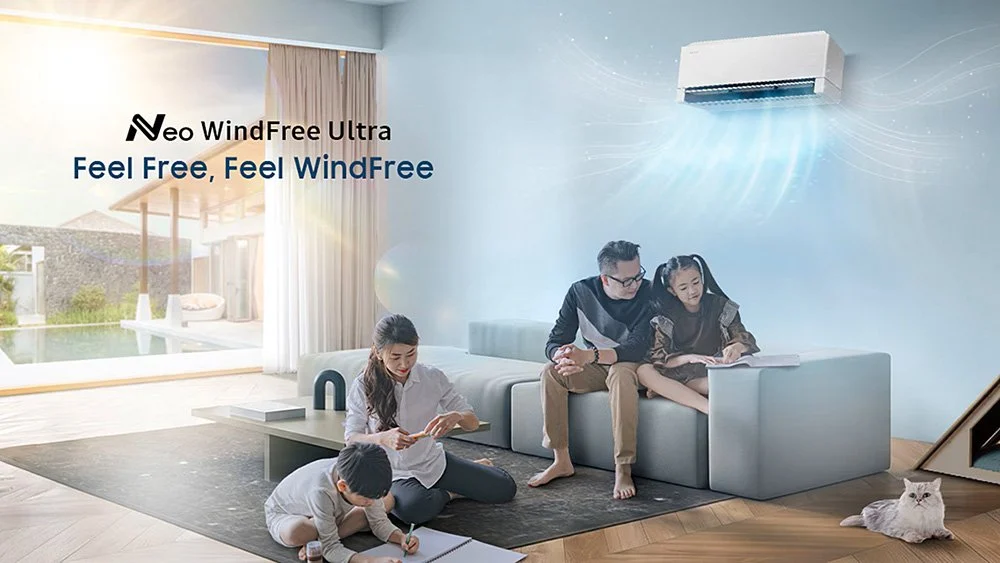
Samsung Electronics Indonesia officially entered a new era of home climate management on September 19, 2026, with the market introduction of the Samsung AC Neo WindFree Ultra. This device represents a strategic shift in the appliance industry, moving away from single-function cooling units toward comprehensive, AI-integrated "All-in-One" environmental control systems. By combining high-performance air conditioning with advanced purification technology, the company aims to address the dual consumer demand for thermal comfort and indoor air quality (IAQ) in increasingly urbanized living environments.
The launch event highlighted the convergence of three primary technological pillars: the WindFree™ Enhanced cooling architecture, the PM1.0 filtration system, and a robust AI-driven energy management ecosystem.
Evolution of Air Conditioning Technology: A Historical Context
The development of the Neo WindFree Ultra follows a multi-year trajectory in HVAC (Heating, Ventilation, and Air Conditioning) engineering. For decades, the primary challenge for AC manufacturers was the "direct blast" effect—the uncomfortable sensation of cold air hitting occupants directly, which often led to dryness and respiratory discomfort.
Samsung’s WindFree™ technology, first introduced years prior, sought to mitigate this by diffusing air through thousands of micro-holes. The "Ultra" iteration launched in 2026 marks the culmination of this research, incorporating 23,000 micro-holes and a sophisticated array of AI-driven motion sensors. This evolution reflects a broader industry trend where hardware is increasingly secondary to the software algorithms that govern airflow, energy consumption, and maintenance schedules.
The Engineering Behind PM1.0 Air Purification
A significant differentiator for the Neo WindFree Ultra is the integration of a professional-grade PM1.0 filter. In the context of atmospheric science, particulate matter (PM) is categorized by size. While many standard air purifiers utilize HEPA filters effective against PM2.5 (particles 2.5 micrometers or smaller), the move to PM1.0 signifies a higher tier of filtration.
Particles at the 1.0-micrometer level are significantly more dangerous as they can penetrate deeper into the human respiratory system. According to the data provided by Samsung, this filter is capable of capturing particles down to 1 micrometer and neutralizing over 99 percent of bacteria. This "All-in-One" approach effectively replaces the need for a standalone air purifier in the room, saving floor space and reducing the total energy footprint of the household. The inclusion of an integrated light-based indicator provides real-time feedback, allowing users to monitor their indoor air quality at a glance, a feature that aligns with the growing global focus on wellness-oriented smart home architecture.
AI 7 Motion Winds: Precision Climate Customization
The "AI 7 Motion Winds" system represents a significant leap in how cooling is delivered. By utilizing seven distinct modes, the system attempts to solve the "one-size-fits-all" problem of traditional AC units. The modes include:
- Max Wind: Designed for rapid temperature reduction upon entering a hot room.
- Surround Wind: Utilizes spatial distribution to ensure even cooling across larger areas.
- Long Reach Wind: Optimized for open-plan living areas where airflow needs to travel significant distances.
- Down Wind: Concentrates cooling toward the floor, useful for specific activity zones.
- AI Direct Wind: Uses sensors to track movement and prioritize cooling for individuals.
- AI Indirect Wind: Prevents cold air from hitting occupants directly, maintaining a consistent ambient temperature.
- WindFree™: The flagship mode that uses the 23,000 micro-holes to maintain a "still air" environment.
Hendy Budihartono, Head of AC Business at Samsung Electronics Indonesia, noted during the launch that modern consumers prioritize "intelligent comfort." He emphasized that the device is designed to understand the occupant’s needs through pattern recognition, effectively reducing the need for constant manual adjustments via a remote control.
SmartThings and the AI Energy Paradigm
The integration of the Samsung SmartThings ecosystem is the "brain" of the Neo WindFree Ultra. By connecting the unit to the cloud, the device can analyze external weather patterns, historical usage, and current room occupancy to optimize its performance.
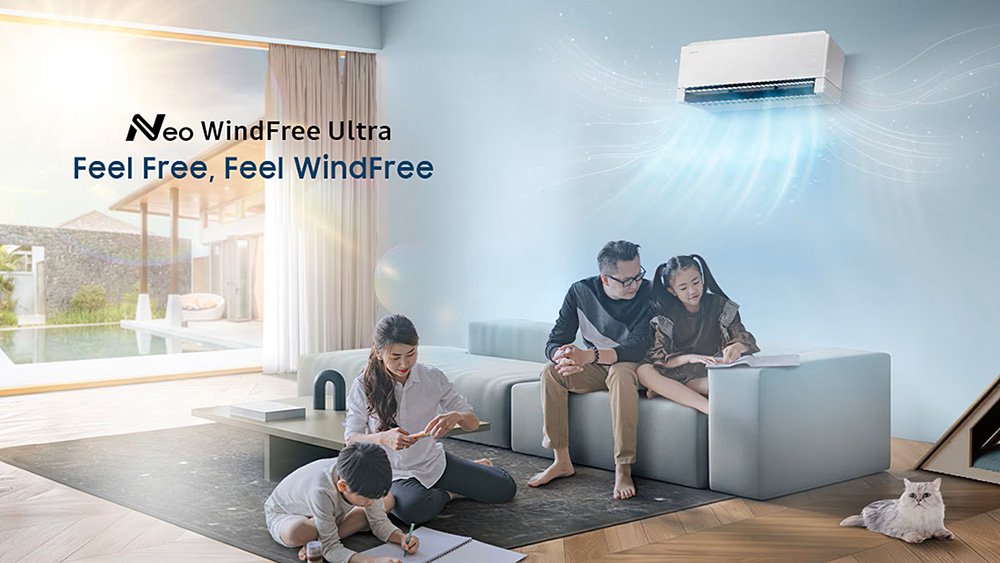
One of the most notable claims regarding the new unit is the "AI Energy Mode," which Samsung states can achieve up to 41 percent energy savings compared to standard non-AI models. This is achieved through the continuous adjustment of the inverter compressor speed. Rather than cycling on and off—a process that consumes significant electricity—the AI Inverter maintains a steady, low-energy state to keep the temperature constant.
For the modern consumer, the ability to monitor electricity consumption in real-time via a smartphone app is not just a convenience, but a financial imperative. As energy prices fluctuate globally, the ability to track the "cost of cooling" provides transparency that encourages more sustainable usage habits.
Maintenance and Longevity: The Freeze Wash Innovation
A recurring issue with high-efficiency AC units is the accumulation of biological matter (mold and bacteria) within the internal heat exchanger, which can degrade air quality over time. Samsung’s response to this is the "Freeze Wash" technology. This automated cleaning cycle freezes the surface of the heat exchanger to trap dust and bacteria, then melts the ice to wash the impurities away. This reduces the frequency of manual professional cleaning, effectively lowering the Total Cost of Ownership (TCO) for the user.
Market Positioning and Strategic Implications
The Neo WindFree Ultra is available in 1 PK, 1.5 PK, and 2 PK capacities, starting at a price point of approximately Rp10 million. By positioning this product in the premium segment, Samsung is targeting homeowners who view their appliances as investments in health and property value rather than mere utility purchases.
The implication for the wider market is significant. As Samsung integrates air purification into its flagship AC line, competitors are likely to face pressure to follow suit. The industry is moving toward a model where home appliances must be "connected," "intelligent," and "multi-functional."
Furthermore, the emphasis on AI-driven energy saving reflects the manufacturer’s response to environmental regulations and the global "Green Home" movement. If the 41 percent energy savings claim holds true in real-world, non-laboratory conditions, the unit could become a preferred choice for residential developers aiming for high energy-efficiency certifications for their properties.
Challenges and Future Outlook
Despite the advanced feature set, the success of the Neo WindFree Ultra will depend on the reliability of its connectivity features. An "AI-driven" appliance is only as good as the software ecosystem that supports it. If the SmartThings platform faces downtime or if the AI fails to adapt to specific room geometries, the user experience could suffer.
Additionally, the reliance on high-tech filters like the PM1.0 requires a commitment to periodic maintenance. While the filter is washable, the long-term effectiveness of the filtration system will depend on user adherence to cleaning schedules—a challenge that even the most advanced technology cannot fully automate.
Conclusion
The launch of the Samsung AC Neo WindFree Ultra marks a definitive step toward the "smart home" ideal, where appliances function as an integrated ecosystem rather than isolated machines. By merging air purification, advanced AI-based cooling, and energy-management software, Samsung has set a high bar for the HVAC industry. As consumers continue to demand greater control over their indoor environments, the success of this product will likely serve as a blueprint for the next generation of home climate technology.
Moving forward, the industry will watch closely to see how effectively the "AI Energy Mode" performs in diverse residential settings, and whether the market is ready to embrace higher upfront costs in exchange for long-term energy savings and superior air quality. For now, the Neo WindFree Ultra stands as a testament to the ongoing digital transformation of domestic infrastructure.
