
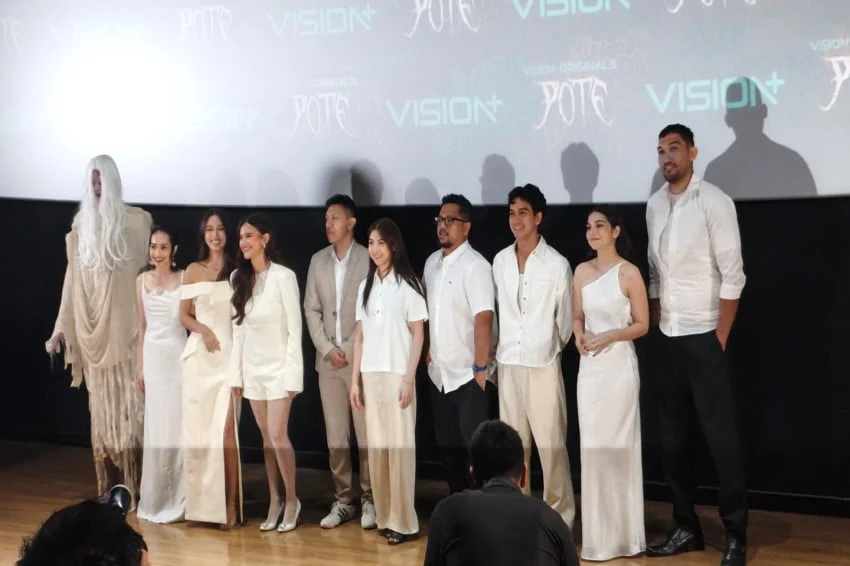
The modern landscape of Indonesian streaming content continues to expand rapidly as platforms invest heavily in high-concept original series that blend horror, drama, and intricate character design. A prime example of this ongoing production boom is the upcoming Vision+ original series titled POTE, which has already begun generating considerable industry buzz following its official press conference held in Jakarta on Saturday, September 19, 2026. Among the primary talking points emerging from the promotional event is the rigorous physical and artistic transformation undergone by actor Daniel Ekaputra, who takes on the daunting responsibility of portraying the titular ghost character, Pote. While supernatural and horror-themed narratives are a staple of Southeast Asian cinema and television, the technical execution required to bring Pote to life on screen demanded an unprecedented level of commitment from the production team, special effects makeup artists, and the lead actor himself.
The Main Facts of the Production and Character Transformation
At the heart of the recent press conference discussions was the revelation of the extreme logistical hurdles associated with bringing the character of Pote to the screen. Daniel Ekaputra, known for his dedication to character immersion, revealed to the gathered media that his portrayal of the spectral entity required a daily transformation process that stretched up to four hours before a single frame of footage could be captured. In a competitive streaming market where visual fidelity and production value directly influence subscriber retention, the decision to rely heavily on practical special effects makeup rather than relying exclusively on computer-generated imagery (CGI) underscores Vision+’s commitment to delivering a visceral, authentic viewing experience.
According to Ekaputra, the intricate design of the Pote character is not merely a background aesthetic choice but a central narrative device. The physical manifestation of the ghost is subjected to numerous close-up camera angles throughout the series, meaning that every prosthetic application, skin texture, scar, and discoloration must withstand intense visual scrutiny. In contemporary high-definition and 4K streaming formats, minor flaws in special effects makeup are easily detected by audiences, necessitating an extraordinary degree of precision from the makeup department. Consequently, the preparation window before shooting began each day was non-negotiable, requiring the actor to endure a lengthy, meticulous process long before stepping onto the set.
Chronology and Behind-the-Scenes Realities of Filming POTE
The journey toward bringing POTE to audiences involves a carefully coordinated timeline of pre-production planning, prosthetic testing, principal photography, and post-production refinement. Months before the cameras started rolling, the production team, led by specialized prosthetic artists and directors, conceptualized the visual identity of Pote. The goal was to craft a specter that diverged from conventional, overused tropes of Indonesian horror while still invoking genuine dread and unease.
Once the conceptual phase was finalized, screen tests were conducted to evaluate how the makeup would react under various lighting conditions, particularly given that horror series often rely on low-key lighting, shadows, and sharp contrasts. It was during these initial trials that the time commitment required for the makeup application became apparent. By the time principal photography commenced ahead of the late 2026 release schedule, the routine was firmly established.
Ekaputra described the daily ritual with a mixture of humor and candor, noting that while the process was undeniably cumbersome, he adapted by treating the four-hour window as an opportunity to rest. Being required to sit perfectly still while multiple layers of prosthetics, paints, and specialized adhesives were applied to his skin tested his patience. Despite the physical discomfort, Ekaputra embraced the challenge, recognizing that the external transformation was vital for internalizing the character’s psychological and supernatural weight. The ability to remain still and cooperative during such exhaustive cosmetic sessions highlights the high level of professionalism required of actors working within the demanding genre of prosthetic-heavy horror.
Supporting Data and Context within the Indonesian Streaming Ecosystem
The release of POTE represents a strategic push by Vision+, one of Indonesia’s leading subscription video-on-demand (SVOD) platforms, to capture a larger share of the domestic and regional streaming market. In recent years, Indonesian horror content has experienced a renaissance, driven by both theatrical blockbusters and serialized streaming formats that appeal to younger, digitally native demographics. Data from media analytics firms indicate that horror remains the most consumed local genre across Indonesian streaming services, outperforming romantic comedies and standard dramas.
However, as the market becomes saturated with supernatural thrillers, platforms are forced to elevate their production standards to stand out. Audiences have grown increasingly sophisticated, demanding higher production values, compelling storylines, and complex character arcs. The inclusion of seasoned and rising talent alike—such as Audi Marissa, who plays a medical professional in the series and had to undergo rigorous training to master medical terminology prior to filming—demonstrates the multi-layered approach production houses are taking to ensure narrative credibility.
The investment in high-end practical effects for POTE aligns with global industry trends, where audiences show a distinct preference for tangible, tactile monster and ghost designs over purely digital creations. Practical effects evoke a visceral sense of realism that CGI sometimes fails to deliver, particularly in close-up sequences. The decision by Vision+ to allocate substantial resources to the makeup department for Daniel Ekaputra’s character underscores a broader industry realization that technical authenticity directly correlates with audience engagement and critical reception.
Official Responses, Cast Dynamics, and Collaborative Efforts
The press conference on September 19, 2026, served as a comprehensive showcase for the cast and crew to articulate the collaborative effort required to bring the complex narrative of POTE to fruition. Directors, producers, and key cast members detailed the synergy between the acting department and the technical crew. For Ekaputra, working closely with the special effects makeup team was a collaborative educational experience. He noted that the makeup artists were under immense pressure to maintain continuity across different shooting days, ensuring that Pote’s appearance remained identical regardless of changes in shooting locations or lighting setups.
Audi Marissa, another prominent cast member whose role as a doctor requires a completely different kind of preparation—namely, learning complex medical terminology and procedural accuracy—emphasized the overall commitment to detail shared by the entire ensemble. This dedication to respective crafts, whether through mastering medical jargon or enduring four-hour prosthetic sessions, reflects a maturing Indonesian entertainment industry where actors are increasingly expected to undergo specialized training to meet the demands of prestige television.
Broader Impact, Industry Implications, and Future Outlook
The production and subsequent marketing rollout of POTE carry significant implications for the future of Indonesian streaming originals. As platforms like Vision+ continue to scale their content libraries, the benchmark for what constitutes a successful local series is shifting away from rapid, low-budget turnarounds toward meticulously crafted, cinematic episodic storytelling.
The physical demands placed on actors like Daniel Ekaputra illustrate the evolving nature of performance in modern genre television. Acting in heavy prosthetics is a specialized skill that requires immense mental fortitude, physical endurance, and the ability to convey emotion through layers of synthetic materials. Ekaputra’s willingness to undergo this rigorous process highlights the lengths to which contemporary Indonesian actors will go to deliver memorable performances that resonate with viewers.
Furthermore, the emphasis on practical special effects in POTE may encourage other domestic production houses to invest more heavily in local makeup and prosthetic talent, rather than outsourcing specialized effects entirely to international firms. This localized capacity-building strengthens the domestic film and television ecosystem, creating sustainable career pathways for makeup artists, prop designers, and visual effects technicians within Indonesia.
As anticipation builds for the official premiere of POTE on Vision+, the industry will be watching closely to see how these ambitious production choices translate on screen. The combination of medical realism provided by cast members like Audi Marissa and the haunting, high-effort supernatural presence brought to life by Daniel Ekaputra suggests that the series is poised to offer a multi-dimensional viewing experience. By prioritizing technical detail, actor dedication, and narrative depth, POTE exemplifies the progressive trajectory of Indonesia’s digital entertainment sector as it continues to capture both local devotion and international attention.
