
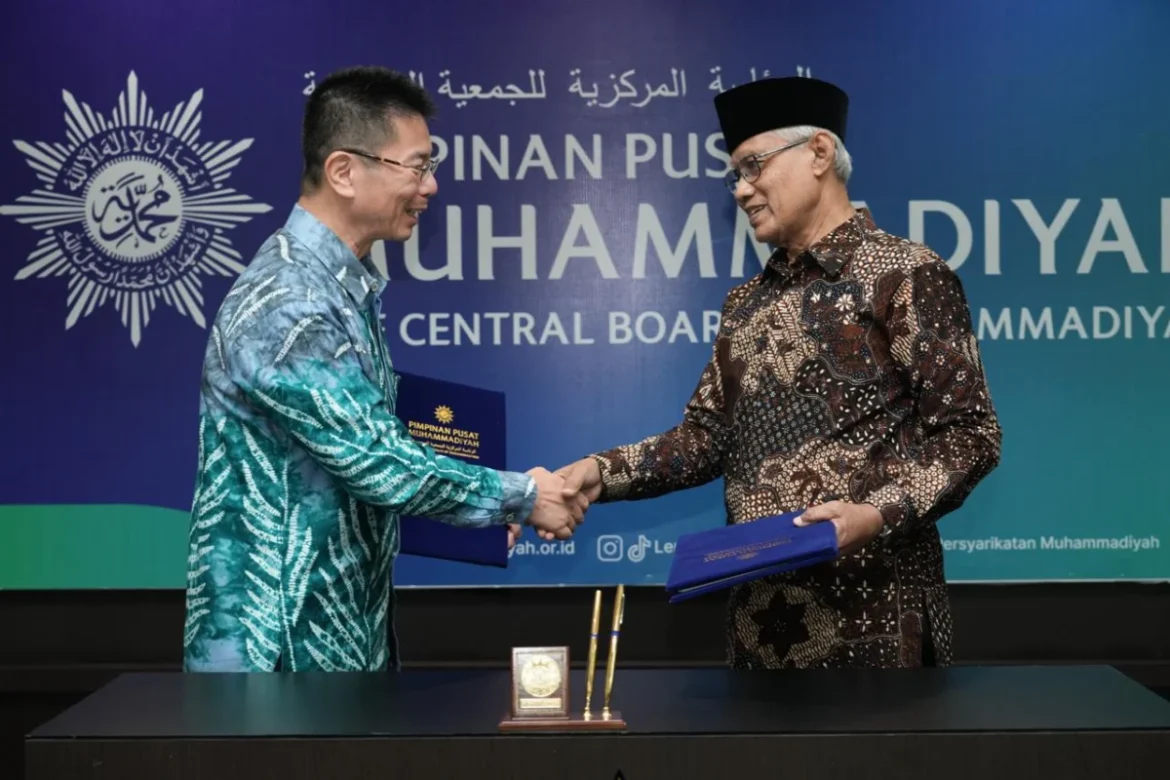
A landmark Memorandum of Understanding (MoU) was officially signed between the Central Leadership (PP) of Muhammadiyah and Japan’s Kaikoukai Healthcare Corporation on Saturday, July 18, 2020, at the Central Leadership Office of Muhammadiyah in Yogyakarta. This pivotal agreement, inked by Professor Dr. H. Haedar Nashir, M.Si., Chairman of PP Muhammadiyah, and Mr. Tetsuya Yamada, President of Kaikoukai Healthcare Corporation, heralds a new era of strategic collaboration aimed at significantly enhancing Indonesia’s healthcare landscape and deepening bilateral ties between the two nations. The partnership focuses on four critical pillars: the development of hemodialysis services, comprehensive hospital management, advanced elderly care, and robust international programs for professional exchange and training.
Background: A Legacy of Service Meets Global Expertise
Muhammadiyah, established in 1912, stands as one of Indonesia’s largest and most influential Islamic organizations, boasting a vast network of educational, social, and healthcare institutions across the archipelago. Its commitment to public welfare, particularly in health, is evidenced by its extensive chain of Muhammadiyah-’Aisyiyah Hospitals (RSMA) and clinics, which serve millions of Indonesians annually. These institutions are not merely service providers but are integral to Muhammadiyah’s broader mission of fostering a progressive and healthy society, deeply embedded in local communities and national development efforts. The organization’s strategic vision for healthcare extends beyond basic provision, aiming for transformative advancements that align with global best practices and address emerging health challenges.
On the other side of this partnership is Kaikoukai Healthcare Corporation, a highly reputable and leading healthcare institution in Japan. Renowned for its cutting-edge medical technologies, patient-centric approach, and specialized care, particularly in areas like hemodialysis and elderly care, Kaikoukai operates a significant network of facilities. These include four prominent hospitals: Nagoya Kyoritsu Hospital, Kaikoukai Rehabilitation Hospital, and Kaikoukai Josai Hospital, all strategically located in Nagoya, along with Toshima Chuo Hospital in Tokyo. Japan’s healthcare system is globally recognized for its efficiency, advanced research, and high standards of patient care, making Kaikoukai a formidable and experienced partner in medical innovation and service delivery. This collaboration represents a strategic convergence of Muhammadiyah’s extensive reach and humanitarian mission with Kaikoukai’s technological prowess and specialized expertise.
The Genesis of a Strategic Partnership: A Shared Vision for Progress
The formal signing of the MoU on July 18, 2020, was the culmination of several years of intensive discussions and preliminary meetings between Muhammadiyah and Kaikoukai. As Chairman Haedar Nashir revealed, the two organizations had engaged in multiple dialogues over the preceding years, laying the groundwork for a robust and mutually beneficial alliance. These preliminary engagements allowed both parties to explore areas of synergy, understand each other’s strengths, and identify common goals, particularly in the realm of health sector development. This iterative process ensured that the formalized cooperation was built on a solid foundation of shared understanding and a clear vision for impact.
Professor Haedar Nashir underscored the profound historical and cultural ties that bind Indonesia and Japan, emphasizing that this relationship goes beyond mere diplomatic or economic exchanges. He highlighted the "brotherly" connection fostered by long-standing interactions and a shared appreciation for values such as discipline, diligence, and hospitality. "Japan has become a close sibling, having interacted with Indonesia for a long time. The friendly culture of Japan also has a closeness with Indonesian culture," Haedar stated during the signing ceremony. This cultural affinity, he believes, forms a crucial bedrock for a successful and enduring long-term collaboration, transcending transactional interests to foster a partnership rooted in mutual respect and understanding. Such cultural alignment is often a key determinant of success in international collaborations, facilitating smoother communication, greater trust, and more effective problem-solving.
Pillars of Collaboration: Addressing Critical Healthcare Needs
The four strategic pillars identified in the MoU are designed to address some of the most pressing healthcare challenges and opportunities in Indonesia, leveraging Kaikoukai’s specialized expertise and Muhammadiyah’s expansive institutional framework.
-
Advanced Hemodialysis Services:
This pillar focuses on the development and enhancement of hemodialysis (kidney dialysis) services across Muhammadiyah’s hospital network. Chronic kidney disease (CKD) is a growing public health concern in Indonesia, with a significant number of patients requiring regular hemodialysis treatments. The prevalence of diabetes, often a precursor to kidney complications, further exacerbates this need. Kaikoukai Healthcare Corporation is a recognized leader in this field, boasting impressive patient outcomes. Mr. Tetsuya Yamada proudly shared that Kaikoukai’s hemodialysis patients achieve a survival rate of over 70% after more than five years of treatment, a figure considered among the best in Japan. This expertise offers a critical opportunity for Muhammadiyah to adopt advanced techniques, implement rigorous quality control measures, and improve patient care standards, ultimately extending the lives and improving the quality of life for countless Indonesian patients suffering from kidney failure. The collaboration is expected to involve technology transfer, staff training, and the establishment of state-of-the-art dialysis centers. -
Comprehensive Hospital Development and Management:
This aspect of the partnership aims to elevate the overall quality and operational efficiency of Muhammadiyah-’Aisyiyah Hospitals (RSMA). With its extensive network, Muhammadiyah is keen to implement best practices in hospital management, optimize patient flow, enhance clinical governance, and integrate advanced medical technologies. Kaikoukai’s experience in managing multiple high-performing hospitals, including specialized facilities like rehabilitation and general hospitals, provides an invaluable blueprint. The collaboration is expected to cover areas such as infrastructure planning, equipment procurement, digitalization of hospital operations, and the implementation of patient safety protocols, ensuring that RSMA facilities evolve into modern, efficient, and patient-centric institutions capable of delivering high-quality care across various specialties. This will involve consultations, joint working groups, and potentially exchange programs for administrative and medical staff. -
Advanced Elderly Care Solutions:
The provision of care for the elderly is a rapidly growing global concern, particularly in developed nations like Japan, which is experiencing an "aging society" phenomenon. Japan’s demographic shift, characterized by a declining birth rate and increasing life expectancy, has led to a significant demand for skilled caregivers and specialized facilities for its senior population. Mr. Yamada highlighted this phenomenon, noting that a substantial portion of caregivers working in Kaikoukai’s facilities are from Indonesia. While Indonesia’s population is still relatively young, it is also experiencing a gradual increase in its elderly demographic, signifying a future need for robust elderly care infrastructure and expertise. This pillar of cooperation offers a dual benefit: it provides opportunities for Indonesian professionals to gain expertise and employment in Japan’s advanced elderly care sector, and it allows Muhammadiyah to proactively develop modern, compassionate, and effective elderly care models that can be adapted and implemented in Indonesia as its own population ages. This could involve training programs for caregivers, development of specialized elderly care facilities, and exchange of best practices in geriatric medicine and palliative care. -
International Programs and Human Resource Development:
Beyond the specific service areas, the MoU encompasses broader international programs focused on human resource development and professional exchange. This pillar is crucial for fostering a sustainable partnership and ensuring long-term impact. It envisages opportunities for Indonesian medical professionals, nurses, and caregivers to undergo training and gain work experience in Japan, benefiting from Kaikoukai’s advanced medical environment. Conversely, it could also involve Japanese experts sharing their knowledge and skills in Indonesia. Chairman Haedar Nashir emphasized that this collaboration would also strengthen Muhammadiyah’s existing international presence, particularly its Special Branch Leadership (PCIM) in Japan. He expressed hope that the cooperation would "provide a positive impact for the management of Muhammadiyah branches in Japan," further integrating the diaspora into the organization’s global mission and leveraging their presence for mutual benefit. Such programs are vital for elevating the skills and perspectives of healthcare workers, bringing global standards back to Indonesia.
Leadership Perspectives: Vision for a Healthier Nation
Both leaders articulated a strong vision for the partnership, emphasizing its transformative potential and long-term implications.
Professor Haedar Nashir powerfully articulated Muhammadiyah’s commitment to a "transformative" approach to healthcare development, moving beyond mere "revitalization." He stressed the importance of progressive steps to build advanced and thriving health institutions. "The four pillars brought by Mr. Yamada reinforce the steps we are currently taking. Without progressive steps, we will not have advanced and progressive health institutions," he affirmed. This statement highlights Muhammadiyah’s ambition to not just improve existing services but to fundamentally reshape its healthcare offerings, integrating innovation, technology, and global best practices. Haedar Nashir also indicated that Muhammadiyah has already directed its network of Muhammadiyah-’Aisyiyah Hospitals (RSMA) to actively embrace and implement the programs that will emerge from this collaboration. He firmly stated, "This agreement must be followed up continuously until it gives birth to concrete programs," underscoring the organization’s resolve to translate the MoU into tangible, impactful initiatives. He reiterated that this partnership with a leading Japanese healthcare institution like Kaikoukai represents a significant opportunity for Muhammadiyah to substantially enhance the quality of its healthcare services and contribute meaningfully to the nation’s health agenda.
Mr. Tetsuya Yamada, President of Kaikoukai Healthcare Corporation, expressed his profound satisfaction and optimism regarding the newly forged alliance. "I am very pleased to sign this MoU with PP Muhammadiyah. These four pillars become the basis of our cooperation, as well as a bridge to further strengthen the relationship between Indonesia and Japan," Yamada stated. His remarks underscored the dual objective of the partnership: not only to advance healthcare services but also to serve as a catalyst for deeper diplomatic and cultural ties between the two countries. Yamada’s enthusiasm for the collaboration highlights Kaikoukai’s recognition of Muhammadiyah’s significant influence and extensive network in Indonesia, presenting a unique opportunity for global engagement and the sharing of Japanese healthcare excellence. He reaffirmed Kaikoukai’s commitment to the success of the joint ventures, particularly leveraging their expertise in hemodialysis and their experience in addressing the challenges of an aging society, which could provide valuable insights for Indonesia’s future demographic shifts.
Broader Implications: Shaping the Future of Healthcare and Bilateral Ties
The strategic partnership between Muhammadiyah and Kaikoukai Healthcare Corporation carries significant implications, promising far-reaching benefits for Indonesian healthcare, economic development, and international relations.
For Indonesian Healthcare, this collaboration is poised to usher in a new era of specialized medical care. The transfer of advanced hemodialysis technologies and clinical protocols from Kaikoukai is expected to significantly improve treatment outcomes for kidney disease patients, reducing mortality rates and enhancing their quality of life. Furthermore, the focus on hospital development and management will lead to more efficient, patient-centric, and technologically equipped hospitals within the Muhammadiyah network, setting new benchmarks for healthcare delivery nationwide. The proactive development of elderly care models, drawing from Japan’s extensive experience, will be crucial as Indonesia anticipates its own demographic shifts, ensuring that future generations of seniors receive comprehensive and compassionate care.
From an economic and social perspective, the international programs and human resource development pillar is particularly impactful. By facilitating training and employment opportunities for Indonesian medical professionals and caregivers in Japan, the partnership addresses the growing global demand for skilled healthcare workers. This not only provides valuable career pathways for Indonesian graduates but also contributes to remittances, boosting the national economy. More importantly, the skills and knowledge acquired abroad will be repatriated, enriching Indonesia’s domestic healthcare workforce and fostering a culture of continuous learning and excellence.
The collaboration also serves as a powerful testament to the strengthening of Indonesia-Japan relations. Beyond traditional sectors like trade and investment, this partnership deepens socio-cultural and professional exchanges, building bridges of understanding and cooperation in critical humanitarian fields. It exemplifies how bilateral ties can evolve to address shared global challenges, from public health to demographic shifts, through mutual learning and strategic alliances.
Finally, for Muhammadiyah, this MoU marks a significant step in its journey of internationalization and mission fulfillment. By partnering with a globally recognized healthcare leader, Muhammadiyah enhances its institutional capacity, broadens its global network, and reinforces its commitment to providing high-quality, transformative services to the Indonesian people. It elevates Muhammadiyah’s standing as a progressive Islamic organization that actively seeks and implements global best practices for the betterment of society, aligning its humanitarian mission with international standards of excellence.
In conclusion, the strategic alliance between Muhammadiyah and Kaikoukai Healthcare Corporation is more than just an agreement; it is a visionary commitment to transforming Indonesia’s healthcare landscape, fostering human resource development, and strengthening the enduring bonds between Indonesia and Japan. It sets a precedent for future international collaborations aimed at addressing complex societal needs through shared expertise, mutual respect, and a progressive outlook. The coming years will be crucial in translating this ambitious MoU into concrete programs that deliver tangible benefits, setting a new standard for healthcare innovation and international partnership in the region.
