
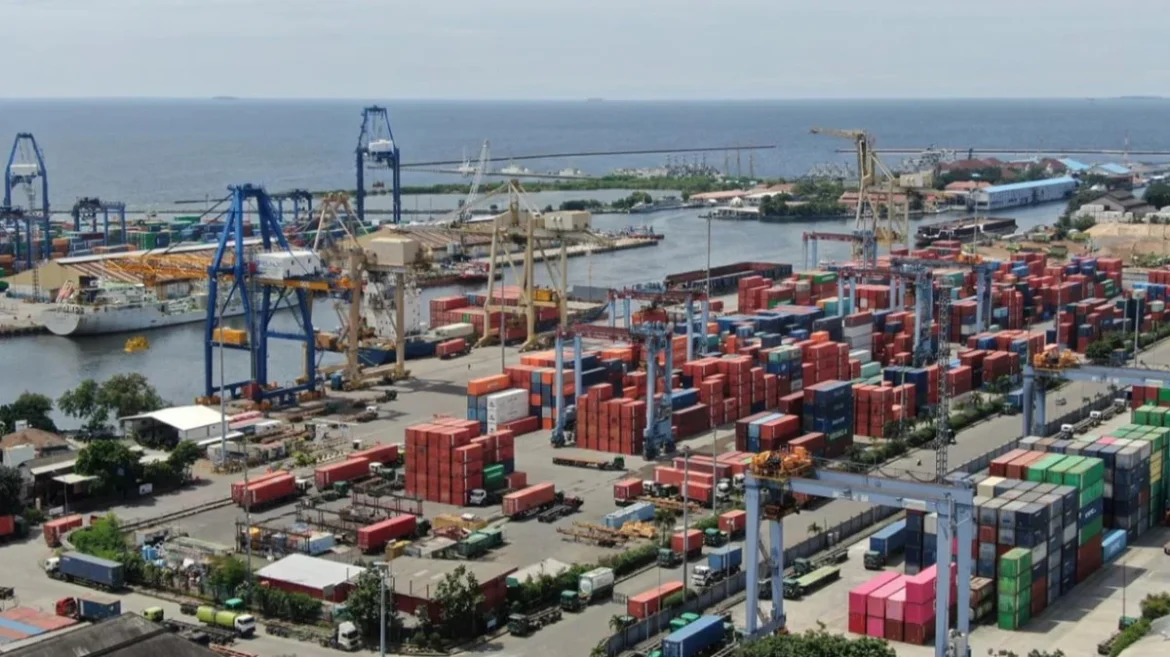
Jakarta, Indonesia – PT IPC Terminal Petikemas (IPC TPK), a pivotal player in Indonesia’s maritime logistics sector, has announced a resilient operational performance for the first quarter of 2026, successfully navigating the inherent complexities and challenges posed by the nationwide Idul Fitri holiday period. The company, a subsidiary of Pelindo, recorded an impressive total throughput of 850,768 TEUs (Twenty-foot Equivalent Units) from January to March 2026. This figure represents a commendable 0.9 percent increase compared to the 843,187 TEUs handled during the corresponding period in the previous year. This growth is particularly noteworthy given the temporary restrictions on freight transport implemented by the government to manage the colossal "mudik" exodus, a mass movement of people to their hometowns, which annually tests the robustness of the nation’s supply chains. The achievement underscores IPC TPK’s strategic agility, operational efficiency, and unwavering commitment to maintaining the flow of critical goods across the archipelago, even under significant logistical pressure.
Background: The Idul Fitri Phenomenon and Its Logistical Impact
Idul Fitri, or Eid al-Fitr, is more than just a religious holiday in Indonesia; it is a cultural cornerstone that triggers one of the world’s largest annual human migrations. Millions of Indonesians travel back to their ancestral homes, creating an unparalleled surge in passenger traffic on roads, railways, sea, and air routes. To ensure public safety, minimize traffic congestion, and facilitate the smooth passage of these travelers, the Indonesian government, primarily through the Ministry of Transportation, typically issues strict directives on freight transport. These directives impose temporary bans or restrictions on certain categories of goods vehicles on major highways and arterial roads. In 2026, the Idul Fitri celebrations took place in early April, meaning the peak period of logistical planning, pre-holiday stockpiling, and subsequent freight restrictions significantly impacted the tail end of the first quarter, specifically the month of March. Historically, these restrictions can last for several days before and after the main holiday, sometimes extending to a week or more, forcing logistics operators to either front-load cargo or face significant delays. The challenge for port operators like IPC TPK lies in efficiently managing the influx and efflux of containers within these constrained windows, ensuring that essential goods reach their destinations without causing significant bottlenecks or economic disruption. The success of IPC TPK in this period reflects a matured understanding of these cyclical challenges and the development of robust countermeasures.
Strategic Foresight and Operational Excellence in Action
Pramestie Wulandary, Corporate Secretary of IPC TPK, elaborated on the proactive and meticulous planning that underpinned the company’s Q1 success. "The achievement is inseparable from IPC TPK’s anticipatory steps in carrying out measured operational optimization, both before and after the logistics restriction period," Wulandary stated during a press briefing on Wednesday, April 15, 2026. This optimization strategy involved several key components:

-
Pre-Restriction Acceleration: Recognizing the impending ban, IPC TPK intensified its loading and unloading operations in the weeks leading up to Idul Fitri. This involved extended operating hours, efficient resource allocation, and close coordination with shipping lines and cargo owners to push through as much volume as possible, ensuring that essential goods reached distributors and retailers ahead of the holiday. This proactive stance helped create a buffer against the subsequent operational slowdown.
-
Post-Restriction Expediting: Once the freight restrictions were lifted, the company immediately shifted into an accelerated mode. This involved prioritizing the swift clearance of accumulated cargo, optimizing internal logistics at terminals, and streamlining gate processes to quickly disperse containers that had been held back. This rapid recovery phase was critical to minimizing any backlog and restoring normal supply chain velocity.
-
Enhanced Communication and Coordination: Throughout the period, IPC TPK maintained continuous dialogue with the Ministry of Transportation, port authorities (as part of the Pelindo Group), shipping companies, and logistics associations. This collaborative approach ensured that all stakeholders were aligned on operational schedules, potential bottlenecks were identified early, and contingency plans could be activated swiftly to address unforeseen issues.
-
Technology Integration: While not explicitly detailed in the original article, modern port operations of this scale typically leverage advanced Terminal Operating Systems (TOS) and other digital platforms. The effective utilization of such technology would have been crucial in executing the "measured operational optimization" strategy, enabling real-time tracking, predictive analytics for vessel arrivals, and efficient yard management. This technological backbone allows for dynamic adjustments to operational plans.

"This strategy allowed us to maintain distribution continuity while minimizing potential congestion at the terminal, which is crucial for overall supply chain health and economic stability," Wulandary added, emphasizing the systemic impact of their efforts beyond just their own throughput figures. The company’s ability to adapt swiftly to government policies and seasonal demand fluctuations serves as a model for operational resilience within the logistics sector.
Detailed Performance Analysis: Unpacking the Q1 Figures
While the overall 0.9 percent growth presents a positive outlook, a deeper dive into the quarterly data reveals interesting dynamics and the specific impact of the Idul Fitri period. The nuanced trends highlight IPC TPK’s capacity to balance various market forces.
- Monthly Fluctuation: The data indicates that March 2026, the month directly preceding the Idul Fitri celebrations, experienced a downturn in activity. Container handling for March 2026 was recorded at 250,352 TEUs, representing an approximately 14 percent decrease when compared to the 290,923
