
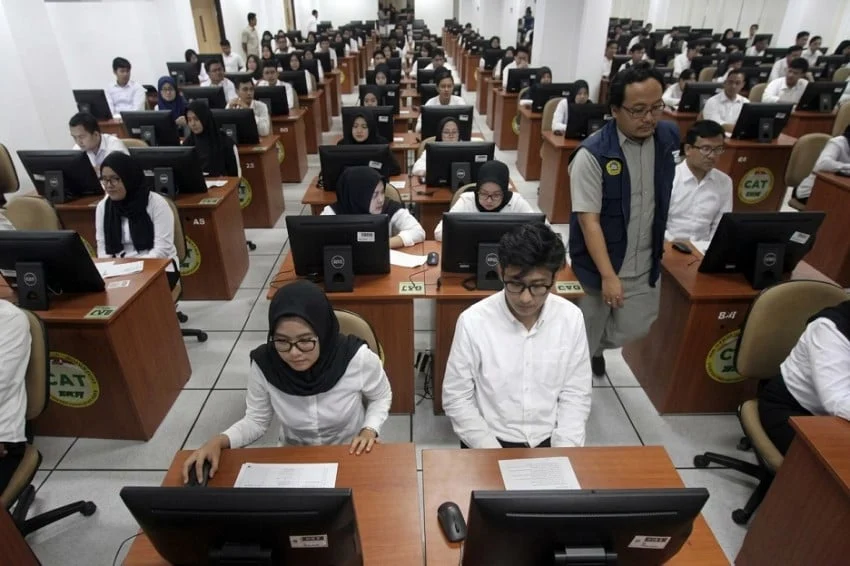
The Indonesian government has officially reached a consensus regarding the future of the nation’s teaching workforce, particularly concerning the status of educators currently serving as part-time and full-time Government Employees with Work Agreements (PPPK). During a closed-door meeting held at the Parliamentary Complex in Senayan, Jakarta, on Thursday, September 17, 2026, Minister of Home Affairs (Mendagri) Tito Karnavian confirmed that a standardized examination system will be implemented to facilitate the transition of these educators into full-time positions under the Ministry of Primary and Secondary Education (Kemendikdasmen).
This policy shift represents a significant evolution in Indonesia’s human resource management for the education sector. It addresses long-standing aspirations from teachers across the country, including those working in state-run madrasas and kindergarten facilities, who have sought greater job security and formal status as civil servants (PNS) or full-time Kemendikdasmen employees.
The Mechanism of the New Examination System
Minister Tito Karnavian emphasized that the proposed testing mechanism is designed to be inclusive rather than punitive. The primary goal is to standardize the quality of the teaching force while rewarding those who meet the necessary criteria. According to the Minister, the policy will apply to three main categories of teachers: current part-time PPPK, full-time PPPK, and specific educators in state-affiliated institutions such as madrasas and kindergartens.
"The conclusion of our discussion is that we will strive to have them participate in a form of examination," Tito explained in a press statement following the meeting. "If they pass, they will be officially integrated as employees under the Ministry of Primary and Secondary Education. However, it is vital to emphasize that if they do not pass, their current status will remain unchanged. They will not be dismissed, nor will they be laid off. Their job security remains protected."
This "no-harm" approach is a critical component of the government’s strategy to maintain stability in the classroom while simultaneously pushing for higher professional standards. By creating a pathway for advancement without the threat of unemployment for those who fail the exam, the government aims to mitigate potential labor unrest and maintain morale among the teaching staff.
Background and Chronology of the Policy Shift
The decision comes after months of deliberation between the executive and legislative branches. The discourse surrounding the status of honorary and contract teachers has been a persistent issue in Indonesian governance for over a decade. Since the introduction of the PPPK scheme, thousands of teachers have transitioned from honorary status to contract-based government work, but the demand for full civil servant status or centralized employment under the Ministry has remained high.
The timeline leading to this development began in early 2026, when various teacher unions and advocacy groups petitioned the House of Representatives (DPR) to address the ambiguity regarding career progression. Throughout the first and second quarters of 2026, the government conducted internal assessments of the state budget and the administrative feasibility of transitioning contract teachers into a centralized civil service structure.
By mid-2026, it became clear that the Ministry of Primary and Secondary Education required a more unified workforce to implement national curriculum reforms effectively. The September 17 meeting served as the culmination of these discussions, effectively signaling a shift toward centralized management of educational human resources, moving away from the previous model where local governments held significant control over teacher appointments.
Economic and Administrative Implications
The transition of thousands of teachers into the Kemendikdasmen payroll carries significant implications for the national budget. Historically, the burden of teacher salaries for many local school districts was shared or entirely devolved to regional budgets (APBD). This created disparities in teacher compensation, as wealthier regions could afford better incentives while rural or underdeveloped regions often struggled to meet payroll obligations.
By moving these teachers under the direct purview of the Ministry, the government aims to standardize compensation and benefits nationwide. This is a critical step toward ensuring equity in the quality of education. Economists suggest that this centralization could lead to higher administrative efficiency, although it necessitates a massive restructuring of the current bureaucratic framework to accommodate a significant influx of new permanent staff.
Furthermore, the implementation of a national exam serves as a quality control mechanism. Critics of the previous honorary teacher system have long argued that the lack of rigorous selection processes contributed to inconsistent teaching quality. By formalizing the path to permanent employment through a standardized test, the government is signaling that it prioritizes meritocracy in its pedagogical staff.

Perspectives from Stakeholders and Experts
The announcement has garnered mixed but generally optimistic reactions. Teacher unions, which have been at the forefront of the advocacy efforts, have welcomed the government’s guarantee that no teacher will be dismissed if they fail the exam. This assurance is seen as a major victory for the labor movement within the education sector.
However, educational policy experts have raised questions regarding the nature and difficulty of the examinations. "The test must be relevant to the practical challenges of teaching," noted a policy analyst from the Indonesian Education Forum. "If the test focuses purely on theoretical knowledge rather than pedagogical capability or years of experience, it could alienate veteran teachers who are highly effective in the classroom but may not be accustomed to standardized computer-based testing."
The government has indicated that the specifics of the exam—including its format, subjects, and grading criteria—will be finalized in the coming months, with technical guidelines to be issued by the Ministry of Primary and Secondary Education.
The Path Toward 2027 and Beyond
The government has already set a tentative roadmap for this transition. As reported previously, the transition for full-time PPPK teachers to be eligible for full civil servant (PNS) status is expected to commence in 2027. The upcoming exams for the broader category of educators are intended to be a precursor to this larger transformation.
This policy is part of a broader "Grand Design" for national education reform. The government’s objective is to professionalize the teaching force, making the profession more attractive to top-tier graduates while providing a clear, transparent, and standardized career ladder for those already in the system.
Challenges and Future Considerations
While the policy is a step forward, several challenges remain. The first is the logistical burden of testing hundreds of thousands of teachers across an archipelago as vast as Indonesia. The Ministry will need to leverage digital infrastructure to ensure that teachers in remote regions have equal access to these exams.
Secondly, the integration of madrasa teachers—who operate under a slightly different administrative umbrella—into the Ministry of Primary and Secondary Education’s framework will require close coordination with the Ministry of Religious Affairs. Ensuring that this cross-ministerial transition is seamless will be one of the primary hurdles for the current administration.
Finally, the sustainability of the salary structure must be considered. While centralizing the payroll provides equity, it also concentrates the financial risk within the central government budget. As the number of permanent staff increases, so too does the long-term pension and benefit obligation.
Conclusion: A New Era for Indonesian Educators
The government’s decision to implement a testing-based transition for PPPK teachers marks a pivotal moment in the professionalization of the Indonesian education sector. By prioritizing job security and providing a clear pathway for professional advancement, the state is attempting to resolve a chronic labor issue that has affected millions of students and educators alike.
As the government prepares for the implementation phase, the focus will now shift to the design of the examination and the administrative readiness of the Ministry of Primary and Secondary Education. For the teachers of Indonesia, the coming months represent a period of anticipation, as the prospect of career stability finally appears within reach. The success of this policy will ultimately be measured by its ability to retain experienced educators while elevating the overall standards of the classroom, ensuring that the next generation of Indonesian students receives the quality of instruction they deserve.
The government’s commitment to maintaining current staff regardless of the exam outcome is a testament to the political sensitivity of the issue. By removing the fear of job loss, the government has cleared the path for a constructive dialogue between the state and the teaching profession, setting the stage for a more stable and effective educational landscape in the years to come.
