
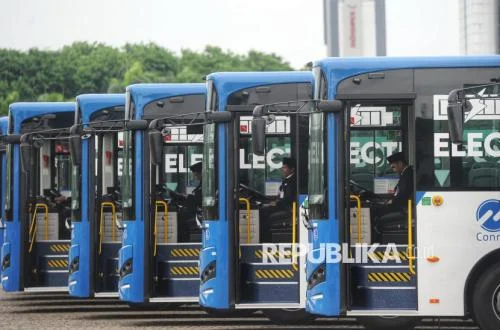
JAKARTA – A single electric bus operating within Jakarta’s expansive TransJakarta public transportation network is projected to save the Indonesian government approximately Rp302 million (approximately USD 19,000) annually in fuel subsidies. This significant figure represents just one facet of the substantial economic and environmental advantages associated with the transition to electric vehicles (EVs) in public transit. When considering a comprehensive array of operational aspects, including energy and maintenance efficiencies, the cumulative cost savings over a 5.5-year operational period for a single electric bus could reach an astonishing Rp3.99 billion (approximately USD 250,000), a sum nearly equivalent to the current purchase price of a new 12-meter electric bus itself.
These compelling financial projections were unveiled by Gatot Indra Koswara, Principal Specialist for Transformation and Change Management at TransJakarta, during a Focus Group Discussion (FGD) held in Jakarta on Wednesday, April 15, 2026. The discussion, which brought together the Strategic Transportation Initiative (Instran) and PT Kalista Nusa Armada, highlighted the strategic imperative and economic viability of electrifying Jakarta’s bus fleet, despite the higher initial capital expenditure associated with electric vehicles.
Deconstructing the Savings: A Deep Dive into Fiscal Efficiency
The cornerstone of the calculated savings lies in the stark difference between subsidized and commercial fuel prices, coupled with the inherent operational efficiencies of electric propulsion. Gatot Indra Koswara detailed the methodology, which assumes a subsidized diesel (solar) price of Rp6,800 per liter, contrasted with commercial-grade diesel (Dexlite) at approximately Rp14,500 per liter. This differential of Rp7,700 per liter forms the basis of the government’s subsidy burden.
A conventional internal combustion engine (ICE) TransJakarta bus typically covers an impressive 78,475 kilometers per year. With an average fuel efficiency of 2 kilometers per liter, such a bus consumes approximately 39,238 liters of diesel annually. By converting this consumption to the non-subsidized price, the potential subsidy expenditure that the government avoids by using an electric bus is calculated at roughly Rp302 million per unit per year. This figure underscores the substantial fiscal relief that a large-scale transition could offer the central government, reducing the financial strain of supporting public and commercial transportation fuel costs.
Beyond the direct fuel subsidy relief at the central government level, TransJakarta’s analysis also identified significant cost efficiencies accruing to the provincial government, particularly in energy and maintenance expenditures.
From an energy perspective, the operational cost of an ICE bus is pegged at approximately Rp3,400 per kilometer. In stark contrast, an electric bus incurs an energy cost of only about Rp800 per kilometer, based on an electricity tariff of Rp731 per kWh and the respective energy efficiencies of each vehicle type. This substantial difference translates into an annual saving of approximately Rp204 million per unit for the provincial government. This saving reflects not only the lower unit cost of electricity compared to diesel but also the superior energy conversion efficiency of electric powertrains.
Furthermore, maintenance costs present another significant area of savings. ICE buses are estimated to require around Rp5,400 per kilometer in maintenance, encompassing regular servicing, engine overhauls, and replacement of numerous mechanical components. Electric buses, with their simpler drivetrains and fewer moving parts, demand considerably less maintenance, with costs estimated at approximately Rp2,600 per kilometer. This disparity yields an additional annual saving of approximately Rp219.7 million per unit. The reduced complexity of electric motors and the absence of an intricate exhaust system, fuel injection systems, and multi-speed transmissions significantly lower the frequency and cost of repairs.
When all these components of savings – fuel subsidy, operational energy, and maintenance – are aggregated, the total efficiency realized by TransJakarta becomes truly transformative. Over a period of just 5.5 years, the cumulative savings per electric bus are projected to reach Rp3.99 billion. As Gatot Indra Koswara emphasized, this sum is equivalent to the current market price of a new 12-meter electric bus, effectively demonstrating that the initial higher investment in electric vehicles is fully recouped through operational savings within a relatively short timeframe. This long-term cost-effectiveness presents a compelling argument for accelerated electrification of public transport fleets, not just in Jakarta but across urban centers grappling with similar fiscal and environmental challenges.
The Broader Context: Jakarta’s Urban Transport and Indonesia’s Green Ambitions
TransJakarta, established in 2004, stands as one of the longest and busiest Bus Rapid Transit (BRT) systems in the world, serving millions of commuters daily across Indonesia’s sprawling capital. Jakarta, a megacity of over 10 million people, faces chronic traffic congestion and severe air pollution, consistently ranking among the most polluted cities globally. Emissions from the vast number of private and public vehicles are a primary contributor to this environmental crisis, leading to significant public health concerns.
Indonesia, as a signatory to the Paris Agreement, has committed to ambitious climate targets, including reducing its greenhouse gas emissions by 29% independently and up to 41% with international assistance by 2030. A key pillar of this commitment is the acceleration of the energy transition and the promotion of electric vehicles. The government has introduced various incentives, including tax breaks and local content requirements, to stimulate the domestic EV industry and encourage adoption. President Joko Widodo has repeatedly underscored the importance of transitioning to electric vehicles, not only for environmental reasons but also to reduce the nation’s reliance on fossil fuel imports and enhance energy security. The push for electric public transport aligns perfectly with these national strategic goals.
A Global Perspective: Electric Bus Adoption Worldwide
Jakarta’s move towards an electric bus fleet is part of a growing global trend among megacities seeking sustainable urban mobility solutions. Cities like Shenzhen, China, have famously achieved a 100% electric bus fleet, demonstrating the feasibility and benefits of such a transition on a massive scale. London, Santiago, and various European cities are also rapidly electrifying their public transport networks, driven by commitments to improve air quality, reduce carbon emissions, and lower operational costs in the long run.
These global examples highlight several key benefits:
- Reduced Emissions: Electric buses produce zero tailpipe emissions, directly contributing to cleaner urban air and mitigating climate change.
- Noise Reduction: Electric buses operate much more quietly than diesel buses, improving the urban soundscape and reducing noise pollution.
- Lower Running Costs: As evidenced by TransJakarta’s calculations, the cost of electricity is generally lower and more stable than fossil fuels, leading to significant operational savings.
- Enhanced Passenger Experience: Quieter, smoother rides contribute to a more pleasant commuting experience.
However, the global experience also points to challenges, including the initial high capital cost of electric buses, the need for robust charging infrastructure, and the management of battery lifecycles. Nevertheless, advancements in battery technology, falling battery prices, and innovative financing models are continuously making electric bus adoption more attractive and scalable.
TransJakarta’s Electrification Journey: Timeline and Strategy
TransJakarta’s journey towards electrification began with pilot programs and trials to assess the performance and suitability of various electric bus models in Jakarta’s demanding urban environment. These initial phases provided crucial data on range, charging requirements, operational reliability, and passenger acceptance. The positive outcomes from these trials laid the groundwork for a more ambitious procurement strategy.
In 2021, TransJakarta officially launched its first electric buses into regular service, marking a pivotal moment in its modernization efforts. The company has set ambitious targets for fleet electrification, aiming to have a significant portion of its fleet, potentially all of it, converted to electric by 2030. This strategy involves phased procurement, with ongoing tenders for hundreds of electric buses from both local and international manufacturers.
The development of robust charging infrastructure is a critical component of this strategy. TransJakarta is collaborating with various stakeholders to establish charging depots capable of accommodating a large number of buses, often utilizing fast-charging technology to minimize downtime. The integration of renewable energy sources for these charging stations is also being explored to maximize the environmental benefits of the transition. Partnerships with local manufacturers and technology providers are crucial not only for procurement but also for fostering local expertise in EV maintenance and potentially local production, aligning with Indonesia’s broader industrial development goals.
Beyond the Numbers: Environmental and Social Dividends
While the financial savings are substantial and compelling, the adoption of electric buses by TransJakarta yields an array of equally vital environmental and social dividends:
- Air Quality Improvement: The direct elimination of tailpipe emissions from buses—including particulate matter, nitrogen oxides (NOx), sulfur oxides (SOx), and volatile organic compounds—will significantly contribute to reducing smog and improving air quality in Jakarta. This has direct, positive impacts on public health, reducing respiratory illnesses, cardiovascular diseases, and other conditions linked to air pollution.
- Noise Pollution Reduction: The inherent quietness of electric vehicles will dramatically reduce noise pollution in a city often characterized by its cacophony. This improvement in the urban soundscape enhances the quality of life for residents, particularly those living along bus routes, and contributes to a less stressful urban environment.
- Carbon Emission Reduction: By shifting away from diesel fuel, TransJakarta’s electric buses will substantially lower the city’s carbon footprint, playing a crucial role in Indonesia’s efforts to mitigate climate change and achieve its Nationally Determined Contributions (NDCs) under the Paris Agreement. If the electricity used for charging comes from renewable sources, the carbon benefits are even greater.
- Energy Security: Reducing reliance on imported fossil fuels for public transport enhances Indonesia’s energy security and shields the national economy from volatile global oil prices. It promotes greater utilization of domestically produced electricity, which can increasingly be generated from renewable sources.
- Innovation and Economic Growth: The transition to electric buses stimulates the growth of the domestic electric vehicle industry, from manufacturing and assembly to component supply and charging infrastructure development. This fosters job creation in green sectors, encourages technological innovation, and positions Indonesia as a key player in the regional EV market.
Navigating the Road Ahead: Challenges and Policy Support
Despite the clear benefits, the path to full electrification is not without its challenges. The initial capital investment remains a significant hurdle, as electric buses are currently more expensive to purchase than their diesel counterparts. Overcoming this requires sustained government funding, innovative financing mechanisms such as green bonds or public-private partnerships, and potentially international climate finance.
The development of a comprehensive and scalable charging infrastructure is paramount. This includes not only building charging stations at depots but also ensuring grid stability and capacity to handle increased electricity demand. Integrating renewable energy sources into the charging network will be key to maximizing environmental benefits.
Technological evolution in battery chemistry and energy density will continue to play a role in improving range and reducing costs. Furthermore, developing local expertise in the maintenance and repair of electric buses and their sophisticated battery management systems is essential for long-term operational success. Consistent and supportive policy frameworks, including clear regulations, incentives for adoption, and standardization of charging interfaces, are crucial to accelerate the transition. Educating the public and fostering acceptance of electric public transport will also be vital to ensure sustained ridership and community support.
Official and Expert Reactions
While specific new statements were not provided, the implications of these findings are likely to draw strong support from various stakeholders. Government officials, particularly from the Ministry of Finance and the Ministry of Energy and Mineral Resources, would undoubtedly welcome the substantial fiscal savings on fuel subsidies and the enhanced energy security. These findings would reinforce the government’s broader strategy for accelerating EV adoption and transitioning to cleaner energy.
Environmental advocacy groups would hail the move as a critical step towards improving Jakarta’s notoriously poor air quality and reducing the city’s carbon footprint. They would likely call for an even faster pace of electrification and emphasize the urgent need to address urban pollution for public health.
Industry analysts and manufacturers would view TransJakarta’s commitment as a significant market signal, potentially spurring further investment in local EV manufacturing and related infrastructure. The long-term cost savings demonstrated by TransJakarta could serve as a powerful case study for other cities in Indonesia and Southeast Asia considering similar transitions.
Conclusion: A Transformative Shift for Jakarta and Beyond
TransJakarta’s comprehensive analysis unequivocally demonstrates that electric buses, despite their higher upfront cost, represent a financially astute and environmentally responsible investment for urban public transport. The multi-billion rupiah savings over their operational lifespan, coupled with profound environmental benefits such as cleaner air, reduced noise, and lower carbon emissions, position electric buses as a cornerstone of Jakarta’s sustainable future. This transformative shift not only addresses the immediate challenges of urban pollution and fiscal strain but also aligns Indonesia with global efforts to combat climate change and foster a greener economy. By embracing electric mobility, TransJakarta is setting a powerful precedent, not just for the nation’s capital but for urban centers across the region, paving the way for a more sustainable, efficient, and healthier future for millions.
