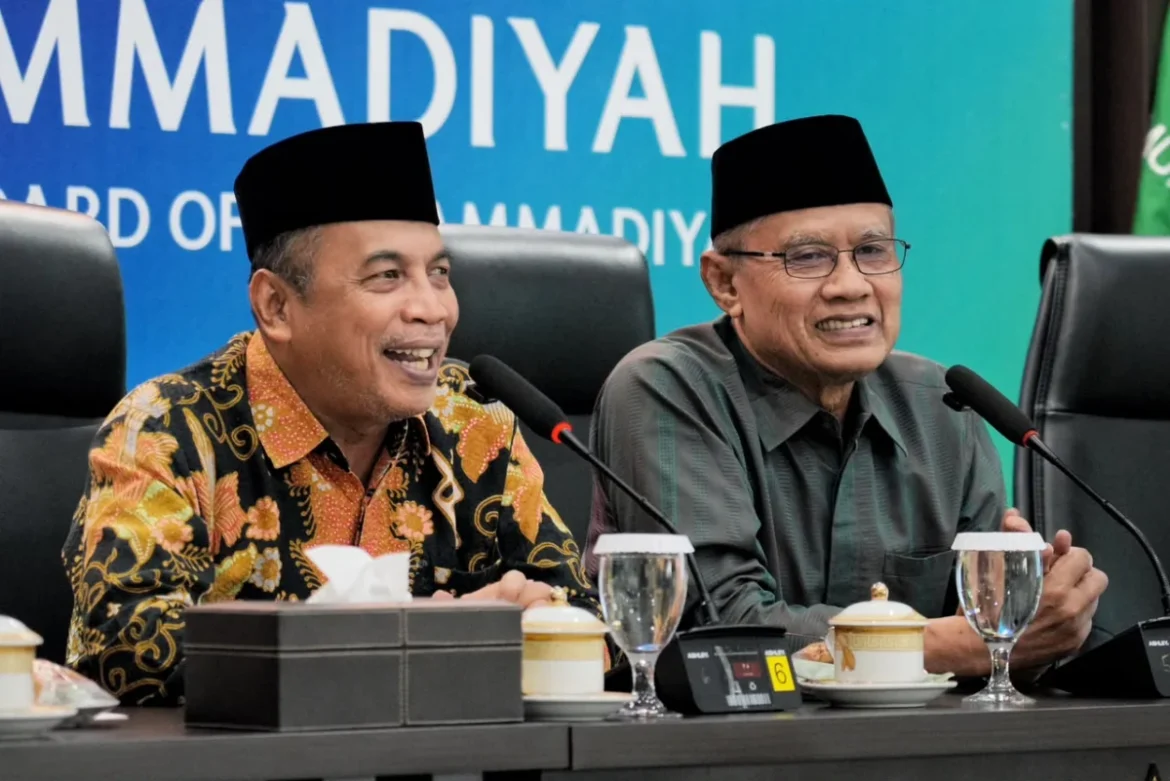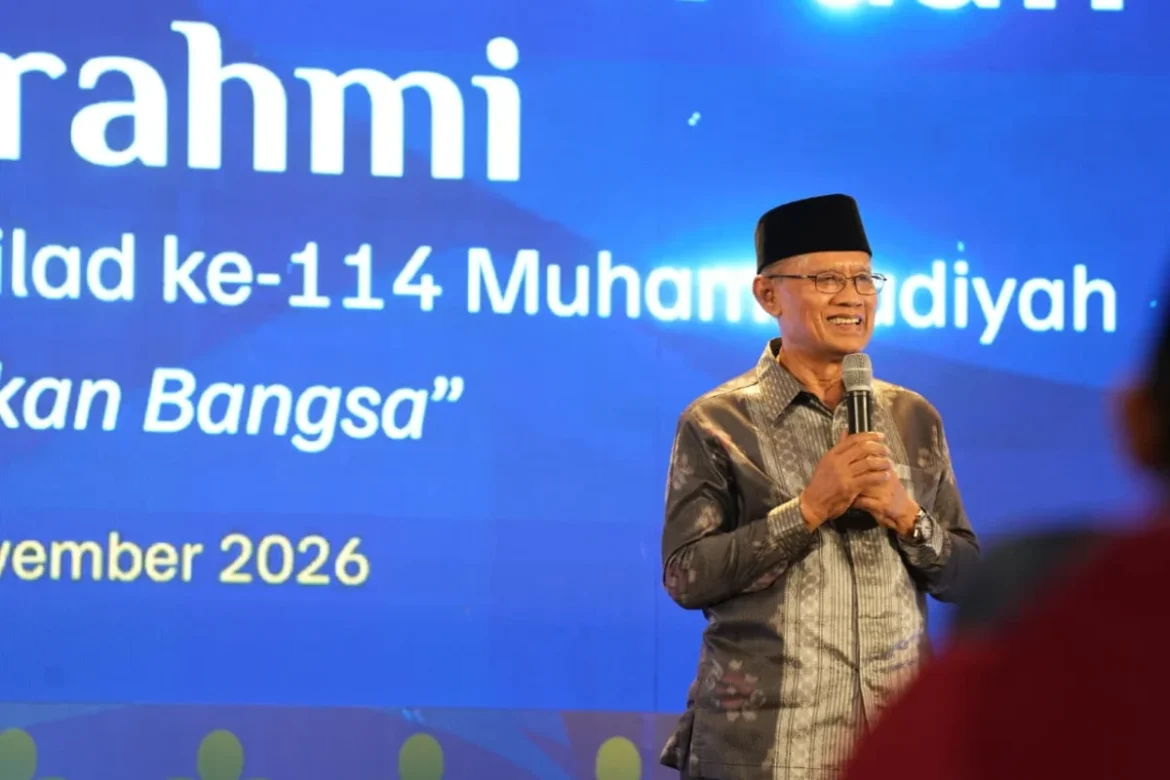
The successful execution of the upcoming Tanwir Muhammadiyah in Palu is set to serve as a vital barometer and ideological reflection for the highly anticipated 49th Muktamar Muhammadiyah, scheduled to take place in Medan, North Sumatra, in 2027. This assertion was prominently highlighted by the General Chairperson of the Central Leadership (PP) of Muhammadiyah, Haedar Nashir, during his keynote address at the Taaruf Night and Fellowship Gathering for Tanwir participants held in Palu.
Addressing hundreds of organizational leaders, regional delegates, and members from across the Indonesian archipelago, Haedar emphasized that the core strength of Muhammadiyah lies in its deeply rooted culture of solidarity, mutual understanding, and collective responsibility. As one of Indonesia’s largest Islamic reformist organizations, Muhammadiyah continually navigates complex socio-religious landscapes through structured deliberations, making high-level meetings like the Tanwir and Muktamar critical milestones for the organization’s governance and strategic trajectory.
The gathering in Palu is not merely an administrative prerequisite mandated by the organization’s constitution; it is a vital crucible where national policy directions, organizational consolidation, and leadership ethos are rigorously debated and harmonized. By framing the Palu Tanwir as a direct precursor to the Medan Muktamar, the central leadership has signaled a deliberate emphasis on seamless operational continuity, structural maturity, and ideological alignment across all tiers of the movement.
The Strategic Significance of Tanwir within the Muhammadiyah Hierarchy
Within the organizational framework of Muhammadiyah, the Tanwir represents the second-highest decision-making forum after the Muktamar. While the Muktamar convenes every five years to elect central leadership, evaluate the overarching strategic blueprint, and ratify major policy shifts, the Tanwir meets in the interim years to address pressing national issues, monitor the implementation of Muktamar resolutions, and formulate immediate responses to socio-political and economic developments in Indonesia.
The selection of Palu as the host city for this pivotal deliberation carries profound symbolic and practical significance. Situated in Central Sulawesi, Palu represents the resilience of a region that has successfully rebuilt itself following catastrophic natural disasters in recent years. By bringing a national-scale deliberation to Central Sulawesi, Muhammadiyah underscores its commitment to equitable national development, regional empowerment, and decentralized institutional attention. Furthermore, it tests the logistical, administrative, and infrastructural capacities of regional chapters outside the traditional urban centers of Java, thereby ensuring that the organizational muscle of Muhammadiyah remains robust nationwide.
The transition from the Palu Tanwir to the 49th Muktamar in Medan forms a continuous arc of preparation. Organizing an event of the Muktamar’s magnitude—which routinely attracts millions of participants, including official delegates, observers, independent scholars, and commercial vendors—requires meticulous planning. Haedar’s remarks point to the reality that the organizational discipline, behavioral norms, and cooperative spirit displayed in Palu will directly dictate the operational atmosphere in Medan.
Cultivating Kebersamaan: The Bedrock of Islamic Modernism
At the heart of Haedar Nashir’s address was the concept of kebersamaan (togetherness), underpinned by Islamic principles of taaruf (mutual acquaintance) and tafahum (mutual understanding). In an organization as vast and structurally decentralized as Muhammadiyah—which manages thousands of educational institutions, hundreds of hospitals, and extensive social welfare networks across Indonesia—maintaining ideological and operational cohesion is an ongoing challenge.
Haedar noted that the institutional longevity of Muhammadiyah, which was founded in 1912 by K.H. Ahmad Dahlan, is largely attributable to its members’ ability to subordinate personal ambitions to collective welfare.
"I am convinced that if our foundation remains rooted in this collective togetherness, while continuously nurturing our mutual acquaintance and mutual understanding within our souls, then, God willing, both this Tanwir and the upcoming Muktamar will proceed successfully," Haedar stated to the assembled delegates.
This emphasis on relational harmony is particularly critical in light of the modern socio-political pressures facing civil society organizations in Indonesia. As national polarization occasionally seeps into grassroots organizations, Muhammadiyah has consistently positioned itself as a moderating force, advocating for Islam Berkemajuan (Progressive Islam)—a civilizational approach that champions education, social welfare, national integration, and universal human values.
Managing Institutional Dynamics and Curbing Ambition
While institutional harmony was a primary theme, Haedar pragmatically addressed the inevitability of internal organizational dynamics. Deliberations within Muhammadiyah are known for being robust, intellectually rigorous, and fiercely democratic. Delegates frequently clash over theological interpretations, structural priorities, educational policies, and organizational alignments.
Rather than attempting to suppress these debates, Haedar acknowledged that vibrant discussions and differing perspectives are entirely normal and healthy for a dynamic reformist movement. However, he drew a sharp distinction between constructive debate and destructive factionalism.
"The dynamics that live and operate within every deliberation should not be eliminated," Haedar explained. "Such dynamics are completely natural, provided they do not escalate into bitter infighting, let alone generate public friction."
The critical safeguard against toxic internal politics, according to the PP Muhammadiyah leader, lies in self-restraint, particularly regarding the pursuit of structural positions and leadership titles. Haedar issued a gentle yet pointed reminder to potential contenders and power brokers within the organization to actively restrain the innate human impulse for unchecked ambition and power.
"And that is precisely where the key lies for all of us—in our ability to put the brakes on the nafsu kekuasaan (appetite for power)," he emphasized.
This perspective addresses a recurring vulnerability in large civil society organizations: the temptation for leadership contests to devolve into careerist maneuvers. By framing leadership within Muhammadiyah not as a political prize to be won, but as an onerous fiduciary duty before God and the community, the central leadership seeks to preserve the moral authority and integrity of the movement.
The Weight of Leadership: Equal Burden Across All Tiers
Expanding on the theme of organizational ethics, Haedar elaborated on the nature of authority within the Muhammadiyah hierarchy. He stressed that leadership roles, whether at the central executive level, the regional (wilayah) level, the municipal/district (daerah) level, or the grassroots branch (cabang and ranting) level, carry equal weight in terms of moral responsibility and spiritual accountability.
In public discourse, attention often gravitates disproportionately toward the Central Leadership (PP Muhammadiyah) or prominent regional figures. However, Haedar reminded the audience that the day-to-day survival and community impact of the movement depend heavily on local leaders working quietly in remote districts and urban neighborhoods.
"Leadership in Muhammadiyah at any level is equally noble, and equally heavy," Haedar asserted.
This egalitarian view of institutional responsibility reinforces the decentralized nature of Muhammadiyah’s operational model. Schools, clinics, orphanages, and disaster relief units operate largely under the stewardship of local boards. Consequently, ensuring that local leaders view their mandates with utmost seriousness is essential for maintaining the institutional reputation and social efficacy of the entire organization.
Historical Reflection: Launching the Sulawesi Tengah History Book
A significant highlight of the Taaruf Night was the official launch of a newly compiled historical book documenting the evolution, struggles, and expansion of Muhammadiyah in Central Sulawesi (Sulawesi Tengah). The inclusion of this historical compendium in the Tanwir agenda reflects Muhammadiyah’s institutional self-awareness and its commitment to preserving regional heritage as a guide for future generations.
Haedar noted that documenting regional histories is not an exercise in nostalgic retrospection, but a strategic necessity. Understanding how early pioneers established schools, clinics, and religious outreach centers under difficult colonial and post-colonial conditions provides modern members with valuable lessons in resilience, adaptability, and community engagement.
"History is a struggle, a tool through which we peer into the future," Haedar remarked, urging other regional chapters to document their local institutional trajectories.
The historical trajectory of Muhammadiyah in Central Sulawesi mirrors its broader national expansion outside Java. Established through the dedication of itinerant preachers, merchants, and educators who carried the reformist message of K.H. Ahmad Dahlan across maritime trade routes, regional chapters often faced initial skepticism from traditionalist communities. Over decades, however, these chapters embedded themselves within the social fabric by prioritizing tangible community benefits—primarily modern education and healthcare—over theological polemics.
Broader Implications and National Impact
The outcomes of the Palu Tanwir and the preparations for the Medan Muktamar carry implications that extend well beyond the internal administrative affairs of Muhammadiyah. As one of Indonesia’s twin pillars of Islamic civil society alongside Nahdlatul Ulama, Muhammadiyah’s institutional health directly influences the broader sociopolitical stability and democratic maturity of the nation.
Political analysts frequently observe that the manner in which major Islamic organizations conduct their internal succession processes and policy deliberations sets a standard for democratic practice nationwide. By emphasizing internal transparency, intellectual rigor, the mitigation of excessive ambition, and an outward focus on national welfare, Muhammadiyah models a form of institutional governance rooted in ethical accountability.
Furthermore, the resolutions emerging from the Palu Tanwir are expected to address pressing contemporary national challenges, including economic inequality, educational reform in the post-pandemic era, environmental sustainability, and the ethical implications of rapid technological advancement, including artificial intelligence. By aligning its internal deliberations with these macro-level concerns, Muhammadiyah ensures that its religious mission remains dynamically engaged with the material realities of modern Indonesian society.
Conclusion: Setting the Course for Medan 2027
As the Palu Tanwir concludes its sessions, the focus of the organization’s millions of members inexorably shifts toward Sumatra and the preparations for the 49th Muktamar in Medan. The messages delivered by Haedar Nashir in Palu—underscoring unity, ethical self-restraint, respect for healthy internal dynamics, and a renewed commitment to societal welfare—will serve as the guiding ethos for the months leading up to 2027.
By successfully navigating the organizational complexities in Central Sulawesi, Muhammadiyah demonstrates once again its capacity for self-correction, institutional continuity, and national leadership. The road from Palu to Medan is paved with the shared values of kebersamaan and progressive Islamic reform, ensuring that the movement remains an enduring pillar of moral authority, educational advancement, and humanitarian service in contemporary Indonesia.