
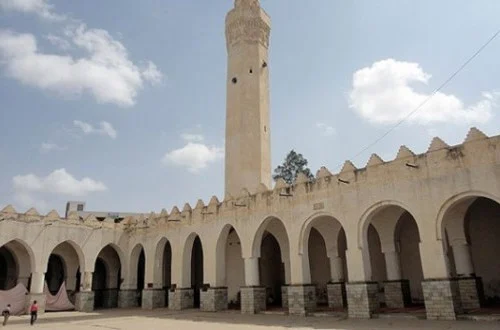
REPUBLIKA.CO.ID, JAKARTA – Among the profound blessings bestowed by Allah SWT upon the land of Yemen and its people is the widespread acceptance and establishment of Islam in the region from the very dawn of the prophetic mission. This early embrace cemented Yemen’s unique and venerable position within the annals of Islamic history, a legacy tangibly embodied by ancient structures such as the Muadh ibn Jabal Mosque, a testament to the pioneering efforts of the Prophet Muhammad’s (PBUH) esteemed companions. This mosque, deeply rooted in the foundational period of Islam, stands not merely as a place of worship but as a living monument to the enduring faith and intellectual legacy propagated by figures like Muadh ibn Jabal (RA).
Yemen’s Early Embrace of Islam
Yemen, strategically located at the crossroads of ancient trade routes, was a vibrant hub of culture and commerce even before the advent of Islam. Its geographical proximity to Mecca and Medina, coupled with its distinct societal structures, made it a crucial region for the early expansion of the nascent Islamic state. Unlike some other regions that resisted the new faith, segments of Yemeni society showed an early receptiveness to the monotheistic message of Islam. This receptiveness was not coincidental but rather a reflection of the inherent virtues and intellectual openness often attributed to its people, as acknowledged in various prophetic traditions.
The early spread of Islam in Yemen was a meticulously planned effort by the Prophet Muhammad (PBUH) himself. Recognizing the importance of solidifying the faith in this influential land, he dispatched some of his most knowledgeable and trusted companions. These emissaries were not merely preachers but comprehensive educators, tasked with laying the groundwork for a fully functional Islamic society. Their mission encompassed teaching the intricacies of the Quran, elucidating the Sunnah (the Prophet’s traditions and practices), explaining the detailed tenets of Islamic law (Sharia), and deeply instilling the profound realities of faith (Iman) into the hearts and minds of the Yemeni populace. This holistic approach ensured that Islam was not just superficially accepted but was integrated into every facet of life, fostering a robust and enduring Islamic identity.
The Prophetic Mission to Yemen: Architects of Faith
The choice of companions for the Yemeni mission underscores the Prophet’s wisdom and strategic foresight. Among those specifically entrusted with this monumental task were Muadh ibn Jabal (RA), Ali ibn Abi Talib (RA), and Abu Musa Al-Ash’ari (RA). Each of these noble companions brought a unique set of skills and profound understanding of Islam, making them ideal ambassadors of the faith. Their collective responsibility was immense: to convey the divine message of Allah, the religion of pure monotheism (Tawhid), which has been the universal message of all prophets and messengers, from Prophet Nuh (Noah) (AS) to Prophet Muhammad (PBUH).
Their core message was unwavering: to call humanity to worship Allah alone, associating no partners with Him, and to sternly warn against polytheism (shirk) and disbelief (kufr). This fundamental principle of Tawhid is eloquently articulated in the Quran, affirming the universal nature of the prophetic mission. Allah Ta’ala states in Surah An-Nahl, verse 36: "And We certainly sent into every nation a messenger, [saying], ‘Worship Allah alone and avoid Taghut (false deities, false leaders, etc.).’ And among them were those whom Allah guided, and among them were those upon whom error was [deservedly] decreed. So travel through the earth and observe how was the end of those who denied." This verse perfectly encapsulates the mandate given to the companions in Yemen – to guide people towards monotheism and away from all forms of idolatry and false worship.
Muadh ibn Jabal: Scholar, Jurist, and Messenger
Muadh ibn Jabal (RA) stands out as a pivotal figure in the Islamization of Yemen. Born in Medina, he embraced Islam at a young age and quickly distinguished himself through his exceptional intellect, deep piety, and profound understanding of the Quran and Islamic jurisprudence. The Prophet Muhammad (PBUH) held Muadh in high esteem, famously remarking, "The most knowledgeable among my Ummah (community) concerning halal (lawful) and haram (unlawful) is Muadh ibn Jabal." This commendation highlights his unparalleled mastery of Islamic law and ethical principles, making him an ideal candidate for the critical mission to Yemen.
Muadh was dispatched to Yemen around the 9th or 10th year of the Hijra, a period crucial for consolidating Islamic rule and disseminating its teachings beyond the Arabian Peninsula. His instructions from the Prophet (PBUH) were comprehensive, covering aspects of governance, justice, and spiritual guidance. A famous narration illustrates the Prophet’s trust in Muadh’s judgment: when asked how he would decide matters in Yemen, Muadh replied, "By the Book of Allah." If not found there, "By the Sunnah of the Messenger of Allah." If not found in either, "I will exert my own reasoning (ijtihad) and will not fall short." The Prophet (PBUH) expressed his approval, praising Allah for guiding His messenger. This exchange not only highlights Muadh’s jurisprudential approach but also establishes a foundational principle of Islamic legal methodology – the concept of ijtihad (independent reasoning) within the bounds of Quran and Sunnah.
Muadh’s tenure in Yemen was marked by remarkable success. He established courts, collected zakat (charitable alms), and, most importantly, educated the populace in the true spirit of Islam. His presence transformed communities, fostering an environment where Islamic law and ethics flourished. He served as a spiritual mentor, a judge, and an administrator, laying the essential groundwork for a stable and just Islamic society in Yemen. His leadership was instrumental in integrating Yemen into the broader Islamic commonwealth, not through coercion, but through profound teaching and exemplary conduct.
The Genesis of the Muadh ibn Jabal Mosque
It is within this historical context of Muadh ibn Jabal’s profound influence that the mosque bearing his name was founded. While specific architectural blueprints or exact construction dates from the initial period may be scarce due to the passage of time and the absence of detailed ancient records, it is widely accepted that the mosque was established during or shortly after Muadh’s mission to Yemen. Such structures were vital to the early Islamic community, serving as more than just places for congregational prayer. They were centers for learning, community assembly, judicial proceedings, and even administrative functions.
The Muadh ibn Jabal Mosque, often identified with the Grand Mosque of Al-Janad in the Ta’iz governorate, is one of the oldest mosques in Yemen and indeed in the Islamic world. Its establishment signifies the formal institutionalization of Islam in the region. The initial structure would have been humble, reflecting the simplicity of early Islamic architecture – likely an open courtyard with a designated prayer area (qibla wall) facing Mecca, possibly with a rudimentary minbar for the Imam’s sermons. Over centuries, like many ancient mosques, it would have undergone numerous renovations, expansions, and restorations by successive Islamic dynasties and local rulers, each adding layers of architectural and historical significance. These modifications, while altering the original appearance, preserved its spiritual core and continuity as a beacon of faith.
The mosque’s location in Al-Janad, a historic city, further emphasizes its strategic importance. Al-Janad was an early center of Islamic learning and administration in Yemen, making it a logical site for a major mosque founded by a companion of the Prophet. The very act of constructing a mosque by a figure of Muadh’s stature underscored the permanence of Islam in the region and provided a focal point for the burgeoning Muslim community.
Architectural Heritage and Spiritual Significance
While the original architecture of the Muadh ibn Jabal Mosque would have been rudimentary, subsequent centuries saw the development of distinctive Yemeni mosque architecture. Characterized by robust construction, often using local stone, with features like intricate geometric patterns, stucco work, and distinctive minarets, Yemeni mosques are renowned for their blend of practicality and aesthetic beauty. The Muadh ibn Jabal Mosque, through its various historical iterations, embodies this evolving architectural heritage. Its enduring presence for over fourteen centuries is a testament to the skill of Yemeni craftsmen and the unwavering devotion of its people.
Spiritually, the mosque represents a direct link to the prophetic era. It is a place where the foundational teachings of Islam were first disseminated in Yemen, where the Quran was recited, and where the Sunnah was taught by a direct student of the Prophet. For Muslims, visiting such a site is not merely a historical tour but a profound spiritual experience, connecting them to the earliest moments of their faith’s expansion. It serves as a reminder of the sacrifices and dedication of the companions and the purity of the early Islamic message.
Yemen’s Esteemed Status in Islamic Tradition
The virtues of Yemen and its people are frequently celebrated in both the Quran and the Hadith of the Prophet Muhammad (PBUH). The original article alludes to this, and indeed, numerous prophetic narrations highlight their special status. For instance, the Prophet (PBUH) is reported to have said, "Faith is Yemeni, and wisdom is Yemeni." In another narration, he pointed towards Yemen and said, "Verily, faith is there." These sayings underscore the deep-seated piety, intellectual acumen, and sincere hearts of the Yemeni people, which made them fertile ground for the message of Islam. Their swift acceptance of Islam, their resilience, and their contributions to Islamic scholarship and civilization throughout history further exemplify these prophetic commendations.
From the early Islamic period, Yemen produced numerous scholars, poets, and jurists who significantly enriched the intellectual and cultural landscape of the Muslim world. The traditions of Islamic learning established by companions like Muadh ibn Jabal blossomed into vibrant centers of knowledge, contributing to fields ranging from Hadith studies and Fiqh to Arabic language and astronomy. The Muadh ibn Jabal Mosque, therefore, is not just an isolated structure but part of a larger narrative of Yemeni contributions to Islamic civilization.
Preserving a Sacred Past: Challenges and Calls for Protection
In contemporary times, the historical and cultural heritage of Yemen, including its ancient mosques, faces unprecedented threats due to the protracted conflict gripping the nation. The ongoing civil war has caused immense human suffering and has also inflicted severe damage on Yemen’s rich archaeological and architectural treasures. Historical sites, some dating back millennia and others from the early Islamic period, have been either directly targeted, damaged by collateral fire, or subjected to neglect and looting.
The Muadh ibn Jabal Mosque, like many other heritage sites in Yemen, stands vulnerable amidst this turmoil. While specific recent reports of damage to this particular mosque might vary, the general situation for Yemeni heritage is dire. International organizations, such as UNESCO, ISESCO, and various cultural heritage bodies, have repeatedly voiced grave concerns over the destruction of Yemen’s cultural patrimony. They have issued urgent calls for all warring parties to respect international laws protecting cultural sites and to ensure their preservation.
Local Yemeni authorities, even amidst the conflict, have often emphasized the profound importance of safeguarding these sites. Statements from heritage officials and local community leaders frequently highlight that these monuments are not just stones and mortar but represent the very identity and memory of the Yemeni people and the broader Islamic world. They serve as tangible links to a glorious past and are crucial for the spiritual and cultural resilience of the nation. The destruction of such sites is viewed as an irreparable loss, not only for Yemen but for humanity’s shared heritage. The resilience of the local communities, who often take personal risks to protect and maintain these sites, is a testament to the deep reverence they hold for their history and faith.
The Mosque’s Contemporary Relevance and Future
Despite the challenges, the Muadh ibn Jabal Mosque continues to hold immense contemporary relevance. It serves as a powerful symbol of endurance, faith, and historical continuity for the Yemeni people. For the wider Muslim world, it is a reminder of the universal mission of Islam and the sacrifices made by the early generations to establish the faith. In an era marked by conflict and fragmentation, such historical landmarks offer a sense of rootedness and a connection to a shared, foundational narrative.
The future of the Muadh ibn Jabal Mosque, and indeed all of Yemen’s heritage, hinges on the cessation of hostilities and a concerted effort towards peace and reconstruction. Post-conflict recovery must include comprehensive plans for heritage preservation, restoration, and documentation. This would require international cooperation, funding, and the expertise of conservationists to ensure that these irreplaceable treasures are protected for future generations. The mosque can play a vital role in national healing and identity rebuilding, serving as a focal point for community gathering, education, and spiritual solace in a country deeply scarred by war.
Conclusion: A Symbol of Enduring Faith
The Muadh ibn Jabal Mosque in Yemen is far more than an ancient edifice; it is a profound symbol of the enduring legacy of early Islamic propagation. It stands as a testament to the prophetic mission of teaching Tawhid, the dedication of companions like Muadh ibn Jabal, and the early embrace of Islam by the Yemeni people. Its long history, from its foundational days to its present challenges, mirrors the journey of Islam itself – a journey of faith, knowledge, and resilience.
As a beacon of early Islamic learning and community, the mosque embodies the virtues celebrated in Islamic traditions concerning Yemen. Its continued existence, despite the ravages of time and conflict, underscores the unwavering spiritual connection that generations of Muslims have felt to this sacred land and its hallowed sites. The preservation of the Muadh ibn Jabal Mosque is not just an act of safeguarding architectural heritage; it is an act of preserving the very memory of Islam’s formative years and honoring the profound spiritual heritage it represents for millions worldwide. Its story is a compelling narrative of faith, wisdom, and the timeless call to worship Allah alone, echoing across centuries from the heart of Yemen.
