

The Indonesian Ministry of Transportation (Kemenhub) is set to implement a transformative regulatory overhaul aimed at curbing the persistent issue of Over Dimension Over Load (ODOL) vehicles on national roads. Through the proposed revision of Law Number 22 of 2009 concerning Road Traffic and Transportation (UU LLAJ), the government plans to impose staggering administrative fines ranging from Rp500 million to Rp5 billion. This aggressive legislative shift signals a departure from the relatively lenient penalties that have historically failed to deter logistics operators from maximizing vehicle capacity at the expense of road safety and infrastructure longevity.
Director General of Land Transportation at the Ministry of Transportation, Aan Suhanan, confirmed that these provisions have been formally submitted to the House of Representatives (DPR) as part of the ministry’s List of Problem Inventories (DIM). The proposed penalty structure is designed to align with the evolving classification of administrative sanctions, scaling from level 3 to level 7, which corresponds to the severity of the violation.
The Chronology of the ODOL Crisis
The prevalence of ODOL trucks has long been a structural challenge for Indonesia’s logistics sector. For decades, the practice—where vehicles are modified to exceed standard dimensions or carry loads far beyond their legal capacity—has been driven by the pursuit of operational efficiency and reduced transport costs. However, the external costs are borne by the state and the public.
Government data indicates that ODOL trucks are a primary factor in the premature deterioration of national roads, bridges, and highways. The frequent need for road repairs places a massive burden on the state budget, costing trillions of rupiah annually. Beyond infrastructure damage, these oversized and overloaded vehicles are statistically linked to a significant portion of traffic accidents, often involving brake failures, rollovers, and collisions caused by the inability of the vehicles to maneuver or stop safely in emergency situations.
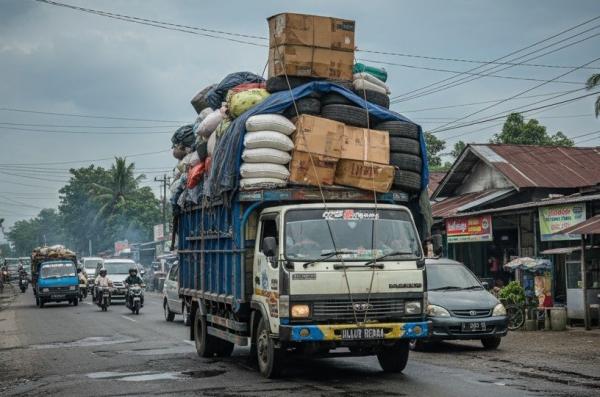
In response, the Ministry of Transportation has spent the last several years attempting to implement a "Zero ODOL" target. The timeline for this initiative has been adjusted several times, with current efforts focused on a 2027 completion date. The recent integration of the Electronic Traffic Law Enforcement (ETLE-Hub) system across 51 strategic locations serves as the digital backbone for this crackdown, allowing authorities to monitor and identify non-compliant vehicles in real-time.
Escalating Penalties: From Nominal Fees to Financial Deterrence
The current legal framework, as stipulated in the existing LLAJ Law, has been widely criticized for being ineffective. Under current regulations, penalties for overload violations are often as low as Rp500,000, while over-dimension violations incur fines of approximately Rp24 million. For many logistics companies, these figures are viewed merely as a "cost of doing business," a small risk that is far outweighed by the profit margins gained through overloading.
By raising the ceiling to Rp5 billion, the Ministry aims to make the economic risk of violating the law fundamentally unsustainable. Furthermore, the proposed revision introduces criminal sanctions, including potential jail time of up to five years for repeat or severe offenders. This move is designed to shift the burden of responsibility from the driver—who is often the most vulnerable party in the chain—to the corporate entities that dictate logistics policies.
Expanding Legal Liability: A Supply Chain Approach
A critical component of the proposed legislative change is the expansion of legal targets. Historically, law enforcement efforts have largely focused on the driver behind the wheel. However, the Ministry of Transportation acknowledges that drivers are often acting under direct orders from their employers or the owners of the goods being transported.
Aan Suhanan emphasized that the upcoming revision will likely extend liability to "transport companies and the companies that own the cargo." By holding the "beneficial owners" of the logistics process accountable, the government aims to dismantle the incentive structure that encourages the use of ODOL vehicles. If the law successfully holds shippers and cargo owners legally responsible for the dimensions and weight of the freight they load onto trucks, the pressure on logistics providers to bypass safety regulations will be significantly mitigated.

Economic and Logistical Implications
The transition to a "Zero ODOL" environment is not without its economic challenges. Logistics players have frequently expressed concerns regarding the potential for increased freight costs and supply chain bottlenecks if the enforcement is too rigid. Indonesia’s geographic complexity, coupled with the reliance on road transport, means that any sudden shift in trucking capacity could lead to price volatility in essential goods.
However, industry experts and road safety advocates argue that the long-term benefits of safer, more sustainable road infrastructure far outweigh the short-term adjustment costs. The standardization of vehicle dimensions is also expected to harmonize Indonesia’s logistics standards with international best practices, eventually leading to more efficient fleet management and lower vehicle maintenance costs for companies that comply with regulations.
Challenges in Enforcement and Oversight
While the proposed fines are substantial, the success of this policy will ultimately depend on the rigor of its enforcement. The Ministry of Transportation’s reliance on the ETLE-Hub system is a strategic step toward minimizing human interaction, which is often a source of corruption and inconsistent application of the law. By automating the detection of dimensions and weight, the Ministry intends to remove the possibility of bribery or negotiation at weigh stations.
Nevertheless, the implementation phase will require intense coordination between the Ministry of Transportation, the National Police, and the Ministry of Public Works and Housing. Each of these agencies plays a role in monitoring road usage and enforcing traffic laws. Critics of the current system point to the need for more transparent weigh station operations and a standardized digital database that tracks the history of individual transport companies to identify chronic offenders.
Broader Impact on the National Logistics Ecosystem
The government’s focus on eliminating ODOL vehicles is closely tied to the broader goal of reducing the national logistics cost index, which currently remains one of the highest in the Southeast Asian region. By enforcing standard vehicle dimensions, the government encourages the use of more efficient, optimized logistics models, including the shift of freight from road to sea or rail where possible.

Recent initiatives, such as the separation of cargo-only and passenger-only vessels in major ports, reflect the Ministry’s holistic approach to the logistics ecosystem. The intent is to create a seamless, safe, and cost-effective chain that does not compromise the safety of the public or the integrity of national infrastructure.
Future Outlook and Legislative Process
As the RUU LLAJ continues to move through the legislative process, the Ministry of Transportation remains committed to the principle that public safety is non-negotiable. The debate within the House of Representatives is expected to focus on the balance between industry competitiveness and public interest. Industry associations are likely to lobby for transition periods or subsidies to help upgrade existing fleets that do not meet the new dimensional standards.
For now, the message from the government is clear: the era of lax oversight and nominal fines for ODOL violations is coming to an end. With the introduction of multi-billion rupiah fines and the potential for corporate-level criminal liability, the logistics industry in Indonesia is facing its most significant regulatory shift in over a decade. Whether this change will lead to a cleaner, safer, and more efficient transport system will depend on the political will to uphold these strict penalties once they are codified into law.
In summary, the revision of the LLAJ Law represents a strategic pivot toward systemic accountability. By targeting the entire supply chain—from the manufacturer and the cargo owner to the transport provider—the government is signaling that the era of "ODOL-as-business-as-usual" is effectively over. The coming months will be crucial as the legislative discussions unfold, setting the stage for what many hope will be a permanent transformation of Indonesia’s road transport landscape.
