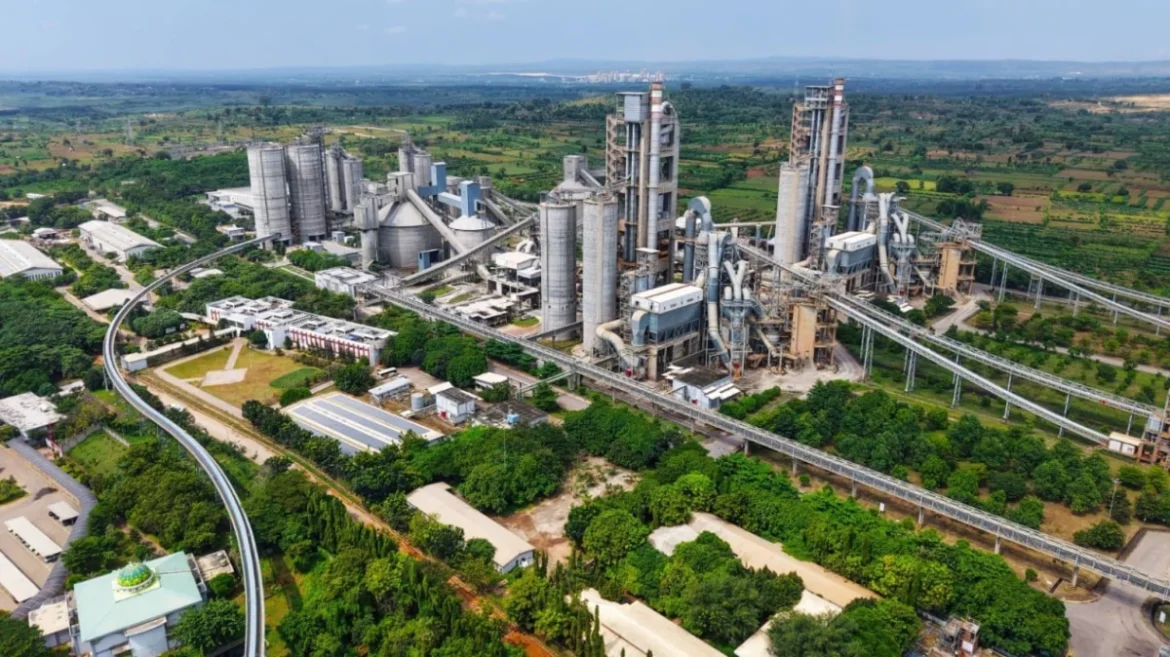
PT Semen Indonesia (Persero) Tbk (SIG), Southeast Asia’s leading building materials provider, has once again been recognized for its unwavering commitment to corporate governance and sustainability. The company secured the prestigious Katadata ESG Insight (KESGI) Award 2026 in the Construction Material Sector for Governance, a testament to its superior performance and proactive initiatives in embedding Environmental, Social, and Governance (ESG) principles into its core business framework.
The award ceremony took place on Thursday, September 17, 2026, at the Sudirman Hall, Sequis Tower SCBD, Jakarta, during the high-profile Katadata Sustainability Action for the Future Economy (SAFE) 2026 summit. The accolade highlights SIG’s strategic focus on robust governance mechanisms, which the leadership attributes as a key driver of operational resilience and long-term financial stability in an increasingly competitive market.
Recognition at Katadata SAFE 2026 Summit
The Katadata ESG Insight Award 2026 is an esteemed initiative organized by Katadata Green to honor corporations in Indonesia demonstrating exemplary sustainability performance. The rigorous evaluation process involves comprehensive ESG scoring based on publicly available corporate reports, sustainability disclosures, and audited documentation spanning environmental protection, social responsibility, and corporate governance practices.
During the formal presentation, the award was presented by Heri Susanto, Co-founder and Chief Content Officer of Katadata, to Arif Kurniawan, ESG Project Management Senior Manager at SIG. The recognition underscores how systematic monitoring, transparent reporting, and strict adherence to regulatory standards can set industry benchmarks for heavy manufacturing sectors traditionally associated with high resource consumption and carbon footprints.
Speaking on the milestone achievement, SIG President Director Indrieffouny Indra expressed profound gratitude for the external validation. He emphasized that sustainability is no longer an optional corporate social responsibility add-on but a non-negotiable operational pillar deeply integrated into SIG’s daily business activities.
"SIG applies Good Corporate Governance (GCG) practices across every stage of our operational value chain, enabling the company to build greater resilience against industry headwinds and dynamic macroeconomic conditions," stated Indrieffouny Indra in an official statement released on Sunday, September 20, 2026. He further noted that this disciplined governance model has directly empowered the company to maintain steady business growth and safeguard profitability despite persisting market challenges, such as industry-wide overcapacity that has intensified competition within the domestic and regional cement sectors.
Institutionalizing Sustainability: The Governance Architecture
SIG’s success in securing the KESGI Award 2026 is not an overnight phenomenon but the result of years of structural reform and institutionalized governance. To ensure that ESG and GCG principles are consistently translated from boardrooms to factory floors, the company established a dedicated Sustainability Committee as early as 2021.
This specialized committee operates as an oversight and advisory body designed to support the management in tracking, measuring, and optimizing sustainability performance across all subsidiaries and operational units. The committee plays a pivotal role in monitoring the progress of long-term environmental targets outlined in the ambitious SIG Sustainability Roadmap 2030, ensuring that carbon emission reduction, energy efficiency, and resource conservation align seamlessly with financial objectives.
Furthermore, SIG’s governance framework is continuously benchmarked against rigorous international and domestic standards. The company regularly measures the quality of its GCG implementation through formal evaluations of fulfillment criteria referencing the ASEAN Corporate Governance Scorecard (ACGS), regulations set by the Indonesian Financial Services Authority (OJK), and other relevant statutory compliance frameworks. This meticulous self-assessment guarantees that transparency, accountability, responsibility, independence, and fairness—the five foundational pillars of GCG—are strictly upheld throughout the organization.
Proactive Climate Risk Management and TCFD Alignment
In addition to traditional corporate governance metrics, modern ESG evaluations heavily scrutinize a company’s readiness to address systemic macroeconomic shocks, particularly climate change. Recognizing the existential and financial risks posed by global warming, SIG has successfully integrated the Task Force on Climate-related Financial Disclosures (TCFD) framework into its operational risk management architecture.
The adoption of the TCFD framework provides SIG with a robust mechanism to systematically identify, assess, manage, and mitigate climate-related physical and transition risks. Simultaneously, it allows the company to capitalize on emerging opportunities in the green economy, such as the growing demand for low-carbon cements, blended cements, and energy-efficient construction materials. By aligning its financial disclosures with TCFD recommendations, SIG has significantly enhanced its transparency, providing institutional investors, shareholders, and regulators with clear, verifiable data on how climate strategies are factored into business continuity planning.
Industry Context and Macroeconomic Implications
The construction material sector in Indonesia operates within a complex and demanding environment. In recent years, the domestic cement industry has grappled with structural overcapacity, where national production capacity substantially outstrips local consumption. This supply-demand imbalance has triggered intense pricing competition, squeezed profit margins, and forced industry players to optimize operational efficiencies aggressively.
Amidst such a challenging backdrop, SIG’s strategic emphasis on GCG and ESG integration offers critical insights into modern corporate turnaround and resilience strategies. Traditional economic theories often frame sustainability investments as short-term cost centers that can burden corporate balance sheets during economic downturns. However, SIG’s financial performance and industry standing challenge this outdated narrative.
By embedding stringent governance and environmental stewardship into its operations, SIG has successfully optimized resource utilization, reduced waste, lowered energy intensity through alternative fuels and raw materials (AFR), and minimized regulatory compliance risks. These efficiencies directly translate into cost savings and operational agility, proving that robust governance acts as a financial buffer during periods of market volatility.
Broader Economic and Sectoral Impacts
The recognition of SIG at the Katadata ESG Insight Award 2026 carries significant implications for the wider Indonesian industrial landscape. As Indonesia aims to achieve its national emissions reduction targets under the Enhanced Nationally Determined Contribution (ENDC) and move toward a net-zero economy by 2060 or sooner, heavy carbon-emitting industries face mounting pressure from policymakers, international supply chains, and global capital markets.
Investors are increasingly prioritizing ESG-compliant assets, making access to capital heavily dependent on a company’s sustainability credentials. By demonstrating leadership in governance and sustainability reporting, SIG not only strengthens its own corporate valuation and creditworthiness but also sets a persuasive precedent for other state-owned enterprises (SOEs) and private manufacturing firms in Indonesia.
The integration of advanced frameworks like the TCFD and ACGS demonstrates that Indonesian companies are fully capable of competing on the global stage not just in production scale, but in governance maturity, ethical business conduct, and ecological responsibility. As infrastructure development remains a cornerstone of Indonesia’s national growth strategy, the availability of sustainably produced construction materials will become increasingly critical for green building certifications and environmentally conscious public-private projects.
Conclusion and Future Outlook
As PT Semen Indonesia (Persero) Tbk moves forward with its SIG Sustainability Roadmap 2030, the recognition received at the Katadata SAFE 2026 summit serves as both an endorsement of past efforts and a catalyst for future ambitions. Maintaining a leadership position in a capital-intensive and environmentally sensitive sector requires continuous innovation, stakeholder engagement, and uncompromising adherence to ethical governance.
By proving that rigorous GCG practices can coexist with commercial profitability even in the face of overcapacity and economic uncertainty, SIG has reinforced its position as a benchmark enterprise in Indonesia’s corporate sector. Moving ahead, the company’s ability to sustain these high governance standards while accelerating its decarbonization journey will remain a critical focal point for investors, industry analysts, and policymakers monitoring the green transformation of Southeast Asia’s industrial giants.