
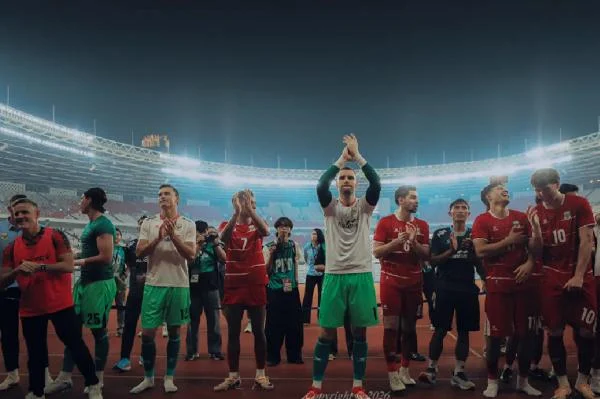
The Indonesian national football team, famously known as the Garuda squad, is set to undertake a critical series of international friendly matches in the Middle East during the FIFA Matchday window scheduled for November 2026. This strategic move, confirmed by the Chairman of the Football Association of Indonesia (PSSI), Erick Thohir, serves as the final phase of preparation for the team ahead of the prestigious 2027 AFC Asian Cup, which is slated to be hosted by Saudi Arabia in January 2027.
The decision to station the team in the Middle East is calculated, aiming to acclimatize the players to the environmental conditions, climate, and playing styles prevalent in the region where the continental tournament will take place. With the FIFA window set for November 9–17, 2026, head coach John Herdman and his staff have a narrow but essential window to refine their tactical blueprints against high-caliber opposition.
Strategic Objectives for the Middle East Tour
For the Indonesian national team, the upcoming tour is not merely about accumulating FIFA ranking points, but about testing the squad’s resilience against technically sophisticated teams. Under the guidance of John Herdman, the Garuda squad has undergone a period of tactical evolution. While Herdman has been notably cautious about making grand promises regarding silverware in the upcoming FIFA ASEAN Cup, his focus remains firmly on institutionalizing a winning mentality and a cohesive playing style that can compete at the highest level of Asian football.
The Middle Eastern region is a traditional powerhouse in Asian football. By scheduling matches against teams like Jordan, the PSSI is providing the players with a simulation of the pressures they will face in the 2027 Asian Cup group stages. The humidity, the intensity of the opposition, and the logistical challenges of traveling abroad are all part of the "stress-testing" required to ensure that Indonesia moves beyond being a participant and becomes a competitive force.
The Jordan Connection: A Key Benchmark
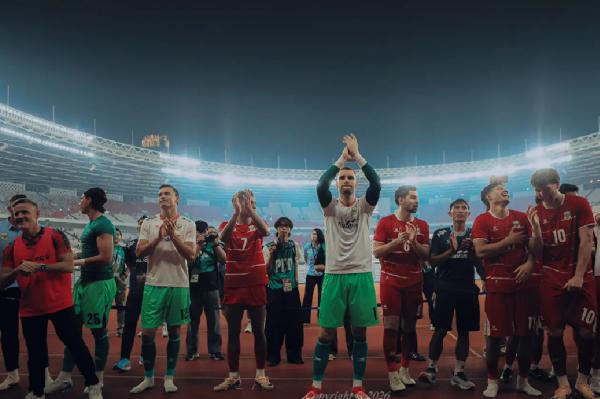
Evidence of the PSSI’s meticulous planning surfaced when the Jordan Football Association (JFA) released its international calendar, which included a confirmed fixture against Indonesia on November 13, 2026. This match represents a significant benchmark for the Indonesian team. Jordan has historically been a stubborn opponent for Southeast Asian sides, known for their physical prowess and disciplined defensive transitions.
Facing a team like Jordan provides John Herdman with the perfect data set to analyze the efficacy of his defensive organization. In the months leading up to this tour, Herdman has been working extensively on the defensive transition—a phase of the game that often separates top-tier Asian nations from the rest. The match on November 13 is expected to highlight whether the team’s current defensive structure can withstand direct, high-pressing attacks, a common trait among Middle Eastern teams.
The Chronology of Preparation for 2027
The road to the 2027 AFC Asian Cup began long before this current announcement. Indonesia’s progress has been a culmination of a multi-year strategy involving youth development, the integration of high-level diaspora players, and the appointment of an experienced coaching staff.
- Early 2026: PSSI and the technical directorate finalized the long-term roadmap for the national team, emphasizing the need for high-level friendlies in the final quarter of the year.
- Mid-2026: Under Coach John Herdman, the team began emphasizing tactical flexibility, moving away from a rigid defensive setup toward a more proactive, ball-possession-based approach.
- September 2026: Herdman confirmed that he has a clear vision for the squad composition, though he remains open to evaluating late-bloomers and players hitting form in their respective leagues.
- November 2026: The Middle East tour commences. This serves as the penultimate block of preparation before the final training camp in December.
- January 2027: The commencement of the AFC Asian Cup in Saudi Arabia.
This timeline demonstrates the methodical approach currently employed by the Indonesian football authorities. By securing matches against geographically relevant opponents, they are minimizing the "culture shock" that often plagues teams moving from the tropical climate of Southeast Asia to the arid conditions of the Middle East.
Tactical Implications and Herdman’s Philosophy
John Herdman’s tenure as the head coach of Indonesia has been defined by his emphasis on "process over result." While the public often demands immediate success, Herdman has been transparent about the need for consistency. His reluctance to over-promise on the ASEAN Cup front is a testament to his grounded approach, focusing instead on building a team culture that can sustain performance over a tournament period.

In the Middle East, fans and analysts alike will be watching to see how Herdman integrates his core roster. There is significant pressure to finalize the starting eleven. While the pool of talent available to Indonesia has grown significantly, finding the right balance between established stars and emerging young talents remains a delicate task. The November window will likely see Herdman rotate his squad to assess depth, ensuring that in the event of injuries or suspensions during the Asian Cup, there is no drop-off in quality.
Broader Impact on Indonesian Football
The commitment to participate in high-profile friendlies outside of the ASEAN region has broader implications for the development of Indonesian football. It signals to the Asian Football Confederation (AFC) that Indonesia is serious about its growth and is willing to invest in the necessary logistics to compete with the continent’s elite.
Furthermore, these matches are vital for the FIFA rankings. Improving the national team’s standing in the rankings is essential for future tournament seeding. By consistently playing—and attempting to secure results against—nations like Jordan, Indonesia positions itself to climb the rankings ladder, which in turn could grant them more favorable draws in future qualification cycles.
For the players, the exposure to international football in a professional environment is invaluable. It forces them out of their comfort zones, exposes them to different refereeing styles, and demands a higher level of tactical discipline. As the local league in Indonesia continues to improve its own standards, the integration of "international-standard" experiences is the final piece of the puzzle.
Official Responses and Stakeholder Expectations
Erick Thohir’s confirmation regarding the tour reflects a collaborative effort between the federation and the coaching staff. Thohir has consistently emphasized that the national team is the "face" of Indonesian sports, and his direct involvement in securing these friendlies underscores the high level of priority placed on the 2027 Asian Cup.

While specific details of other opponents in the November window remain subject to negotiation, the intent is clear: the PSSI is looking for quality over quantity. Two matches against high-ranked opposition are seen as more beneficial than multiple matches against lower-tier teams. The focus is on preparation, intensity, and ensuring that by the time the team touches down in Saudi Arabia in 2027, they are fully acclimatized to the demands of the tournament.
Conclusion: Looking Ahead to 2027
The upcoming tour of the Middle East is more than just a series of friendly matches; it is a vital checkpoint in Indonesia’s journey toward continental competitiveness. As the team prepares to face Jordan and potentially other regional rivals, the eyes of the nation will be on John Herdman’s side. The goal is to evolve, adapt, and build a cohesive unit capable of standing toe-to-toe with the giants of Asia.
With the support of the PSSI and a clear, well-executed roadmap, the Garuda squad is in a strong position to make a significant impression in the 2027 AFC Asian Cup. The lessons learned in the desert heat of the Middle East this November will undoubtedly serve as the foundation for the tactical maneuvers that will be deployed on the grandest stage of Asian football just a few months later. As the countdown to January 2027 continues, every training session and every minute played during this November tour will be a step toward defining the future of Indonesian football on the global map.
