Effective communication in both academic and professional environments hinges on the ability to navigate diverse viewpoints. In English linguistics, the capacity to articulate agreement and disagreement is categorized under "functional language," which serves as the framework for debate, negotiation, and collaborative problem-solving. While linguistic proficiency often focuses on grammar and vocabulary, the pragmatic application of these expressions—choosing the appropriate level of formality based on the social context—is a critical skill for students and professionals alike.
The Linguistic Framework of Consensus and Dissent
In the study of sociolinguistics, expressions of agreement and disagreement are categorized by their "illocutionary force," or the intended effect of the speaker’s utterance. Agreement is generally characterized by markers of alignment, whereas disagreement requires a more nuanced approach to mitigate interpersonal conflict.

When a participant in a discussion intends to show alignment with a proposition, they utilize phrases that validate the speaker’s premise. Conversely, expressing disagreement requires a strategic balance between transparency and politeness. In formal settings, such as corporate boardrooms or academic forums, the use of "hedging"—using tentative language to soften the impact of a counter-argument—is standard. For instance, instead of a blunt "I disagree," a professional might state, "I see your point, but I have a different perspective based on the current data."
Contextual Chronology: A Case Study in Collaborative Decision-Making
To understand the practical application of these linguistic tools, one can analyze a common classroom simulation, such as the planning of a field trip or a group project. The chronology of such a decision-making process typically follows three stages: the proposal, the deliberation, and the resolution.
In the initial stage, a moderator or team leader introduces an objective. In the case of a field trip to Borobudur Temple, the teacher initiates the proposal: "The destination will be Borobudur Temple. Do you agree?" The students’ response, "Yes, we agree with you," represents a straightforward, high-agreement interaction.
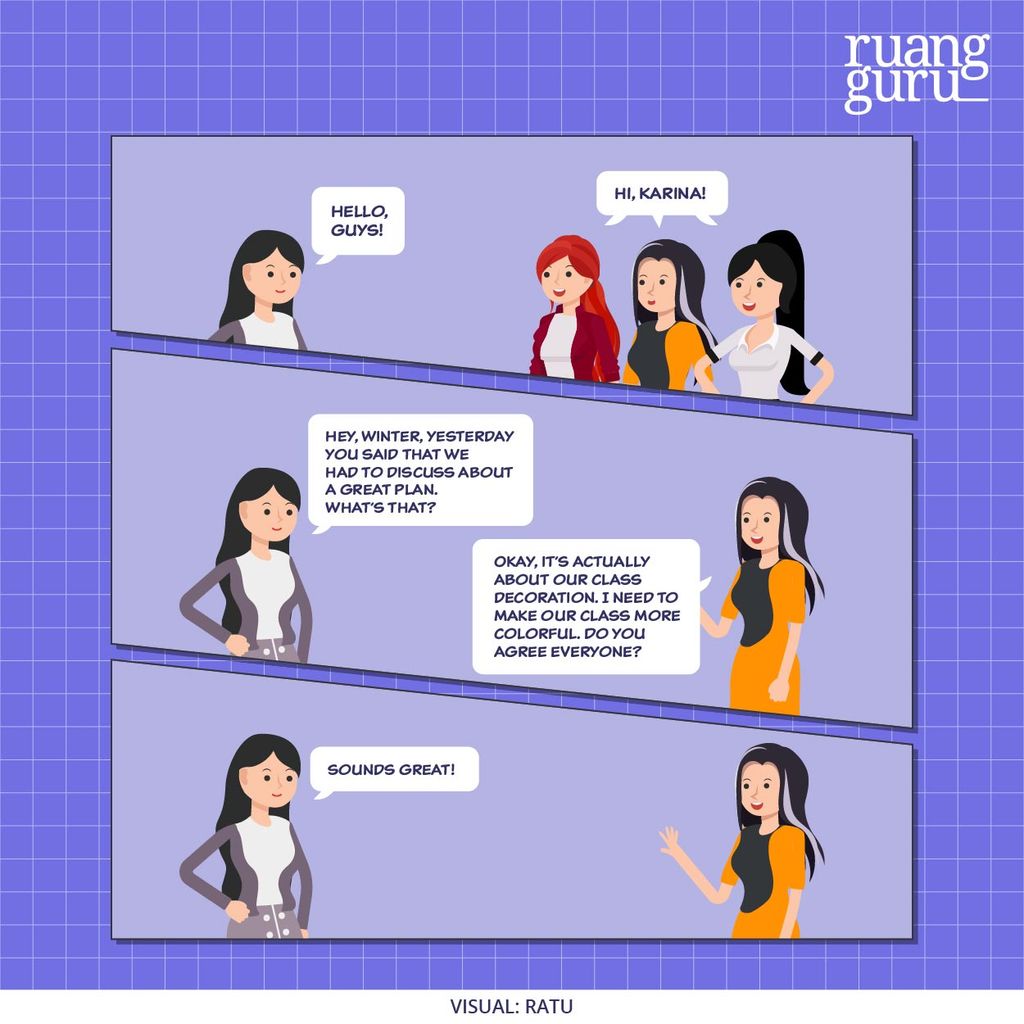
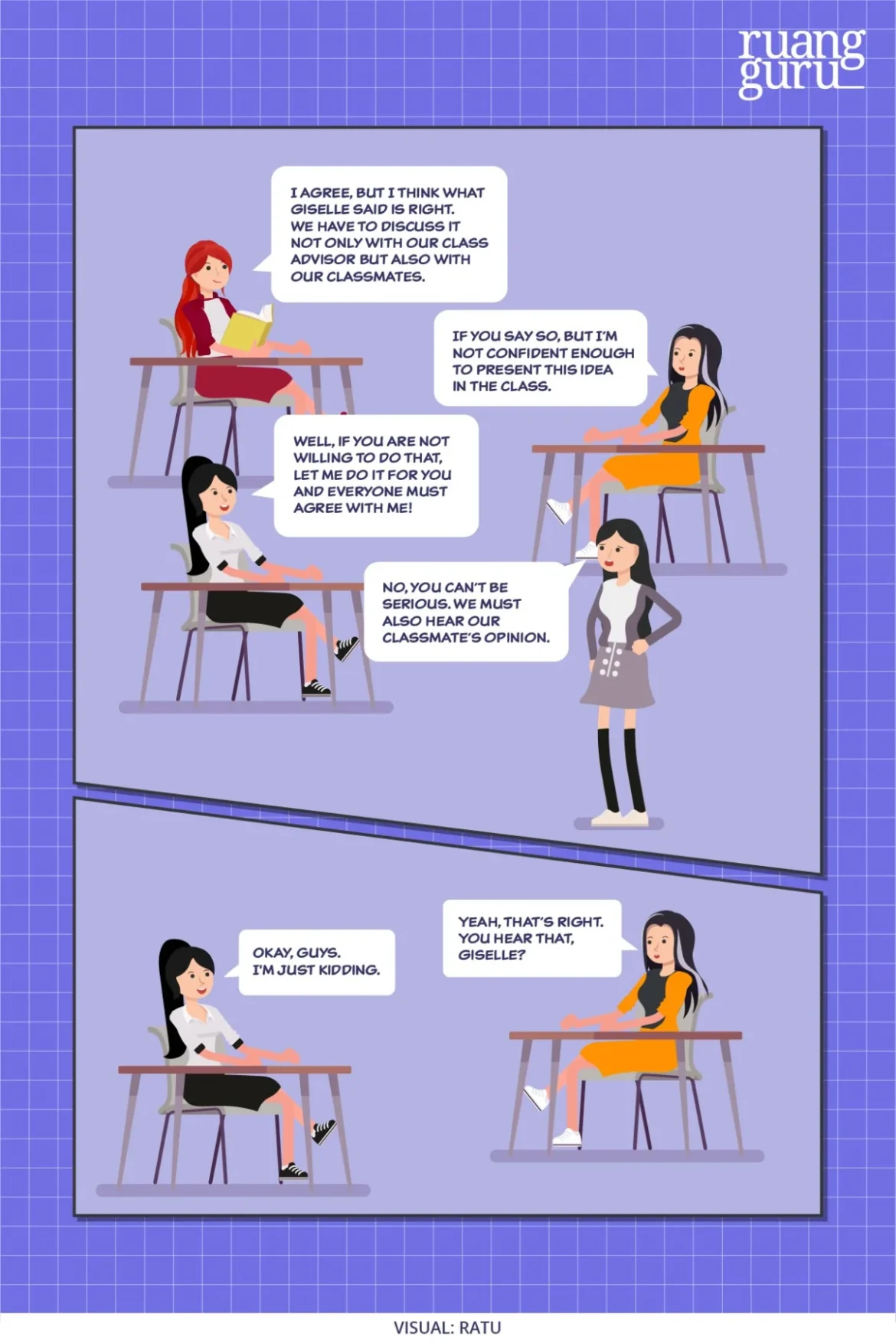
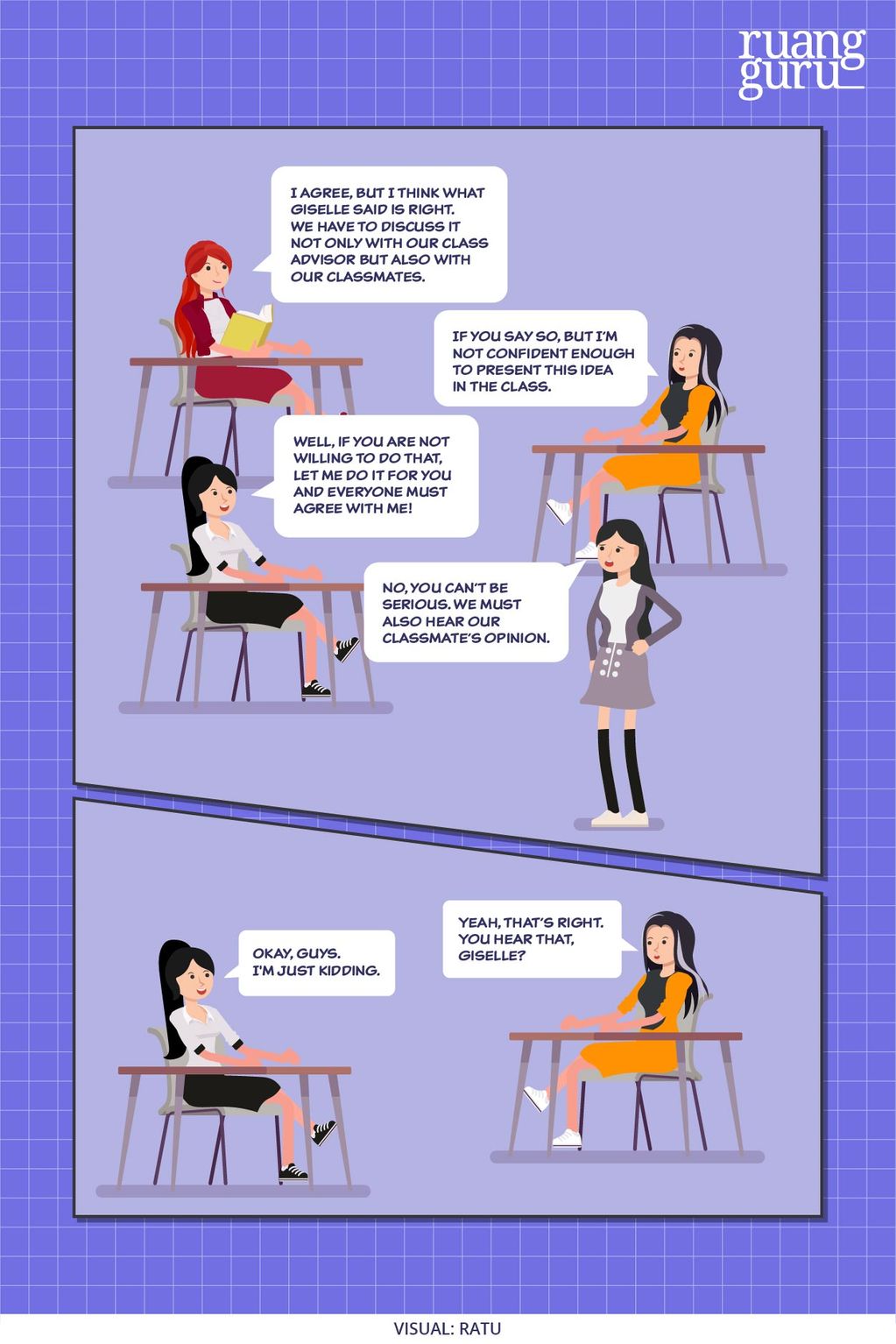
However, as the scope of the project expands to include logistical details—such as class decorations—the complexity of the discourse increases. In a four-party discussion involving students like Karina, Giselle, Winter, and Ningning, the dialogue shifts from binary agreement to nuanced negotiation. When Winter suggests a specific decorative theme, the group must evaluate the proposal against constraints such as budget, time, and institutional approval.
Data-Driven Analysis of Communication Styles
Empirical research in communication studies suggests that the effectiveness of a team is directly proportional to its members’ ability to express disagreement constructively. According to a study on team dynamics, groups that utilize "task-oriented conflict"—where disagreement is focused on the idea rather than the individual—tend to reach more innovative solutions than those that exhibit "affective conflict," which involves personal animosity.
The formal expressions of disagreement are statistically correlated with higher levels of team cohesion. Phrases such as "I am afraid I have a different opinion," or "I see the merits of your point, but I have reservations regarding the implementation," allow for the exploration of alternatives without compromising professional relationships. This stands in stark contrast to informal disagreement, often characterized by colloquialisms like "No, you can’t be serious," which, while effective in close-knit peer groups, carries a significant risk of escalating tension in formal environments.

The Role of "Not Sure" in Deliberative Discourse
A frequently overlooked aspect of communication is the expression of uncertainty. In professional settings, the phrase "I am not sure" or "I need more information" is often more valuable than an immediate commitment. This linguistic position serves as a "neutral anchor," allowing the speaker to avoid premature consensus while keeping the discussion open.
During the aforementioned classroom simulation, when Ningning notes, "I agree about it, but I think what Giselle said is right," she is demonstrating a sophisticated linguistic technique known as "synthesizing." By acknowledging the validity of multiple viewpoints, she positions herself as a mediator, which is a vital skill in leadership and project management.
The Implications of Linguistic Proficiency
The ability to categorize and use these expressions has significant implications for educational outcomes and career readiness. Students who master these nuances are better equipped to participate in international discourse, where English serves as the lingua franca.

- Academic Impact: Students who can articulate disagreement formally are more likely to excel in essay writing, debating, and seminar participation, where they are required to critique academic literature without resorting to ad hominem attacks.
- Professional Impact: In the global workforce, the ability to navigate cultural differences through careful language choice is essential. Many international corporate training programs now emphasize "soft skills," specifically training employees to disagree without causing friction.
- Cognitive Development: Engaging in a structured debate requires the speaker to process information, evaluate it against their own beliefs, and construct a logical, polite rebuttal. This process enhances critical thinking and analytical reasoning.
Strategic Application: A Sample Exercise
To ensure the practical acquisition of these skills, educational frameworks often utilize standardized exercises. Consider the following scenario: A government body proposes a policy change, such as an increase in utility costs.
- The Statement: "The government plans to raise the price of electricity next month."
- The Disagreement: "I totally disagree. It will disproportionately affect low-income households."
- The Analysis: The speaker here correctly identifies that the word "disagree" is a verb that already encompasses the negative sentiment. Therefore, saying "I don’t disagree" would be a double negative, whereas "I totally disagree" provides the necessary emphasis.
This exercise underscores the importance of precision. In public policy discourse, clarity is paramount to ensure that the dissent is understood as a challenge to the policy, not a rejection of the institution itself.
Conclusion and Future Directions
The mastery of agreement and disagreement is not merely about learning a set of phrases; it is about understanding the social and professional contract that governs human interaction. Whether in a classroom, a laboratory, or a corporate boardroom, the ability to navigate consensus and dissent with precision and respect remains a cornerstone of effective leadership.
As educational institutions continue to integrate communication training into their curricula, the focus must remain on the intersection of linguistic accuracy and cultural context. By providing students and professionals with the tools to express their thoughts clearly, society fosters an environment where diverse ideas can compete, collide, and ultimately merge into more informed, collaborative solutions. The ongoing evolution of English as a global medium ensures that these fundamental communicative skills will remain as relevant in the future as they are today. Future developments in this field will likely include more emphasis on digital communication, where the nuances of tone and intent must be conveyed through text-based platforms, further highlighting the necessity for refined expression in an increasingly connected world.