
The Hikayat serves as one of the most significant pillars of classical Malay literature, representing a profound bridge between the historical narratives, oral traditions, and societal values of the pre-modern Nusantara region. Predating the modern emergence of the short story and the novel, these prose narratives offer an unparalleled glimpse into the cultural, political, and spiritual frameworks of kingdoms across modern-day Indonesia, Malaysia, Brunei, Thailand, and the Philippines. Far from being mere folklore, the Hikayat functions as a complex repository of dynastic history, moral philosophy, and regional identity, maintained through centuries of manuscript preservation and oral transmission.

Historical Context and Evolution
The genesis of the Hikayat dates back to the classical Malay period, flourishing significantly between the 14th and 19th centuries. Historically, these texts were often commissioned by royal courts to solidify the legitimacy of a ruling dynasty. By intertwining genealogical records with heroic exploits and religious didacticism, monarchs used the Hikayat as a tool for political consolidation and psychological defense, projecting an image of invincibility to rival states.
Chronologically, the evolution of the genre can be categorized by its external influences:
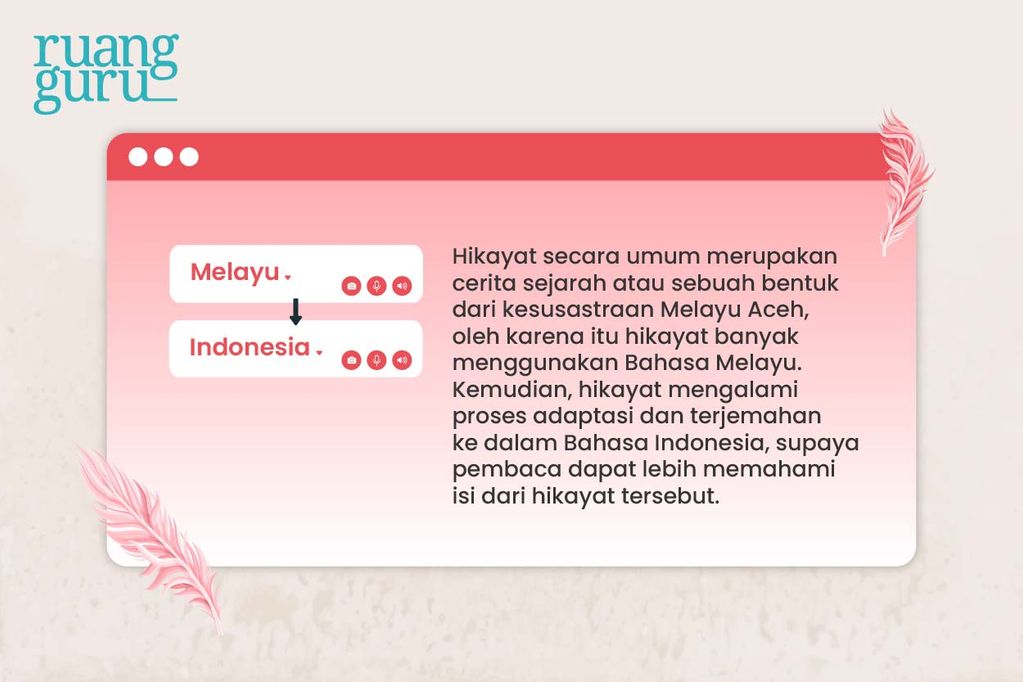
- The Pre-Islamic Era: Early narratives often drew from indigenous mythology and local animistic traditions, later heavily influenced by Hindu-Buddhist epics such as the Ramayana and Mahabharata.
- The Islamic Golden Age: With the spread of Islam in the archipelago, the genre underwent a massive transformation. The infusion of Arabic and Persian literary traditions introduced new themes of mysticism, theological inquiry, and biographies of prophets or historical Islamic figures.
- The Colonial Transition: During the colonial era, many Hikayat were transcribed from oral traditions into written form by both local scribes and colonial scholars, often leading to the integration of localized colonial perspectives.
Structural Anatomy of the Hikayat
While the narratives vary in scope, a rigorous analysis of extant manuscripts reveals a consistent structural architecture. The typical Hikayat is composed of five distinct components: the Abstraksi (Abstract), which provides the narrative hook; the Orientasi (Orientation), which establishes the socio-spatial setting; the Komplikasi (Complication), where the central conflict arises; the Resolusi (Resolution), documenting the outcome of the struggle; and the Koda (Coda), which serves as the final pedagogical or moral conclusion.
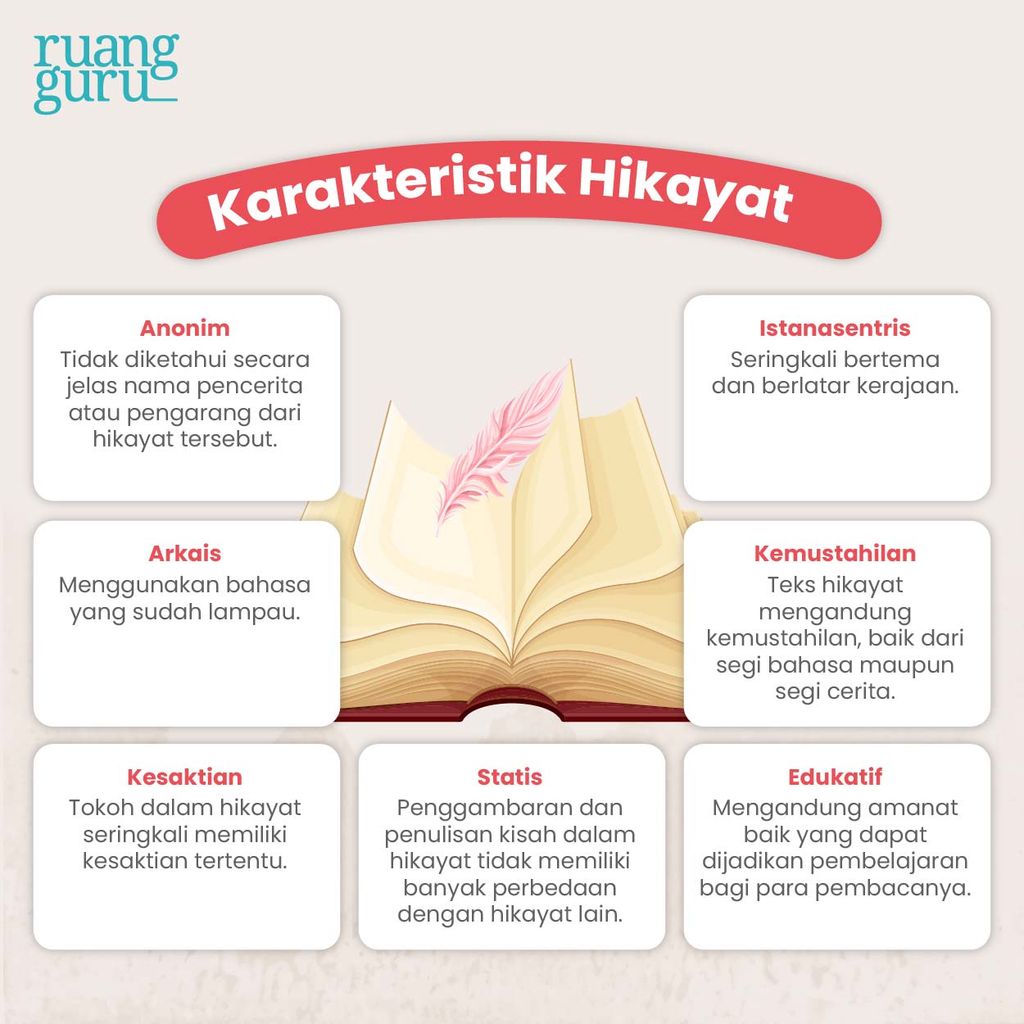
Unlike the modern novel, the Hikayat is characterized by its "stasis." Because many were written to serve as timeless templates for moral or political instruction, the narratives remain relatively uniform across different regions. This lack of variation is not a sign of creative limitation, but rather an intentional design to preserve the sanctity of the values being transmitted.
Defining Characteristics: The Elements of the Fantastic
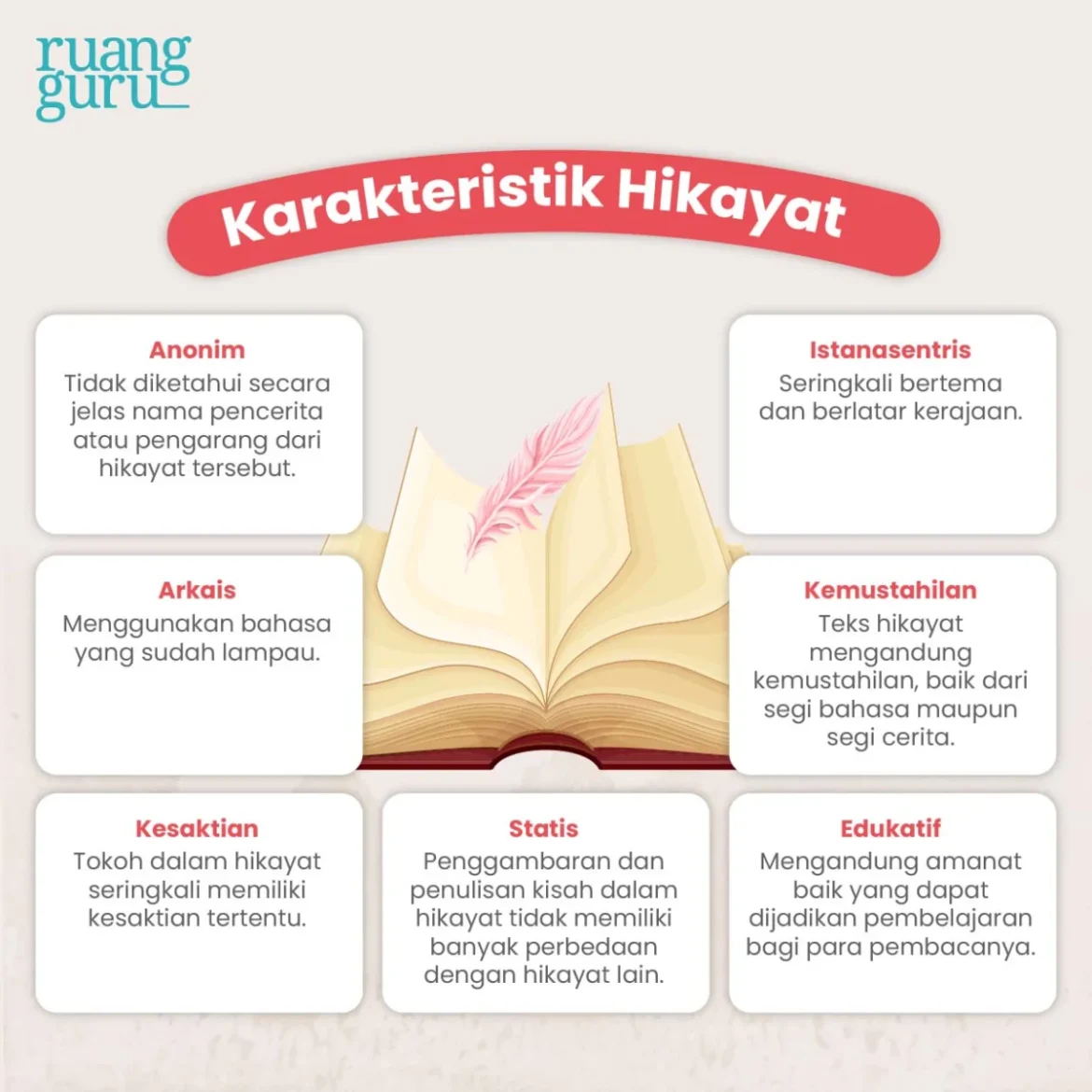
One of the most defining features of the Hikayat is the inclusion of the "mustahil" (the impossible). Modern literary critics observe that these elements—such as a protagonist born with a sword in hand or the intervention of mythical creatures—are not meant to be read as literal historical accounts. Instead, they serve as metaphors for divine favor or the exceptional nature of the protagonist’s character.
Key literary devices found in these texts include:

- Istanasentris: The narrative is almost exclusively set within the confines of the palace or royal sphere.
- Arkaisme: The language is heavily infused with archaic terminology (such as "hatta," "titah," and "bejana"), which serves to distance the reader from the mundane reality of the present.
- Anonimitas: A majority of these works remain anonymous, reflecting a cultural emphasis on the message and the collective heritage rather than individual authorship.
- Kesaktian: The reliance on supernatural powers or artifacts to resolve the Complication, reinforcing the idea that greatness is often preordained or blessed by the divine.
Categorization by Historical and Thematic Origin
Scholars classify the vast corpus of Hikayat into distinct groups based on their origins, which in turn informs their thematic content. The "Melayu" group, for instance, focuses heavily on the synthesis of local custom with Islamic morality. The "India" category, exemplified by works like the Hikayat Pandawa Lima, retains the structure and character archetypes of the great Sanskrit epics. The "Arab-Persia" category, such as Hikayat 1001 Malam, is synonymous with the expansion of Middle Eastern intellectual influence in Southeast Asia. Finally, the "Jawa" group illustrates a sophisticated hybridity, blending Hindu-Javanese cosmology with the burgeoning influence of Islam.
Furthermore, when analyzed by content, these texts are subdivided into five functional categories:
- Historiographic: Pseudo-historical accounts that, while fictionalized, provide insights into the power structures of the era (e.g., Hikayat Raja-Raja Pasai).
- Biographic: Focused on the life trajectories of prominent figures or saints, often emphasizing their trials as a pathway to wisdom.
- Religious: Didactic texts intended to explain Islamic tenets or mystical philosophy.
- Peristiwa (Event-based): Narrative dramatizations of significant, sometimes apocalyptic, events.
- Cerita (Romance/Epic): Narratives that emphasize human emotion, loyalty, and the classic struggle between good and evil.
Socio-Cultural Implications and Value Systems
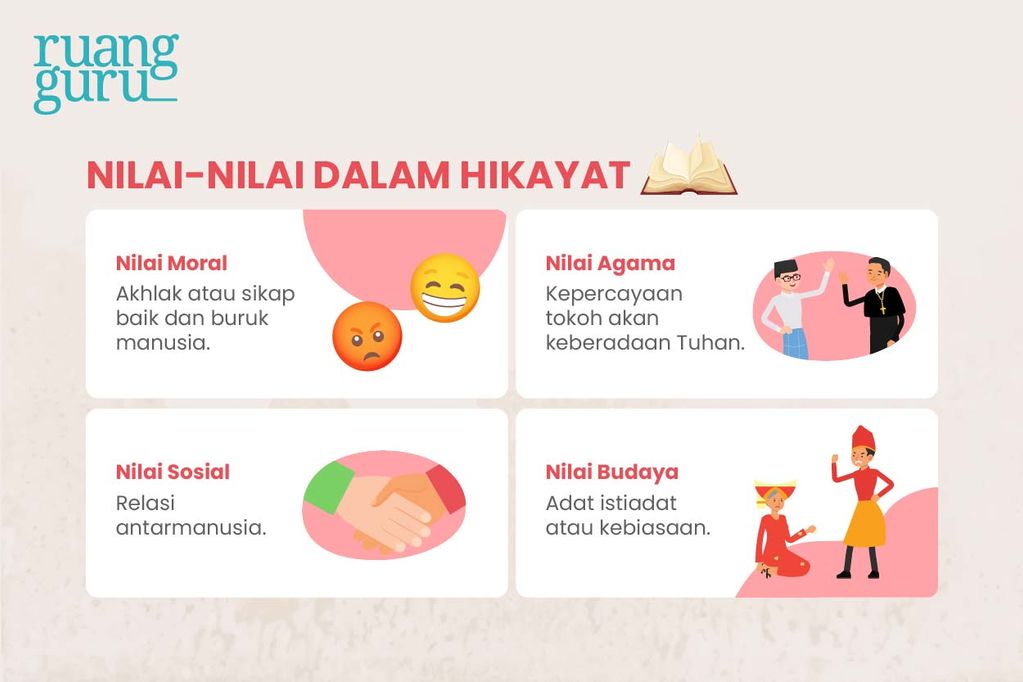
The enduring relevance of the Hikayat lies in the values they encode. The narratives are structured to instill four primary pillars of societal conduct:
- Moral Values: The dichotomy between right and wrong is absolute, serving as a social compass.
- Religious Values: The reinforcement of faith and submission to the divine, often presented as the ultimate resolution to worldly suffering.
- Social Values: The emphasis on etiquette, hierarchy, and duty to the community or sovereign.
- Cultural Values: The preservation of indigenous customs and the "adat" (traditions) that define the Malay identity.
Broader Impact and Contemporary Relevance
The study of Hikayat is not merely an academic exercise in antiquity; it is essential for understanding the psychological and political landscape of contemporary Southeast Asia. The focus on "istanasentris" (palace-centric) narratives, for example, helps explain the lingering respect for traditional authority and hierarchy in the region. Furthermore, the didactic nature of these stories continues to influence modern storytelling, as contemporary Indonesian and Malay writers often draw upon the pacing and moral directness found in the Hikayat tradition.

However, the preservation of these texts remains a critical challenge. Many original manuscripts are fragile, suffering from the effects of tropical humidity and historical neglect. Digital archiving projects, spearheaded by both national libraries and international academic institutions, have become the primary method for ensuring these texts survive for future generations.
In conclusion, the Hikayat is a testament to the sophistication of pre-modern Malay literature. By synthesizing history, religion, and the fantastical, these texts did more than just entertain; they defined the boundaries of the known world and provided a blueprint for moral existence. As we continue to digitize and analyze these narratives, we uncover a deeper, more nuanced understanding of the cultural tapestry that binds the Malay world together, proving that even in their "impossible" tales, there is a profound, enduring truth about the human condition.
