
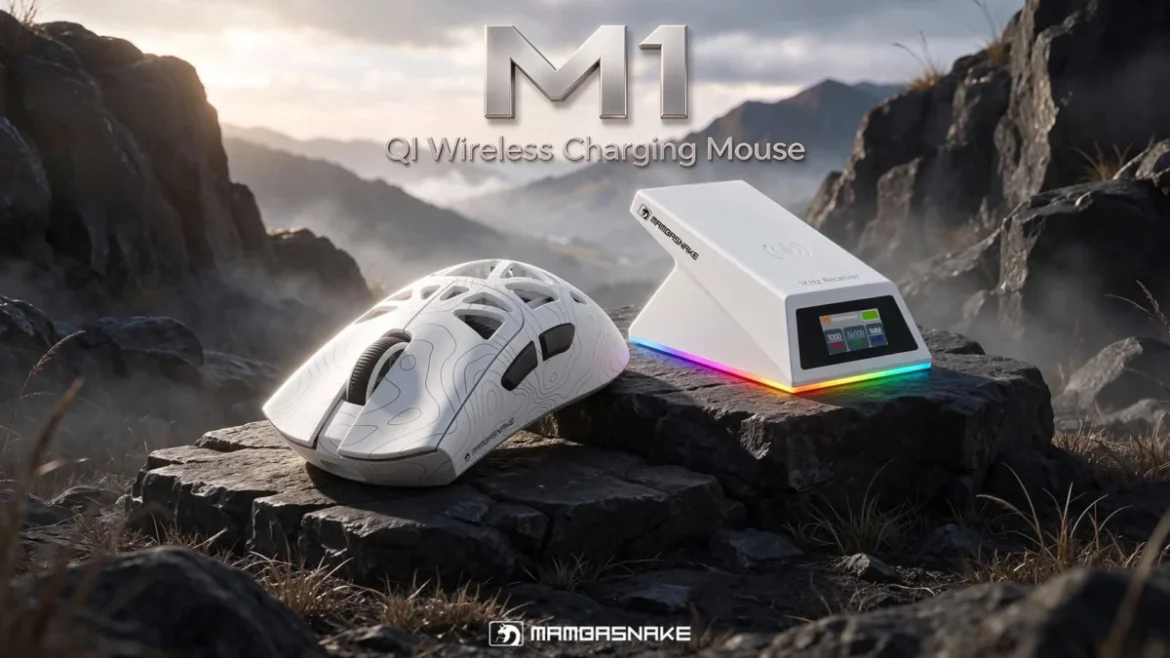
The competitive PC gaming peripherals market is bracing for a fresh contender as manufacturer MAMBASNAKE officially introduces its latest flagship peripheral, the M1 Wireless Gaming Mouse. Designed from the ground up to cater to the exacting demands of esports athletes and casual enthusiasts alike, the M1 combines an ultra-lightweight chassis, a high-performance optical sensor, and a cutting-edge magnetic Qi wireless charging dock. This strategic hardware release underscores a growing industry trend toward eliminating cable clutter without compromising the millisecond precision required in high-stakes competitive gaming environments.
According to initial product disclosures and industry reports, the MAMBASNAKE M1 enters a crowded marketplace dominated by established giants, yet it manages to carve out a distinct identity through thoughtful feature integration. At the core of the mouse’s performance architecture lies the PixArt PAW3323 optical sensor. While technical purists often debate sensor tiers, this specific implementation is touted to support an impressive sensitivity range scaling up to 36,000 DPI. Furthermore, the sensor is rated for a maximum tracking speed of 400 inches per second (IPS) and a G-force acceleration threshold of 40G, ensuring that rapid, flick-based movements during intense first-person shooter matches register accurately without tracking loss.
Data processing and low-latency communication are handled by an integrated BK3633 microcontroller chip. This hardware pairing facilitates a stable 1,000 Hz polling rate, ensuring a swift one-millisecond response time whether the user operates the device via a traditional wired connection or the 2,4 GHz proprietary wireless dongle.
Versatile Connectivity and Ergonomic Engineering
Modern gamers frequently demand hardware that transitions seamlessly between high-intensity gaming sessions and productivity workflows. Addressing this versatility, the MAMBASNAKE M1 features a tri-mode connectivity suite. Users can toggle between a wired USB connection, a ultra-low latency 2,4 GHz wireless mode utilizing the included USB receiver, and standard Bluetooth connectivity for pairing with laptops, tablets, or secondary workstations.
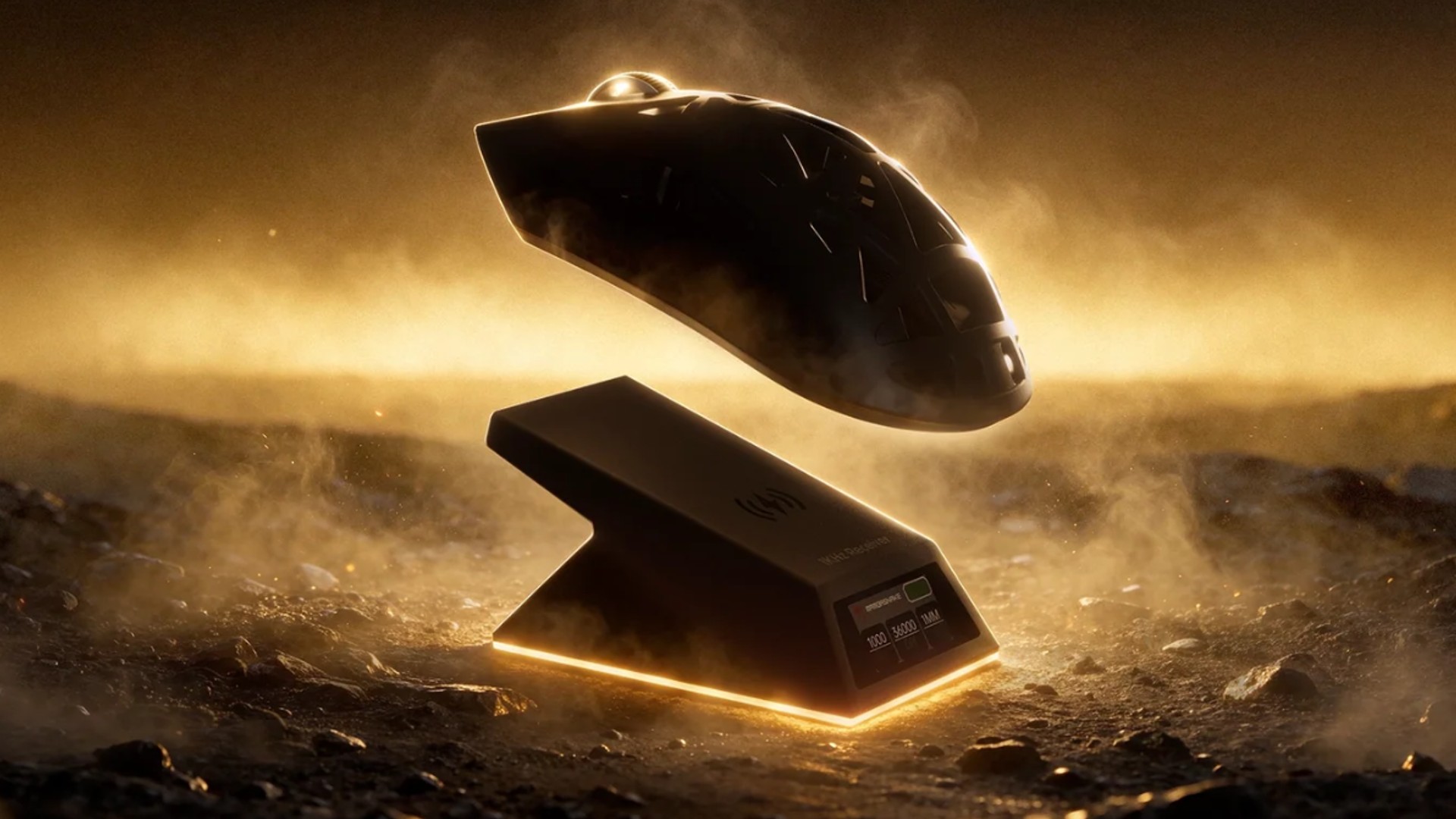
To enhance user experience during daily operation, the mouse incorporates a six-stage DPI adjustment system. Each sensitivity level is paired with a distinct color indicator, allowing users to verify their current profile at a glance.
Ergonomically, the M1 is tailored for right-handed users, featuring a contoured shell designed to accommodate various grip styles, including palm, claw, and fingertip grips. Weighing in at approximately 63 grams (with a minor variance of plus or minus 3 grams), the mouse adopts a lightweight structural philosophy. This featherlight profile is achieved in part through a strategically ventilated honeycomb framework hidden beneath its ergonomic exterior, significantly reducing wrist fatigue during extended gaming sessions.
Durability remains a critical benchmark for competitive peripherals. To that end, MAMBASNAKE has equipped the M1 with premium mechanical switches from Omron, rated for an impressive lifespan of up to 100 million clicks. Complementing these primary switches is a TTC silver wheel encoder, ensuring tactile, precise scrolling feedback. Customization of these hardware parameters is not restricted to onboard toggles; users can fine-tune macro commands, debounce times, and polling rates via dedicated PC software or a newly developed browser-based configuration tool.
The Innovative Qi Magnetic Charging Dock
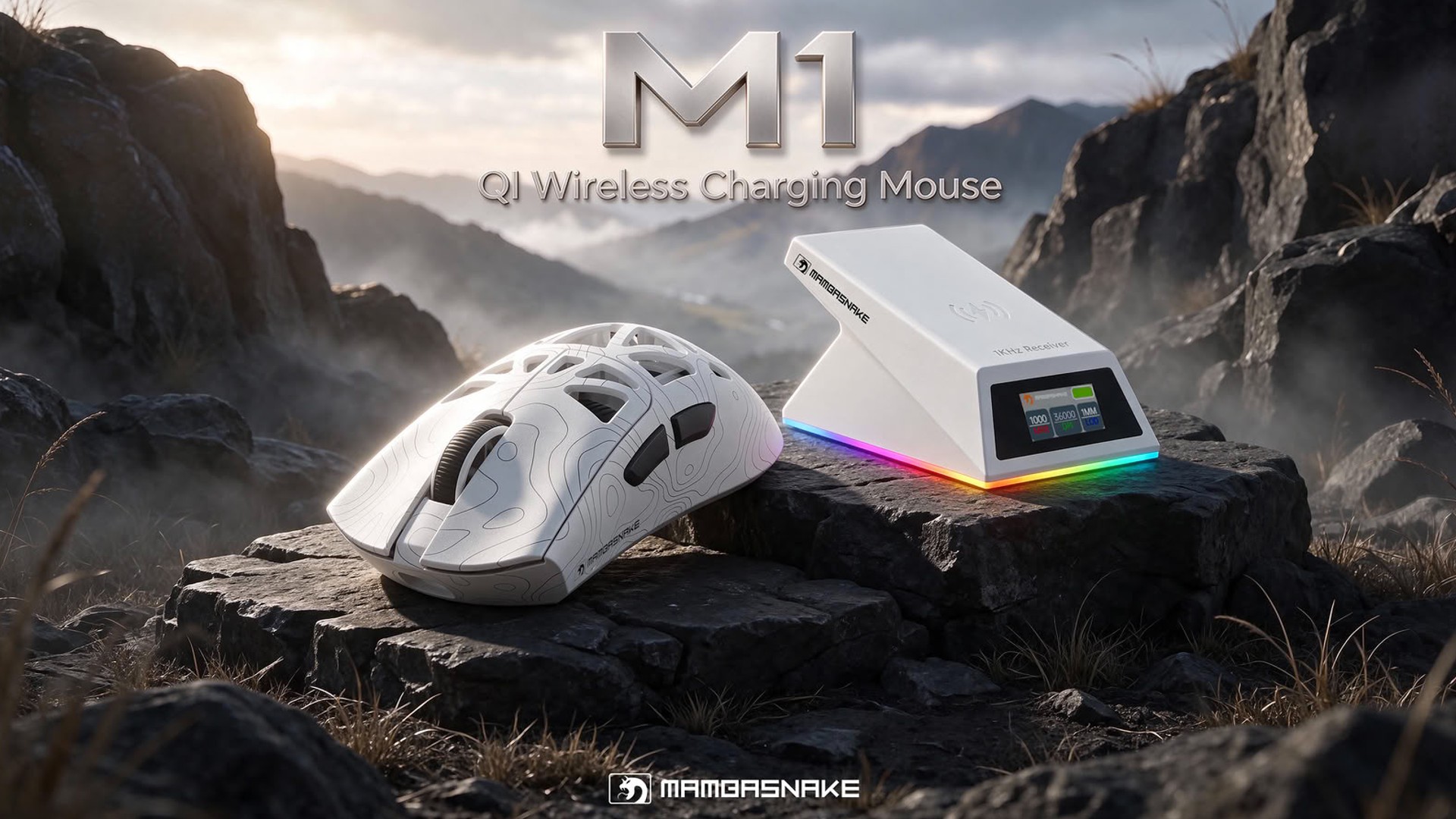
Perhaps the most striking hardware innovation accompanying the MAMBASNAKE M1 is its companion charging dock. Moving away from standard micro-USB or basic magnetic pin connectors, the dock leverages Qi wireless charging standards, allowing users to replenish the mouse’s internal power supply effortlessly by simply placing the device onto the magnetic platform.
Beyond its primary power-delivery function, the charging dock serves a dual purpose as an operational dashboard and a hardware hub. Embedded within the dock is a small digital display screen that broadcasts critical telemetry in real time. Users can monitor active connection modes, current DPI settings, and operational polling rates directly from the desktop display. Additionally, the dock features an integrated housing slot designed to securely store the 2,4 GHz wireless USB receiver when the mouse is packed away for travel, addressing a common pain point for mobile gamers who frequently misplace micro-receivers.

While MAMBASNAKE has outlined the comprehensive feature set of the M1 Qi, critical consumer metrics—specifically the exact battery capacity, operational battery life span per charge cycle, and official retail pricing—remain under wraps. Industry analysts suggest that keeping these figures confidential ahead of the formal launch is part of a calculated marketing strategy to build consumer anticipation.
Chronology and Market Timeline
The developmental trajectory of the MAMBASNAKE M1 reflects the rapid iteration cycles typical of the modern gaming hardware sector. Preliminary specifications and product renders began circulating through tech hardware forums and regulatory filings in late autumn. Following design finalization, MAMBASNAKE officially publicized the peripheral’s core specifications via major tech news outlets.
The hardware ecosystem will reach its next major milestone on November 30, when MAMBASNAKE officially opens the global pre-order window for the M1. Market analysts anticipate that review units will land in the hands of independent hardware testers shortly before the pre-order phase, providing potential buyers with verified benchmarks regarding battery endurance, sensor smoothing, and latency performance. Following the initial pre-order wave, retail shipments are projected to roll out globally, though regional availability dates may vary depending on local distribution partnerships.
Industry Implications and Competitive Analysis
The introduction of the MAMBASNAKE M1 Qi into the competitive gaming landscape highlights several broader trends within the peripheral industry. First, the democratization of high-end specifications continues at a rapid pace. Features such as sub-70-gram weight classes, multi-hundred-million-click switches, and high-DPI optical sensors—once exclusive to elite-tier, ultra-expensive esports mice—are increasingly becoming standard expectations for mid-range and challenger brands.
Second, the incorporation of Qi wireless charging combined with an informative desktop dock points toward an industry-wide push for desk cleanliness and ecosystem integration. While wireless mice have liberated players from cable drag, the necessity of plugging in a charging cable periodically has always posed a minor friction point. Magnetic wireless charging docks mitigate this inconvenience, transforming a mundane maintenance task into a seamless, desk-friendly ritual. Furthermore, the inclusion of a telemetry screen on the dock itself elevates the accessory from a simple charging plate to a functional desktop utility.
However, challenges remain for emerging brands entering the established gaming peripheral ecosystem. Established market leaders such as Logitech G, Razer, and SteelSeries benefit from deeply entrenched brand loyalty, mature proprietary software suites, and extensive global support networks. For MAMBASNAKE to carve out a sustainable market share with the M1, the software experience—specifically the reliability and responsiveness of the companion configuration tools—must match the high standard set by the physical hardware.
As the pre-order date approaches, consumer sentiment across gaming forums remains cautiously optimistic. If MAMBASNAKE can price the M1 competitively relative to established market alternatives while delivering on its promised weight, sensor precision, and innovative charging functionality, the M1 Qi could establish a new benchmark for value and convenience in the wireless gaming mouse sector.
