
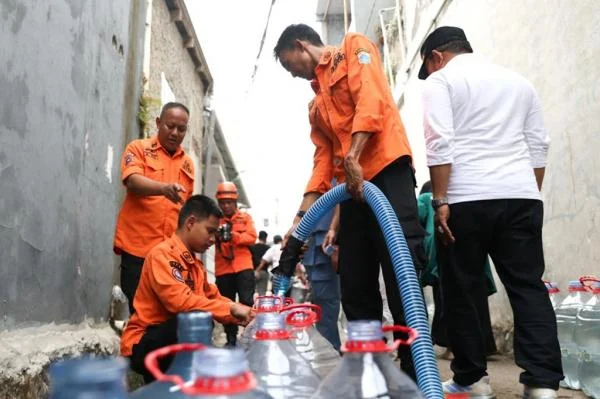
The Regional Disaster Management Agency (BPBD) of South Jakarta has launched a critical humanitarian operation to alleviate the suffering of residents affected by a severe, prolonged drought that has gripped the region. As of Saturday, September 19, 2026, authorities have successfully distributed 44,000 liters of clean water to 195 households spread across six kelurahans (villages) and 23 neighborhood units (RT). This intervention serves as a vital lifeline for communities currently struggling with the depletion of groundwater sources and the failure of local wells, which have been exacerbated by an unusually intense and extended dry season.
The distribution effort is part of a broader, coordinated response mandated by the Governor of DKI Jakarta, aimed at ensuring municipal readiness in the face of escalating climate-related challenges. By mobilizing water tankers to the most vulnerable areas, the city administration seeks to prevent a public health crisis that often accompanies severe water scarcity, including the potential for sanitation issues and the spread of waterborne diseases.
Chronology of the Crisis and Response Efforts
The onset of the current drought began to manifest in early August 2026, as rainfall patterns shifted significantly below the historical average for the Greater Jakarta area. By late August, local community leaders began reporting a noticeable drop in the water table, rendering shallow wells—the primary water source for many households—inoperable.
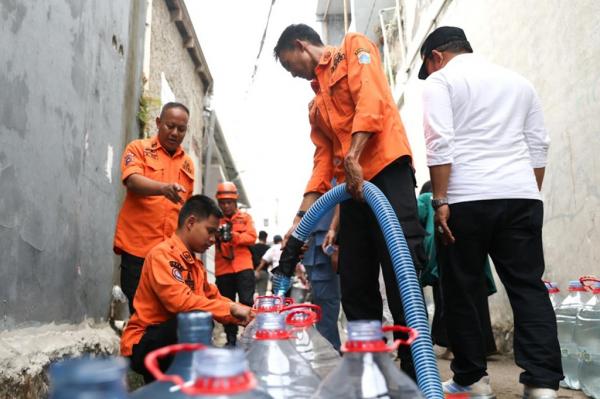
As the situation deteriorated, the South Jakarta BPBD, led by Task Force Head Sukendar, initiated a systematic assessment process. This involved a collaborative effort between municipal officials and local community leaders to map out the most critically impacted zones. "The government of South Jakarta, in close coordination with neighborhood administrators, has been conducting comprehensive data collection on the affected population over the past few weeks," Sukendar noted during the press briefing on Saturday.
Following the verification of data, the operational phase commenced. The BPBD Jakarta Selatan collaborated extensively with PAM Jaya, the municipal water utility company, to source and transport the necessary volume of potable water. The deployment of tankers into the affected neighborhoods represents a logistical success, covering 23 RTs across six distinct administrative villages within a timeframe of less than one week.
Data Analysis and Distribution Logistics
The distribution of 44,000 liters of water represents a significant logistical undertaking, particularly given the dense urban landscape of South Jakarta. Each household in the affected regions requires a baseline of clean water for daily hygiene, cooking, and consumption. While the immediate supply provides temporary relief, the sheer scale of the affected population—195 households—underscores the intensity of the hydrological stress currently affecting the region.
Water scarcity in Jakarta is a multifaceted issue. While the current drought is the primary driver, it is compounded by long-standing issues such as excessive groundwater extraction, the prevalence of non-piped water usage in residential areas, and the reduction of permeable ground surfaces due to rapid urban development. The current intervention by the BPBD acts as a reactive measure, but it also highlights the urgent need for long-term water management strategies.

Official Responses and Institutional Coordination
The response to the water crisis has been framed as a multi-agency commitment to public safety. According to official statements from the provincial government, the readiness of the BPBD is a direct implementation of the Governor’s directive regarding drought preparedness. This directive mandates that all regional disaster agencies remain on high alert to provide immediate assistance to residents in need.
"We are committed to ensuring that the basic needs of our citizens are met, even under extreme environmental conditions," said an official from the provincial administration. The collaboration with PAM Jaya is particularly significant, as it bridges the gap between emergency disaster response and established utility infrastructure. By leveraging the technical capacity of the water utility, the city is able to maintain a consistent quality of water for distribution, thereby mitigating the risk of distributing contaminated or untreated water to the public.
Furthermore, the involvement of local neighborhood and community leaders has been essential in the success of the distribution. These local figures serve as the primary conduits of information, identifying which specific households are at the highest risk and ensuring that the water reaches those who lack the physical or financial means to access it elsewhere.
Broader Implications of Urban Drought
The drought currently impacting South Jakarta is a microcosm of the larger climate challenges facing Indonesia’s capital. The frequency and intensity of extreme weather events, including prolonged dry spells, have become increasingly common in recent years. This trend poses serious implications for urban planning and public resource management.

- Hydrological Stress: The reliance on groundwater has led to land subsidence in many parts of Jakarta. During drought years, the increased dependency on private well extraction accelerates this phenomenon, leading to potential structural damage to infrastructure and an increased risk of flooding during the subsequent rainy season.
- Economic Impact: For low-to-middle-income families, the cost of purchasing water from private vendors during a drought can consume a significant portion of their monthly budget. By providing free, government-subsidized water, the BPBD is essentially providing an economic safety net for those who would otherwise be forced to choose between essential expenditures.
- Infrastructure Limitations: The current crisis highlights the need for the expansion of the piped water network. Many of the affected RTs are located in areas where traditional piping has not yet reached full capacity, leaving residents vulnerable to the vagaries of the local climate.
Future Outlook and Mitigation Strategies
Looking forward, the Jakarta administration is expected to refine its drought response protocols. This includes the development of more sophisticated early warning systems that can predict water shortages based on rainfall deficits and groundwater level monitoring. Furthermore, there is an increasing push toward water conservation and the diversification of water sources, including the utilization of recycled wastewater and the expansion of rainwater harvesting programs for residential areas.
The current 44,000-liter distribution is merely a starting point. As the drought continues, the BPBD remains prepared to scale up its operations. The agency has indicated that they are monitoring weather forecasts from the Meteorology, Climatology, and Geophysics Agency (BMKG) to prepare for potential extensions of the dry season. If conditions do not improve in the coming weeks, the scale of the water delivery operation is expected to grow, potentially involving more trucks and more frequent deployment cycles.
The crisis has also sparked a public conversation about the sustainability of urban living in the face of climate change. Citizens are being encouraged to exercise extreme caution in water usage, prioritizing consumption and basic sanitation while reducing non-essential activities.
In conclusion, while the immediate needs of the 195 households in South Jakarta are being addressed through the swift action of the BPBD and its partners, the situation serves as a stark reminder of the city’s environmental vulnerability. The coordination between municipal agencies and the dedication of local personnel have proven effective in the short term, providing a necessary buffer against the harsh realities of the 2026 drought. However, the path toward long-term resilience will require not only emergency response capabilities but also fundamental shifts in how the city manages its most precious resource: water. The ongoing efforts are a testament to the government’s current priority on human security and the essential role of public services in maintaining urban stability during climate-induced disasters.
