
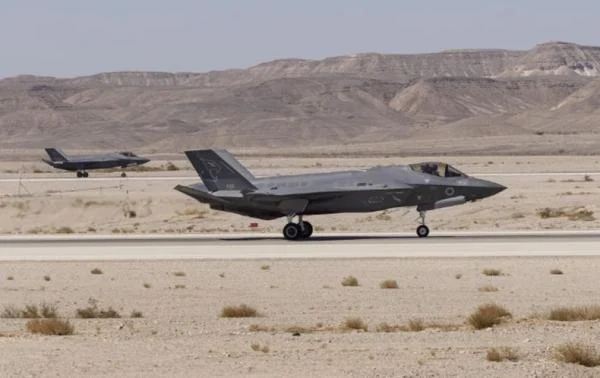
The United States defense establishment is currently grappling with a significant security breach involving the potential compromise of sensitive military technology associated with the F-35 Lightning II, the world’s most advanced multi-role stealth fighter. Recent reports have surfaced indicating that critical components of the aircraft, which were being transported from Australia to the United States for maintenance and diagnostic procedures, were subjected to an unauthorized diversion through Hong Kong. During this transit, several components were reported missing, sparking fears within the Pentagon and intelligence communities that highly classified technological blueprints, material compositions, or proprietary hardware may have fallen into the possession of the Chinese government.
The Chronology of the Security Breach
The logistical trail leading to the incident began in Australia, where specific components of the F-35 fleet—a centerpiece of the U.S. and allied air power—were scheduled for transit to the United States for specialized maintenance. Under standard military logistics protocols, such high-value hardware is subjected to rigorous tracking and secure chain-of-custody procedures. However, the shipment in question, rather than following a direct or pre-approved secure maritime route, was diverted through Hong Kong.
While the exact reasoning behind the route deviation remains under investigation, the implications are severe. Upon the arrival of the shipment at its intended destination, authorities discovered that a portion of the cargo was missing. The absence of these components suggests that they were either offloaded, intercepted, or stolen during the vessel’s stay in the Hong Kong port. Given the geopolitical climate and the strategic interest Beijing maintains in reverse-engineering American military hardware, the disappearance has been treated as a high-level security incident rather than a routine theft.
The Strategic Value of the F-35 Program
To understand the gravity of this situation, one must consider the technological profile of the F-35. The F-35 Lightning II is not merely an aircraft; it is a flying computer network designed to operate within contested environments. Its stealth capabilities rely on a sophisticated combination of airframe geometry and radar-absorbent materials (RAM) that are among the most closely guarded secrets in the U.S. arsenal.
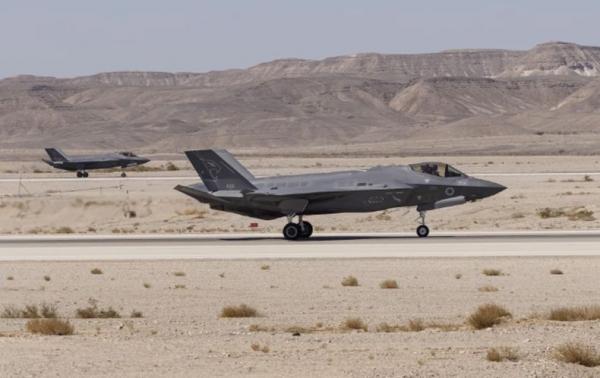
The program, which represents an investment of over $1 trillion in development and procurement, is designed to ensure air superiority for the U.S. and its partners, including Australia, the United Kingdom, and Israel. The loss of even minor components—such as sensors, specialized fasteners, or electronic control modules—could provide foreign adversaries with insights into the structural integrity, electronic warfare capabilities, or maintenance intervals of the aircraft. By analyzing the materials or the software interfaces of these components, engineers in a rival nation could theoretically develop countermeasures or identify "blind spots" in the stealth design, significantly eroding the operational advantage of the F-35 fleet.
The Geopolitical Context: Why Hong Kong Matters
The diversion through Hong Kong carries immense strategic weight. Since the implementation of the National Security Law and the subsequent integration of the city’s security apparatus with mainland China, the distinction between Hong Kong’s autonomous oversight and Beijing’s intelligence operations has narrowed considerably.
For the U.S. military, Hong Kong has long been a transit point, but the current political environment makes it a high-risk area for sensitive cargo. The ability of Chinese intelligence services to monitor maritime traffic and influence port operations means that any sensitive military equipment passing through the region is effectively under a heightened state of surveillance. The possibility that the components were specifically targeted by state-sponsored actors to facilitate technology transfer is a primary focus of the ongoing U.S. investigation.
Institutional Responses and Internal Security Protocols
While the Department of Defense (DoD) has not released a comprehensive public statement detailing the specific components lost, anonymous officials cited in recent reports have expressed deep frustration regarding the failure of the logistics chain. The incident has triggered an internal audit within the Pentagon to determine how a shipment of such criticality could be diverted to a high-risk jurisdiction without immediate escalation.
This breach highlights a recurring vulnerability in the U.S. global defense supply chain: the reliance on third-party commercial logistics providers. While the military relies on the global maritime trade network to move equipment efficiently, these commercial channels are often less secure than dedicated military transport assets. The Pentagon is now likely to face intense pressure from Congress to overhaul the transport protocols for sensitive F-35 parts, potentially mandating that all future transfers of critical aircraft components be conducted via direct, secure military flights or escorted vessels.

Broader Implications for Global Security
The potential compromise of F-35 technology arrives at a time when tensions in the Indo-Pacific are at an all-time high. China has been aggressively modernizing its own stealth fighter programs, specifically the J-20 and the carrier-based J-35. While Beijing consistently denies using illicit means to acquire foreign technology, the U.S. government has historically documented numerous instances of cyber-espionage and industrial theft aimed at the F-35 program, dating back to early design phases in the 2000s.
If these components have indeed reached the hands of Chinese military researchers, the consequences could manifest in several ways:
- Counter-stealth Development: By analyzing the radar-absorbent coatings or the electronic signature of the components, China could refine its ground-based and airborne radar systems to better detect the F-35.
- Hardware Vulnerabilities: If the components contain microchips or circuit boards, they could be subjected to "hardware trojan" analysis, allowing researchers to understand how the aircraft communicates with other platforms within a Link-16 data network.
- Maintenance Parity: Understanding how the U.S. maintains the complex airframe could inform China’s own efforts to sustain its stealth fleet, potentially reducing the development cycle for their domestic aircraft.
Fact-Based Analysis of the Supply Chain Failure
The logistical failure points to a breakdown in "security in depth." In military parlance, the shipment should have been categorized under the highest level of security classification, necessitating an end-to-end secure route. The fact that a commercial vessel was permitted to alter its course to Hong Kong suggests a lack of real-time monitoring or a failure in the communication between the logistics contractor and the oversight officers.
Furthermore, the delay between the disappearance and the reporting of the incident raises questions about the "chain of custody" procedures. Standard operating procedure requires immediate notification of any discrepancy in cargo manifest. The delay suggests that either the loss was not immediately noticed—implying a failure of inventory management—or that the notification was suppressed, leading to concerns regarding the transparency of the contractors involved.
Conclusion: The Road Ahead
As the investigation into the missing components continues, the U.S. government is expected to take corrective actions to prevent a recurrence. This will likely involve a stricter vetting process for logistics partners and a potential reduction in the number of countries or transit hubs permitted to handle sensitive aircraft components.
The incident serves as a stark reminder that in the era of great power competition, the front lines of defense are not limited to the battlefield. They exist within the shipping containers on the high seas, the digital networks of defense contractors, and the logistical hubs that facilitate global trade. For the F-35 program, which is tasked with maintaining the balance of power in the Pacific, the loss of these components represents a significant, albeit yet unquantified, setback.
Whether the components were stolen for financial gain by criminal syndicates or were the target of a sophisticated state-sponsored intelligence operation remains the central question for investigators. Regardless of the motive, the end result is a heightened state of alertness across the Department of Defense and a sobering lesson on the vulnerabilities inherent in the modern, globalized defense supply chain. As the Pentagon works to mitigate the damage, the incident will likely fuel broader debates in Washington regarding the necessity of "de-risking" military supply chains from any region that falls under the sphere of influence of a strategic adversary.
