
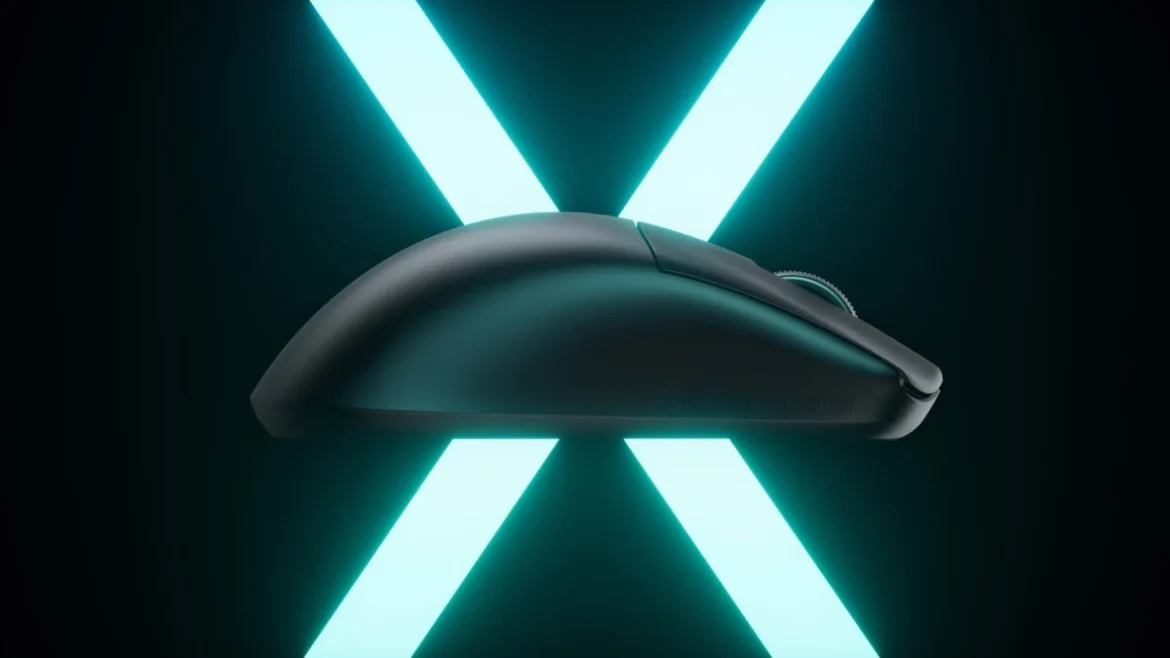
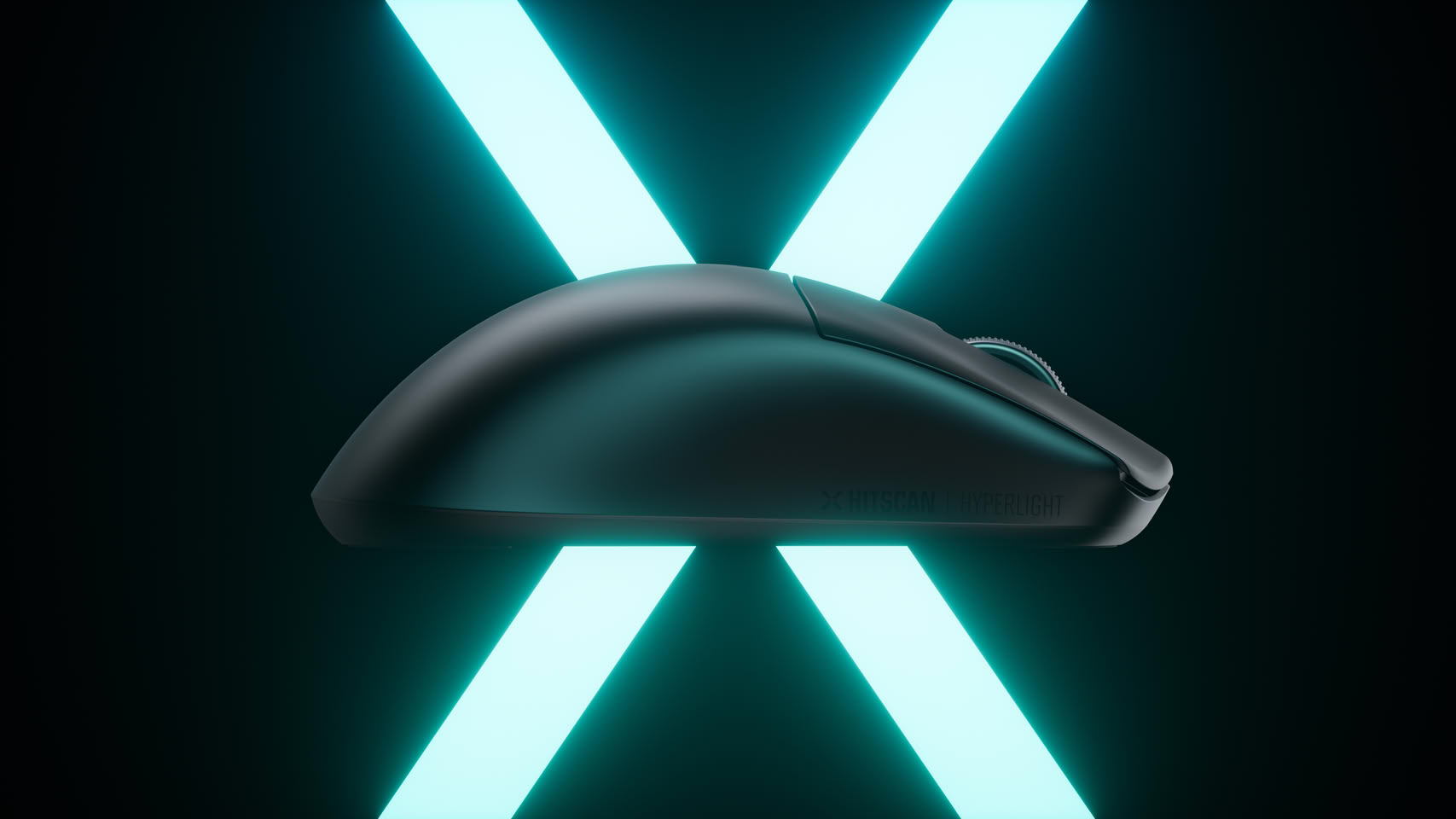
The competitive gaming peripheral market continues its relentless pursuit of absolute speed, minimal latency, and featherlight ergonomics, pushing manufacturers to innovate beyond traditional design paradigms. Hitscan, a brand recognized for catering to high-level esports enthusiasts and precision-aiming purists, has officially announced its latest flagship peripheral: the Hitscan Hyperlight X. Revealed through the company’s official social media channels, this next-generation gaming mouse represents a substantial engineering overhaul of its predecessor, the standard Hyperlight. By combining an even lighter chassis, cutting-edge sensor technology, and an innovative Single Pole Double Throw (SPDT) mechanical switch architecture, the Hyperlight X aims to set a new benchmark for competitive tactical shooters and fast-paced tracking scenarios where every millisecond dictates the difference between victory and defeat.
Evolution of the Hyperlight Lineage: Context and Background
The trajectory of modern gaming mice has been defined by a race to eliminate unnecessary weight without sacrificing structural integrity or sensor fidelity. When Hitscan initially introduced the original Hyperlight, it captured the attention of the enthusiast community by offering a competitive feature set housed within a remarkably lean shell weighing approximately 39 grams. For players specializing in games that demand rapid flick shots, vertical tracking, and micro-adjustments—such as Counter-Strike 2, Valorant, and Apex Legends—reducing hand fatigue and rotational inertia became paramount.
However, the rapid pace of technological advancement in the peripheral industry means that standing still is equivalent to moving backward. Competitors ranging from boutique brands like Endgame Gear to industry giants like Razer and Logitech have continuously pushed the boundaries of polling rates, microcontrollers, and switch actuation methods. Recognizing these market shifts, Hitscan initiated development on the Hyperlight X to address specific feedback from the competitive community. Rather than merely offering a cosmetic refresh, the company redesigned critical internal systems, focusing on weight reduction, click latency minimization, and component reliability.
Engineering the Extremes: Weight Reduction and Structural Refinements
At the core of the Hitscan Hyperlight X’s physical design is its ultra-lightweight chassis, which scales down to approximately 37 grams, depending on the specific configuration and component layout chosen by the user. While a two-gram reduction from the previous 39-gram iteration may appear marginal on paper, in the realm of competitive esports peripherals, every fraction of a gram alters the dynamic feel of the mouse during high-velocity movements.
To achieve this weight reduction while maintaining structural rigidity, Hitscan optimized the internal skeleton and shell geometry. Furthermore, the manufacturer addressed a notable user-experience grievance from the previous generation: dust accumulation. On the original Hyperlight model, the battery compartment cover design occasionally permitted dust and particulate matter to settle into crevices around the base. For the Hyperlight X, Hitscan completely redesigned the lower housing and the battery enclosure interface. The new layout minimizes exposed seams and prevents debris ingress, ensuring that the mouse maintains its aesthetic cleanliness and mechanical integrity over prolonged periods of heavy use in diverse gaming environments.
The SPDT Switch Innovation: Redefining Click Latency
While the reduction in mass is immediately noticeable upon lifting the mouse, the most technologically significant upgrade in the Hyperlight X lies within its click mechanism. Hitscan has integrated Single Pole Double Throw (SPDT) mechanical switches into the design. Traditional gaming mice typically rely on Single Pole Single Throw (SPST) configurations, which close an electrical circuit upon actuation. SPDT switches, by contrast, offer a more complex routing method that allows for alternative signal processing pathways, effectively reducing the physical and electronic debounce delay inherent in mechanical switches.
According to technical specifications and testing data shared by Hitscan via social media, the click latency performance of the Hyperlight X was rigorously evaluated using Open Source Latency Testing Tool (OSLTT) standards. The results place the Hyperlight X in elite company, yielding latency figures that rival or match the industry-leading performance demonstrated by the Endgame Gear OP1 8K—a wired mouse renowned across the competitive community for its near-instantaneous click registration. By achieving comparable speed without resorting to optical switches, which some players criticize for lacking tactile feedback, Hitscan has engineered a solution that bridges the gap between the crisp, satisfying tactile click of traditional mechanical switches and the blazing-fast response times required by modern esports professionals.
Internal Hardware Overhaul: PixArt PAW3950 and Nordic nRF54L15
Beneath the shell, the Hyperlight X replaces legacy components with state-of-the-art silicon. The mouse abandons the PixArt PAW3395 sensor and Nordic nRF52840 microcontroller combination found in its predecessor, upgrading instead to the cutting-edge PixArt PAW3950 sensor paired with the powerful Nordic nRF54L15 MCU.
The PixArt PAW3950 represents the pinnacle of optical sensor technology, offering exceptional tracking accuracy, fine-tuned CPI (Counts Per Inch) adjustments, and flawless surface compatibility. Coupled with the Nordic nRF54L15 microcontroller, the hardware stack ensures ultra-low wireless latency, superior energy efficiency, and stable connection reliability even in tournament environments saturated with 2.4GHz wireless interference. To complement this hardware upgrade, Hitscan has developed a comprehensive web-based configuration software suite. This browser-accessible utility allows users to customize polling rates, remap buttons, configure complex macro commands, and calibrate sensor lift-off distances without requiring heavy, resource-intensive background applications installed locally on their operating systems.
Market Positioning, Pricing Speculation, and Availability
As of the current announcement phase, Hitscan has not disclosed the official retail pricing or the definitive global release date for the Hyperlight X. Market analysts and industry observers point to the pricing history of the original Hyperlight, which retailed at $89.99 through Hitscan’s official storefront, as a baseline reference point.
However, given the incorporation of next-generation internal components—specifically the PixArt PAW3950 sensor, the advanced Nordic nRF54L15 MCU, and the specialized SPDT mechanical switch architecture—it is widely anticipated that the Hyperlight X will command a higher price tag than its predecessor. The inclusion of premium components typically drives up manufacturing costs, positioning the Hyperlight X firmly in the upper tier of enthusiast-grade wireless gaming peripherals. Despite potential cost increases, the competitive feature set is expected to attract dedicated esports players willing to invest in hardware designed to maximize their competitive edge.
Industry Implications and the Future of Competitive Peripherals
The introduction of the Hitscan Hyperlight X underscores a broader trend within the gaming hardware industry: the relentless convergence of ultra-low weight, uncompromising sensor precision, and innovative click actuation methods. As esports titles continue to demand higher frames per second, faster monitor refresh rates, and instantaneous input registration, the peripheral ecosystem must evolve in lockstep.
The adoption of SPDT mechanical switches by Hitscan signals a potential shift away from the traditional compromise between mechanical tactility and optical speed. If independent laboratory testing and widespread user reviews corroborate Hitscan’s initial OSLTT latency claims, other peripheral manufacturers may be pressured to explore similar switch architectures to remain competitive. Furthermore, the meticulous attention paid to structural durability—such as the dust-resistant battery cover redesign—indicates that brands are increasingly listening to consumer critiques regarding long-term maintenance and build quality.
Ultimately, the Hitscan Hyperlight X arrives as a formidable contender in the high-end gaming mouse landscape. By systematically refining every pillar of performance—mass reduction, sensor capability, processing power, and switch mechanics—Hitscan has positioned the Hyperlight X not merely as an incremental update, but as a calculated statement of intent for the future of competitive gaming hardware.
