
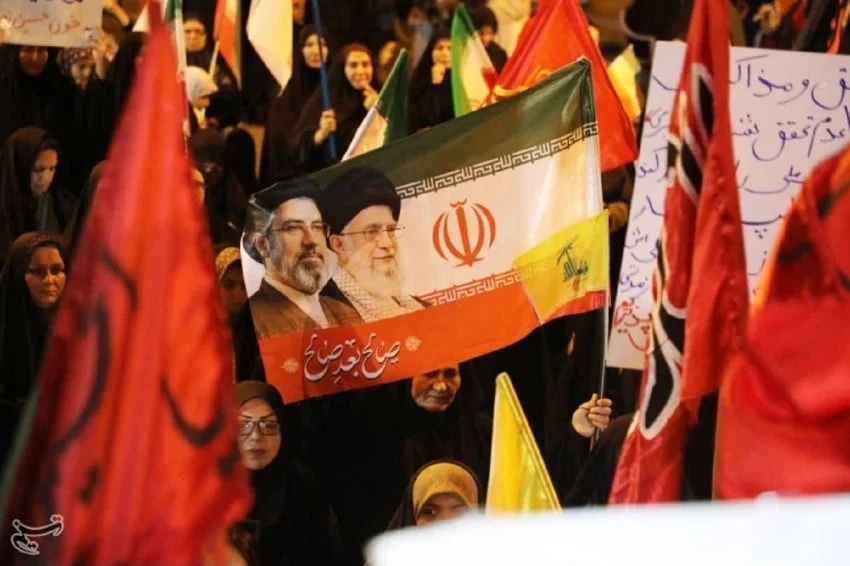
TEHRAN – The General Headquarters of Khatam al-Anbiya, Iran’s central military command, has issued a triumphant declaration asserting that the United States and "Zionist Israel" have been left with no viable option but to accept defeat and surrender. This potent statement arrives amidst Tehran’s confirmation of a finalized Memorandum of Understanding (MoU) with the United States, signaling the cessation of hostilities. The pronouncement, released on Monday morning, June 15, 2026, lauded the resilience of the Iranian populace and declared a "glorious victory" over its adversaries.
The communiqué extended its commendations to all personnel serving within the armed forces and the broader "resistance front," acknowledging their unwavering resolve throughout what the statement characterized as "more than 100 days of war." This period of intense conflict, as described by the Iranian military leadership, has culminated in what they perceive as a decisive strategic triumph, compelling their adversaries to acknowledge their inability to achieve their objectives.
"By the grace of Almighty God and under the command of the Supreme Leader of the Islamic Revolution, the Iranian people and their combatants have proven that the contemptible enemies, America and the Zionists [Israel], have no option but to accept defeat and surrender," the statement, as reported by Tasnim News Agency, emphatically declared. This assertion underscores Iran’s narrative of having successfully imposed its will upon its perceived nemeses, framing the resolution not as a negotiated peace but as a capitulation by the opposing forces.
The supreme military command further elaborated on this theme, stating, "The divine will and the steel-like resolve of the Iranian nation now stand as an unyielding barrier against all forms of aggression," thereby reinforcing the idea that the path of resistance remains the sole determinant of victory. This rhetoric positions Iran as a steadfast defender of its principles and interests, capable of withstanding and ultimately overcoming external pressures.
Background and Escalation of Hostilities
The current geopolitical climate, which has led to this declaration of impending surrender, stems from a protracted period of escalating tensions between Iran and the United States, often with Israel as a significant point of contention. While the exact commencement date of the "more than 100 days of war" remains subject to interpretation, it is widely understood to encompass a series of significant escalatory events that began in early 2026.
These events likely included a complex interplay of proxy conflicts, cyber warfare, economic sanctions, and direct confrontations in strategically sensitive regions. Analysts suggest that the conflict may have been triggered by a specific incident, such as an alleged attack on critical infrastructure, a naval incident in the Persian Gulf, or a significant escalation of proxy warfare in a third country. The prolonged nature of the conflict, exceeding three months as described, indicates a deep-seated strategic rivalry rather than a short-lived skirmish.
The Iranian narrative of forcing surrender suggests that the recent MoU is not a reciprocal agreement but a de facto acknowledgment of Iran’s strategic gains and the United States’ and Israel’s inability to achieve their objectives through military means or economic coercion. This perspective implies that Iran has successfully leveraged its regional influence, asymmetric warfare capabilities, and perhaps even its nuclear program’s perceived proximity as deterrents.
The Memorandum of Understanding: A De Facto Surrender?
The confirmation of a finalized Memorandum of Understanding (MoU) between Iran and the United States marks a critical juncture. While the specifics of this agreement have not been publicly disclosed, the Iranian military’s interpretation paints a stark picture. The wording "finalization of a memorandum of understanding (MoU) to end the war" suggests a formal agreement to de-escalate and cease active hostilities.
However, the accompanying rhetoric from the Iranian command frames this as a capitulation. This implies that the terms of the MoU likely involve significant concessions from the US and Israel, possibly including the lifting of certain sanctions, a halt to direct or indirect military support for adversaries of Iran, and potentially a broader acknowledgment of Iran’s regional influence. The absence of any mention of reciprocal concessions from Iran suggests that their perceived victory is the primary driver of the agreement.
From an analytical standpoint, such a declaration of "surrender" from a major global power like the United States, even if framed as an MoU to end a war, would represent a profound geopolitical shift. It would necessitate a re-evaluation of regional power dynamics and potentially embolden other state and non-state actors challenging Western influence.
Timeline of Key Developments (Inferred)
While a precise, officially released timeline of the "more than 100 days of war" and subsequent negotiations is not available, an inferred chronology based on the provided information can be constructed:
- Early March 2026 (approx.): Initiation of the conflict, characterized by escalating tensions and direct or proxy confrontations. This period is referred to by Iran as the beginning of the "more than 100 days of war."
- March – June 2026: Sustained period of hostilities, involving significant military engagements, cyber activities, and potentially economic warfare. Iran claims to have consistently imposed its will during this phase.
- Late May – Early June 2026: Diplomatic overtures and back-channel negotiations, likely initiated due to the protracted and potentially costly nature of the conflict for all parties involved. Iran’s declaration suggests these negotiations were driven by the realization of impending defeat by the US and Israel.
- June 14, 2026: Confirmation by Tehran of the finalization of the Memorandum of Understanding (MoU) with the United States, aimed at ending the war.
- June 15, 2026: Issuance of the strong statement by the General Headquarters of Khatam al-Anbiya, declaring the unconditional surrender of the US and Israel and celebrating the victory.
Supporting Data and Context
To understand the gravity of Iran’s declaration, it is crucial to consider the broader context of its military and geopolitical standing. Iran has consistently pursued a strategy of asymmetric warfare, leveraging its missile capabilities, drone technology, and network of regional proxies (such as Hezbollah, Houthi rebels, and various Shi’a militias) to counter conventional military superiority.
In recent years, Iran has invested heavily in its ballistic missile program, developing a formidable arsenal capable of reaching targets across the Middle East. Its drone program has also seen significant advancements, with reports indicating its use in various regional conflicts. Furthermore, Iran’s nuclear program, while officially stated to be for peaceful purposes, remains a point of international concern and a significant factor in regional security calculations.
The "resistance front" mentioned in the statement refers to a coalition of allied states and non-state actors that align with Iran’s anti-Western and anti-Israeli stance. This network provides Iran with significant strategic depth and the ability to project power indirectly, making it a formidable adversary even for militarily superior nations.
The "100 days of war" likely involved a multifaceted conflict, potentially including:
- Cyberattacks: Disruptions to critical infrastructure, financial systems, and military communications.
- Missile and drone strikes: Targeted attacks on military assets, naval vessels, or strategic installations.
- Proxy warfare: Increased activity and support for allied groups in regions like Yemen, Syria, Lebanon, and Iraq.
- Naval confrontations: Incidents in the Persian Gulf and the Strait of Hormuz, crucial for global oil transit.
- Economic warfare: Intensified sanctions and counter-sanctions, aimed at crippling the economies of adversaries.
The fact that Iran claims to have forced a surrender suggests that its asymmetric strategies have proven highly effective, perhaps more so than anticipated by its adversaries.
Official Responses and Inferred Reactions
The official statement from Iran’s military command is unequivocal. The triumphant tone and the explicit assertion of "surrender" leave little room for ambiguity regarding their perception of the outcome.
Inferred Reactions from Related Parties:
- United States: Given the declared "surrender," the US government’s official response would likely be more muted, focusing on the successful de-escalation of conflict and the achievement of specific security objectives through diplomatic means. However, behind the scenes, there would be immense pressure to explain the narrative shift and the perceived concessions. The US might emphasize that the MoU was a pragmatic step to avoid further bloodshed and that it secured critical US interests.
- Israel: For Israel, the declaration of surrender by its primary regional adversary would be a deeply concerning development, even if framed as a victory for Iran. Tel Aviv would likely express strong reservations about any agreement that legitimizes or strengthens Iran’s regional influence and would likely reiterate its commitment to its own security and its right to self-defense. They might also criticize the US for any perceived appeasement.
- Regional Allies of Iran: Countries and non-state actors within Iran’s "resistance front" would undoubtedly celebrate this declaration as a major victory, reinforcing their own narratives and potentially increasing their assertiveness in their respective regions.
- International Community: Global reactions would likely be mixed, ranging from cautious optimism about the end of hostilities to deep concern about the shifting regional power balance. Major powers would likely call for transparency regarding the MoU and urge all parties to uphold international law and regional stability.
Broader Impact and Implications
The ramifications of this declared "surrender" and the finalization of the MoU are profound and far-reaching:
- Shifting Regional Power Dynamics: If Iran has indeed forced the US and Israel to the negotiating table under duress and secured concessions, it would signify a significant realignment of power in the Middle East. Iran’s regional influence would be considerably enhanced, potentially leading to increased assertiveness from Tehran and its allies.
- Impact on International Alliances: The perceived weakening of US resolve or strategic retreat could strain its alliances in the region and globally, prompting allies to reconsider their security arrangements and potentially seek greater autonomy or alternative security partnerships.
- Economic Consequences: The lifting of sanctions, if part of the MoU, could lead to a significant economic boost for Iran, enabling it to rebuild its economy and further invest in its military and strategic objectives. Conversely, it could lead to market volatility and a reevaluation of investment strategies in the region.
- Future of Proxy Conflicts: With a perceived victory, Iran might feel emboldened to continue or even expand its support for proxy groups, potentially leading to prolonged instability in conflict zones where these groups are active.
- Nuclear Proliferation Concerns: If the MoU involves any concessions related to Iran’s nuclear program without a clear and verifiable pathway to denuclearization, it could heighten concerns about nuclear proliferation in the region, potentially spurring other nations to pursue their own nuclear capabilities.
- Narrative Warfare: The declared "surrender" is a powerful narrative tool for Iran. Its ability to frame the outcome as a victory, regardless of the precise terms of the MoU, strengthens its ideological standing and its appeal to anti-Western and anti-Israeli sentiments globally.
In conclusion, the statement from Iran’s General Headquarters of Khatam al-Anbiya represents a pivotal moment, not just in the context of the immediate conflict but in the broader geopolitical landscape. The declaration of unconditional surrender by the United States and Israel, coupled with the finalization of an MoU, suggests a dramatic shift in regional power and a potent demonstration of Iran’s strategic assertiveness. The world will be closely watching for the unveiling of the MoU’s details and the subsequent adjustments in international relations and regional stability.
