
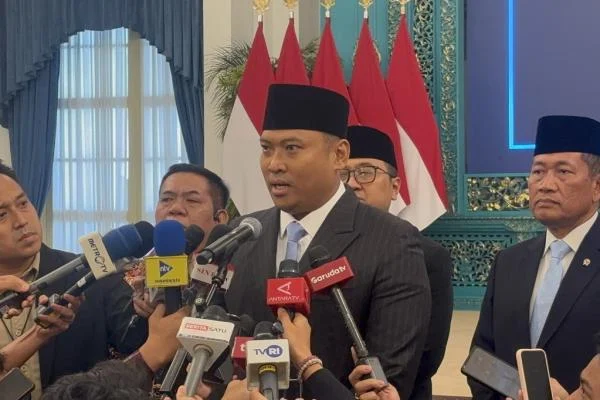
The newly appointed Head of the National Nutrition Agency (BGN), Sudaryono, has issued a firm clarification regarding the operational structure of the government’s flagship Free Nutritious Meal (MBG) program, specifically addressing rumors of personal and familial involvement in the procurement of service units. Speaking to the press at the State Palace in Jakarta on Wednesday, July 22, 2026, Sudaryono emphasized that neither he nor any members of his immediate family own or operate any Nutrition Fulfillment Service Units (SPPG), which are commonly referred to as MBG kitchens. This statement comes as the administration of President Prabowo Subianto accelerates the implementation of its cornerstone social welfare policy, which aims to provide healthy meals to millions of students and pregnant women across the Indonesian archipelago.
The clarification was delivered shortly after Sudaryono’s official inauguration, a move intended to preempt concerns regarding potential conflicts of interest and to establish a standard of transparency within the newly formed agency. Sudaryono stated unequivocally that he does not possess any private interest in the SPPG infrastructure, nor has he authorized any relatives to participate in the commercial aspects of the program. He noted that the integrity of the National Nutrition Agency rests on its ability to remain impartial and focused on the singular goal of improving the nation’s nutritional standards without the interference of nepotism or "rent-seeking" behavior.
Establishing Transparency and the Integrity Warning
During his address, Sudaryono took the opportunity to issue a stern warning to any individuals or entities who might attempt to exploit his name or his office for personal gain. He acknowledged the reality that high-profile government projects often attract "brokers" or middlemen who claim to have special access to decision-makers in exchange for kickbacks or preferential treatment in the bidding process. Sudaryono urged the public and prospective contractors to report any such instances to the authorities immediately, stressing that the recruitment and selection process for SPPG operators would be conducted through official, transparent channels.
"I want to use this opportunity, as I am being covered by the national media, to emphasize to the public that while I have family, friends, colleagues, and alumni networks, none of them are entitled to special treatment," Sudaryono remarked. He reiterated that his role as the head of the BGN is a heavy responsibility that requires him to safeguard the state’s budget and ensure that every rupiah spent on the MBG program directly benefits the targeted recipients. The official’s commitment to "cleansing" the program of illegal practices underscores the administration’s broader push for bureaucratic reform and anti-corruption measures.

The Strategic Framework of the Free Nutritious Meal Program
The Free Nutritious Meal (MBG) program is the centerpiece of the current administration’s human capital development strategy. With an estimated budget allocation of approximately IDR 71 trillion in its initial phases, the program is designed to address several critical issues simultaneously: reducing stunting rates, improving cognitive outcomes for school-aged children, and stimulating local economies. The National Nutrition Agency (BGN) was specifically created to centralize the management of this massive undertaking, which was previously scattered across various ministries including Health, Education, and Social Affairs.
The SPPG units mentioned by Sudaryono are the tactical "hubs" of the MBG program. These units are intended to function as localized kitchens and distribution centers, strategically placed to serve clusters of schools and community centers. By decentralizing the cooking process, the government aims to ensure that meals are fresh, culturally appropriate, and sourced from local farmers and producers. This "farm-to-table" approach is expected to provide a significant boost to the agricultural sector, creating a steady demand for poultry, vegetables, rice, and dairy products at the grassroots level.
Chronology of Institutional Development
The journey toward the establishment of the National Nutrition Agency and the appointment of Sudaryono follows a specific timeline of policy shifts. Shortly after the 2024 presidential election, the incoming administration identified food security and nutrition as its top priorities. By early 2025, legislative frameworks were drafted to consolidate nutrition-related budgets.
On July 22, 2026, President Prabowo Subianto officially inaugurated Sudaryono as the head of the BGN, signaling the transition from the planning phase to full-scale execution. The timing of Sudaryono’s denial of personal involvement is significant, as it coincides with the rollout of pilot projects in several provinces. These pilots are designed to test the logistical feasibility of the SPPG model before it is expanded to cover the entire country by 2029. The government’s roadmap suggests that by the end of the first year of full implementation, over 15 million beneficiaries will be reached, with the number eventually scaling to over 80 million people.
Supporting Data and Economic Implications
The scale of the MBG program is unprecedented in Indonesia’s history. Economic analysts suggest that the IDR 71 trillion investment could have a multiplier effect on the national economy. According to data from the Ministry of Finance, every trillion rupiah spent on local food procurement for the program could potentially generate 1.5 trillion rupiah in local economic activity. This is because the SPPG units are mandated to prioritize local suppliers, thereby reducing the influence of large-scale importers and empowering smallholder farmers.

Furthermore, the nutritional impact is projected to be substantial. Current health data indicates that Indonesia still faces a stunting rate of approximately 21%, a figure the government hopes to bring down to below 14% by 2030. By providing high-protein meals consisting of animal proteins like eggs, fish, and chicken, the BGN aims to bridge the "nutritional gap" that often affects children from low-income households. Sudaryono’s role is to ensure that the quality of these meals remains consistent and that the procurement of ingredients is free from the markups typically associated with corrupt procurement cycles.
Public and Stakeholder Reactions
The appointment of Sudaryono and his subsequent hardline stance on integrity have drawn varied reactions from stakeholders. Civil society organizations and anti-corruption watchdogs have cautiously welcomed the BGN head’s transparency. Teten Masduki, a prominent voice in small business development, noted that if the SPPG units are indeed managed transparently, they could become engines for the growth of cooperatives and micro-enterprises.
However, some political analysts warn that the sheer size of the MBG budget makes it a high-risk area for leakage. "When you have tens of trillions of rupiah flowing into localized service units, the monitoring mechanism must be digitalized and decentralized," said an analyst from a Jakarta-based think tank. Sudaryono has responded to these concerns by promising a digital tracking system where every meal served can be verified, and every payment to a supplier can be audited in real-time.
The Role of the BGN in Indonesia’s 2045 Vision
The National Nutrition Agency is not merely a social assistance provider; it is viewed as a strategic pillar for achieving the "Indonesia Emas" (Golden Indonesia) 2045 vision. The administration argues that a nation cannot become a top-five global economy if its workforce suffers from the long-term effects of childhood malnutrition. By intervening during the school years and the "first 1,000 days of life" through support for pregnant mothers, the BGN is making a generational investment.
Sudaryono’s leadership will be tested by the logistical challenges of Indonesia’s geography. Delivering fresh meals to remote areas in Papua, the Maluku islands, and the highlands of Sumatra requires a sophisticated supply chain that the SPPG units must anchor. The denial of personal involvement by Sudaryono is seen as a necessary step to ensure that the selection of these logistics partners and kitchen operators is based on merit and capability rather than political connections.
Future Outlook and Accountability Measures
Looking ahead, the National Nutrition Agency is expected to release a comprehensive set of guidelines for the establishment of SPPG units. These guidelines will likely include strict criteria for hygiene, nutritional balance, and financial reporting. Sudaryono has signaled that the BGN will collaborate with the State Audit Agency (BPK) and the Financial and Development Supervisory Agency (BPKP) to conduct regular inspections of the MBG kitchens.
The "name-dropping" phenomenon, which Sudaryono so vehemently warned against, remains a common hurdle in Indonesian bureaucracy. By addressing it head-on during his first day in office, Sudaryono has set a high bar for his tenure. The success of the Free Nutritious Meal program will ultimately depend on whether the BGN can maintain this level of scrutiny as the program grows in complexity. For now, the public remains watchful, waiting to see if the promise of a "clean" nutrition program can be translated into the daily reality of millions of Indonesian children receiving a healthy meal without the shadow of corruption.
In conclusion, Sudaryono’s firm stance at the State Palace serves as a foundational policy statement for the National Nutrition Agency. By distancing himself and his family from the commercial aspects of the MBG program, he aims to build the public trust necessary to execute one of the most ambitious social programs in the nation’s history. The focus now shifts to the operationalization of the SPPG units and the rigorous enforcement of the anti-corruption standards Sudaryono has publicly pledged to uphold.
