
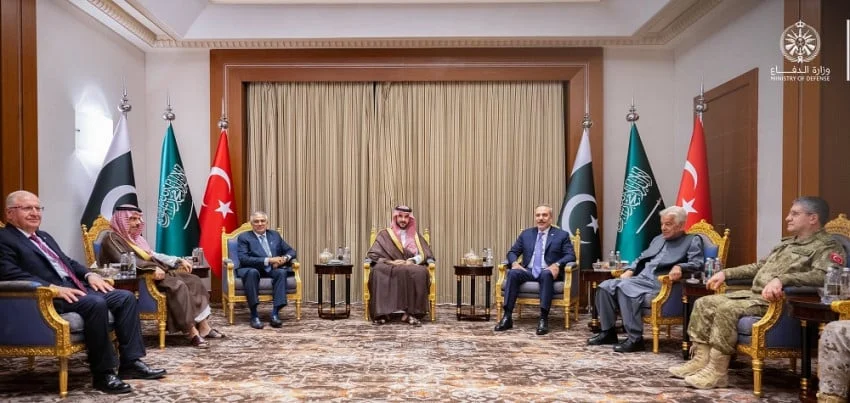
Tehran has emerged as the focal point of a significant diplomatic and defense initiative aimed at redefining the geopolitical architecture of the Middle East and South Asia. In what regional analysts are describing as a watershed moment for indigenous diplomacy, senior military, intelligence, and diplomatic officials from Iran, Saudi Arabia, Pakistan, and Turkey convened in the Iranian capital to lay the groundwork for an autonomous regional security framework. This collaborative effort—informally dubbed the Mecca Alliance framework due to the foundational diplomatic thawing initiated under Saudi auspices—signals a concerted move by pivotal regional powers to take direct ownership of their collective security, minimizing reliance on extra-regional military intervention.
The diplomatic breakthrough was officially confirmed during a weekly press briefing by Iranian Ministry of Foreign Affairs Spokesperson Esmaeil Baghaei. Addressing domestic and international media outlets in Tehran, Baghaei underscored that the high-level consultations involving the Saudi defense minister, Pakistan’s chief of army staff, and the head of Turkish intelligence represent a paradigm shift in how neighboring nations intend to manage cross-border threats, defense cooperation, and geopolitical stability.
Main Facts and the Genesis of the Tehran Consultations
The core objective of the Tehran meetings is the conceptualization and eventual implementation of an indigenous, or "endogenous," security architecture. According to the Iranian Foreign Ministry, the framework is designed to address regional security challenges from within, relying on the collective political will, military capabilities, and diplomatic mechanisms of the participating nations rather than depending on security guarantees from Western powers or distant superpowers.
The genesis of this strategic alignment can be traced back to bilateral exchanges, most notably during the official visit of Pakistan’s Chief of Army Staff, General Asim Munir, to Tehran. During high-level defense talks, the concept of a multi-lateral regional security mechanism was formally proposed. The initiative received an immediate and enthusiastic endorsement from the Islamic Republic of Iran, paving the way for expanded backdoor diplomacy that quickly drew in representatives from Riyadh and Ankara.
By bringing together Iran—a leading Shia-majority power—with Saudi Arabia, the preeminent Sunni regional heavyweight, alongside the robust military might of Pakistan and the strategic NATO-aligned capabilities of Turkey, the initiative bridges historical sectarian and geopolitical divides. This coalition encompasses some of the most influential demographic, economic, and military actors in the broader Middle East and South Asian corridors.
Chronology of Diplomatic Rapprochement
To understand the weight of the current security framework talks, one must examine the broader chronology of diplomatic de-escalation that has quietly transformed the region over recent years:
March 2023: Brokered by China, Saudi Arabia and Iran sign a landmark agreement in Beijing to restore diplomatic ties, reopen embassies, and resume bilateral cooperation after a seven-year rupture. This pivotal moment removed the primary diplomatic barrier to broader regional dialogue.
Late 2023 to Throughout 2024: A series of high-level military and intelligence exchanges take place between Tehran and Riyadh, focusing on maritime security in the Persian Gulf, counter-terrorism, and economic collaboration. Concurrently, Pakistan and Turkey maintain active bilateral security channels with both nations.
Early 2025: Pakistan’s Chief of Army Staff, General Asim Munir, visits Tehran to discuss border management, counter-terrorism operations along the volatile Iran-Pakistan frontier, and broader regional stability. During these discussions, the blueprint for a broader, four-party security mechanism is introduced.
Mid-2025: Concrete steps are taken as Tehran hosts a delegation comprising Saudi Arabia’s defense minister, Pakistan’s army chief, and Turkey’s intelligence chief. The meetings transition from bilateral confidence-building measures to concrete multilateral institutional planning for an endogenous security framework.
Official Responses and Strategic Rationale
The rationale behind the formation of this nascent security framework is deeply rooted in decades of frustration with foreign interventions, which regional leaders argue have exacerbated instability, prolonged civil conflicts, and destabilized state institutions across the Middle East.
Elaborating on the strategic philosophy driving the initiative, Foreign Ministry Spokesperson Esmaeil Baghaei emphasized the historical continuity of Iran’s foreign policy position regarding regional autonomy.
"From our perspective, the fact that regional states are striving to establish, or at least consider, regional security mechanisms based on their own interests and concerns is an immensely encouraging development," Baghaei stated during his briefing, responding to inquiries from the Islamic Republic News Agency (IRNA).
Baghaei further contextualized the meetings as a crucial precursor to long-term stability. "This meeting can serve as a prelude to further steps toward the formation of an endogenous security framework, an issue that we have emphasized for decades. We have consistently emphasized that regional security can only be ensured by relying on the willpower and security considerations of the countries in this region."
While official statements from Riyadh, Islamabad, and Ankara have been measured, reflecting the delicate nature of high-level defense diplomacy, diplomatic sources indicate that all parties recognize the urgent necessity of preempting regional crises. Issues such as narcotics trafficking, cross-border terrorism, maritime trade security in the Red Sea and the Persian Gulf, and the spillover effects of conflicts in neighboring states have created a shared imperative for cooperation.
The Concept of Endogenous Security: Breaking the Cycle of External Dependence
At the heart of the Tehran talks is the political philosophy of "endogenous security"—a concept that posits that regional stability is inherently sustainable only when it is generated from within, utilizing local resources, indigenous norms, and direct bilateral and multilateral dialogue.
For decades, the security architecture of the Middle East has been defined by external security umbrellas, primarily anchored by the United States and various Western European allies. While these arrangements provided defense guarantees to specific states, they frequently fostered a zero-sum security dynamic, where the security of one nation was often perceived as the direct vulnerability of another. Furthermore, major external interventions—ranging from the 2003 invasion of Iraq to ongoing military involvements in various regional theaters—have often left a legacy of protracted instability.
The inclusion of Saudi Arabia, Iran, Pakistan, and Turkey in a security dialogue represents a profound structural evolution. These four nations possess complementary strategic assets:
- Saudi Arabia commands immense economic influence, energy market stability, and moral authority in the broader Islamic world.
- Iran offers deep geopolitical positioning, strategic depth, and critical deterrence capabilities in the Persian Gulf and Levant.
- Pakistan provides immense conventional and nuclear-deterrent military capability, alongside extensive counter-insurgency expertise and a vital geographic bridge to Central and South Asia.
- Turkey brings advanced defense manufacturing, robust NATO-standard military capabilities, and vital geopolitical reach connecting Europe, the Caucasus, and the Middle East.
By pooling their diplomatic and strategic weight, these nations are attempting to draft a new regional social contract. This contract prioritizes economic integration, trade protection, sovereign non-interference, and collective crisis management over factional proxy conflicts.
Geopolitical Implications and Broader Regional Impact
The formation of this security framework carries profound implications for global geopolitics, regional commerce, and international diplomacy.
First, for global powers such as the United States, China, Russia, and the European Union, the emergence of an indigenous security coalition changes the strategic calculus of engagement in the Middle East. China, having successfully mediated the 2003 Saudi-Iran rapprochement, views indigenous regional cooperation as a vindication of its diplomatic approach—one that prioritizes economic development and diplomatic resolution over military intervention. For Washington, while the reduction of regional tensions is generally welcomed, the consolidation of a security framework that deliberately operates outside Western-led architectures introduces new challenges to traditional alliance systems.
Second, the economic implications are immense. Protracted regional conflicts have historically disrupted global energy supplies, inflated shipping insurance premiums, and deterred foreign direct investment. An endogenous security framework capable of managing maritime security in vital chokepoints—such as the Strait of Hormuz, the Bab el-Mandeb strait, and the Gulf of Oman—will enhance investor confidence, secure critical supply chains, and bolster regional economic integration initiatives, including trade corridors linking South Asia to the Mediterranean.
Third, internal state stability within the participating countries stands to benefit significantly. Nations like Pakistan and Iran face persistent security threats along their shared border regions, often exploited by insurgent groups and transnational criminal syndicates. A cooperative intelligence-sharing and coordinated border-management mechanism will deny safe havens to non-state actors, thereby enhancing domestic security for all participating states.
Challenges and Pathways Forward
Despite the high aspirations driving the Tehran consultations, regional analysts caution that formidable challenges remain. Decades of deep-seated strategic mistrust, competing regional ambitions, and differing alignments on peripheral conflicts cannot be erased overnight.
For instance, managing divergent interests regarding regional flashpoints—such as the political transitions in Syria, the humanitarian and political crises in Yemen, and complex security dynamics in Afghanistan—will require extraordinary diplomatic dexterity. Furthermore, institutionalizing these ad-hoc defense consultations into a permanent, legally binding security architecture will necessitate patience, incremental confidence-building measures, and sustained political will from the highest levels of leadership in Riyadh, Tehran, Islamabad, and Ankara.
Nevertheless, the willingness of these major regional players to sit at the same table and conceptualize an endogenous security framework marks a decisive departure from the conflict-ridden paradigms of the past. As Esmaeil Baghaei and other regional diplomats have emphasized, the realization that regional security is an indivisible collective responsibility may well prove to be the most critical diplomatic breakthrough of the decade.
Conclusion
The ongoing security consultations in Tehran demonstrate a growing maturity among Middle Eastern and South Asian powers. By prioritizing indigenous solutions to endogenous challenges, Iran, Saudi Arabia, Pakistan, and Turkey are sketching the outlines of a post-unipolar regional order. Whether this framework evolves from a foundational dialogue into a robust, institutionalized security pact remains to be seen. However, the very existence of such an alliance signals a historic turning point: a region increasingly determined to author its own security, manage its own disputes, and chart an independent course toward collective peace and prosperity.
