
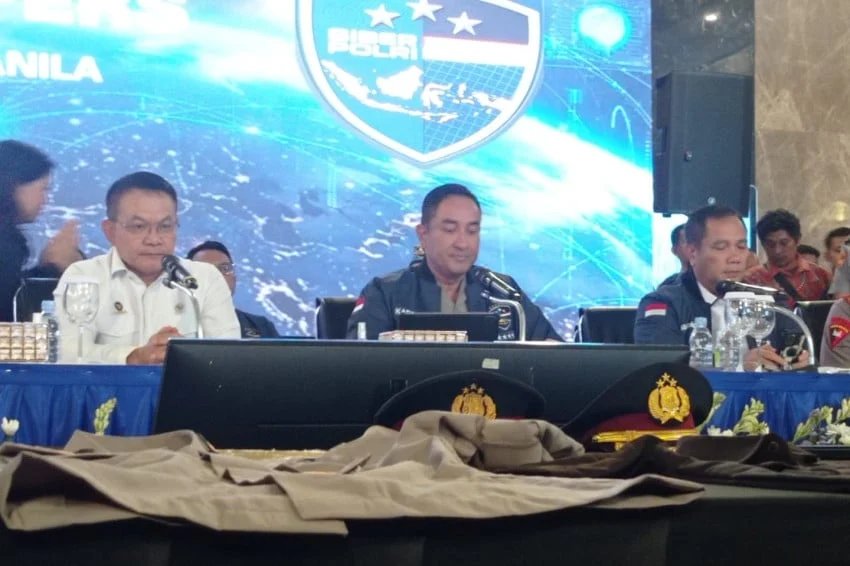
The National Police Chief of Indonesia, General Suyudi Ario Seto, has officially confirmed a disturbing development in the ongoing investigation into an international online scam syndicate operating out of Manila, Philippines. During a press conference held at the VIP Room of Terminal 3 at Soekarno-Hatta International Airport on Tuesday, November 24, 2026, General Suyudi revealed that the authentic Indonesian National Police (Polri) uniforms utilized by syndicate members to intimidate victims were not illicit replicas. Instead, these uniforms were genuine articles, systematically procured from retail outlets specializing in police equipment located in the South Jakarta region.
This revelation has sent shockwaves through the Indonesian security apparatus, raising significant questions regarding the oversight of police uniform sales and the ease with which criminal entities can impersonate law enforcement officers to facilitate cross-border financial crimes.
The Anatomy of the Fraudulent Operation
The syndicate, comprised largely of Indonesian nationals, utilized a sophisticated psychological manipulation technique to defraud victims. By donning official, authentic police uniforms, perpetrators conducted high-pressure video calls with their targets. During these interactions, they would pose as senior police investigators, asserting that the victims were under investigation for alleged involvement in international narcotics trafficking.
The psychological impact of seeing a perpetrator in a legitimate uniform—complete with authentic police insignia, badges, and caps—proved highly effective in coercing victims into transferring large sums of money. The criminals would demand “settlement fees” or “legal retainers” to ostensibly clear the victims of these fabricated criminal charges. By leveraging the authority associated with the police uniform, the syndicate successfully bypassed the skepticism that typically accompanies unsolicited digital outreach.
Chronology of the Crackdown and Repatriation
The identification of these uniforms as authentic is the latest milestone in a massive regional law enforcement effort. The operation to dismantle this syndicate reached a critical juncture when 139 Indonesian citizens, all identified as suspects in the online scam network, were repatriated from the Philippines.
The timeline of this operation reflects months of intelligence-sharing between the Indonesian National Police and the Philippine National Police (PNP). Following reports of massive financial losses—totaling approximately 46.7 billion Rupiah—the Indonesian authorities tracked the digital footprints of the scam centers to various locations in the Philippines.
- Early 2026: Initial reports emerge of WNI (Indonesian citizens) being held or participating in scam centers in Manila.
- Mid-2026: Indonesian police intelligence links the scam centers to specific, high-pressure extortion tactics involving impersonation.
- November 2026: A joint raid by Philippine and Indonesian authorities results in the arrest of the 139 suspects.
- November 24, 2026: The suspects are officially repatriated to Indonesia, where they are placed under the custody of the National Police for further interrogation and legal processing.
The Vulnerability of Procurement Channels
General Suyudi’s admission that the uniforms were purchased from open-market shops in South Jakarta highlights a systemic vulnerability in the distribution of police equipment. While police personnel are issued uniforms through official channels, the availability of these items in retail stores catering to the general public has long been a subject of concern.
In many urban centers across Indonesia, shops specializing in tactical gear, military surplus, and law enforcement uniforms often sell to a variety of customers, including security personnel, private guards, and hobbyists. The lack of stringent regulation regarding who can purchase these items allows for the potential misuse of official gear.

Industry analysts suggest that the ease of purchasing these items stems from the high demand for high-quality tactical wear, which is often perceived as superior to standard-issue materials. However, the use of this gear in a criminal context—particularly by organized crime syndicates—necessitates a stricter regulatory framework, potentially requiring buyers to present official police identification before purchasing identifiable insignia or full uniforms.
Broader Implications and Institutional Response
The implication of this scandal extends beyond the immediate investigation of the 139 suspects. It has forced the Indonesian National Police to conduct an internal audit of its procurement and equipment management protocols.
The misuse of the uniform directly undermines the public’s trust in the police force. If a criminal can successfully pose as a police officer to extort money, the institution’s legitimacy is challenged. As such, the police leadership has indicated that they will pursue legal action against the retail outlets that facilitated the sale of these uniforms, investigating whether these shops were aware of the intended use or if they were merely acting in negligence.
Furthermore, the case serves as a warning regarding the evolving nature of transnational cybercrime. Organized crime syndicates are increasingly using “social engineering” tactics that blend digital technology with physical impersonation to maximize the credibility of their scams. By moving operations to neighboring countries like the Philippines, these syndicates hope to exploit jurisdictional gaps and evade local law enforcement.
Economic and Social Impact
The financial damage caused by this specific syndicate, estimated at 46.7 billion Rupiah, represents a significant drain on the personal savings of the victims. Beyond the monetary loss, the psychological toll on those who were threatened by these fake police officers is immense. The use of the national police identity as a weapon of extortion is considered a grave offense in Indonesian law, likely leading to severe sentencing for those involved.
The repatriation of the 139 individuals also poses a challenge to the Indonesian legal system. Authorities must now distinguish between those who were willing participants in the scam and those who may have been trafficked or coerced into working for the syndicate under duress. This distinction is crucial, as the Indonesian government has been actively fighting against human trafficking in the Southeast Asian region, where many WNIs have been lured by promises of legitimate employment only to find themselves trapped in digital slavery.
Future Preventative Measures
In the wake of this revelation, several preventative measures are being considered:
- Stricter Uniform Control: Implementation of a mandatory digital registry or biometric verification for anyone purchasing police-related apparel.
- Enhanced Border and Cyber Cooperation: Strengthening the existing Memorandum of Understanding (MoU) with ASEAN neighbors to better monitor the movement of individuals associated with high-risk digital operations.
- Public Awareness Campaigns: The National Police have indicated they will launch a public education campaign to inform citizens that official police business is rarely, if ever, conducted via video calls where threats of arrest are made without formal, physical, and verifiable documentation.
Conclusion
The case of the Manila-based scam syndicate is a sobering reminder of how easily the symbols of state authority can be co-opted for criminal gain. By sourcing authentic uniforms from Jakarta, the perpetrators were able to weaponize the reputation of the Indonesian National Police against their own fellow citizens.
As the legal proceedings against the 139 suspects begin, the Indonesian National Police face the dual task of ensuring justice for the victims and reforming the systemic loopholes that allowed for the uncontrolled distribution of law enforcement equipment. The government’s response to this incident will likely set the tone for future regional cooperation in combating the sophisticated, cross-border digital threats that continue to plague the ASEAN region. The resolution of this matter will require not only effective policing but also a comprehensive re-evaluation of how state equipment is managed in an increasingly interconnected and vulnerable society.
