
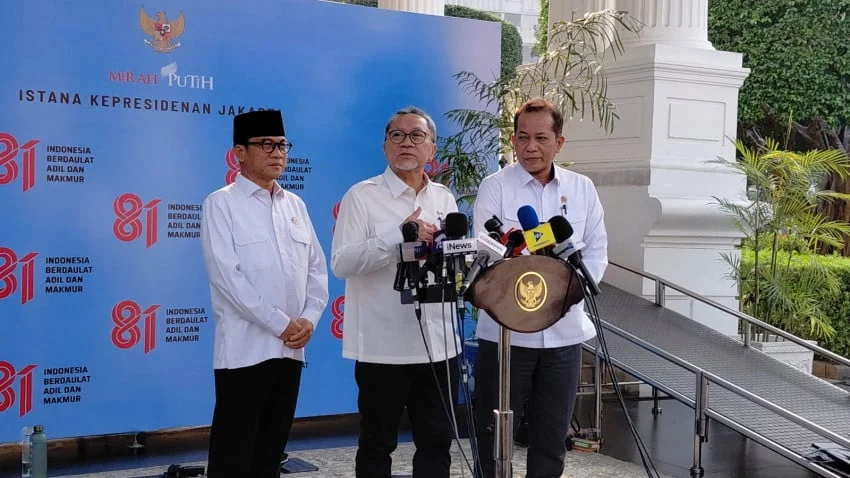
President Prabowo Subianto convened a high-level limited meeting (ratas) at the Presidential Palace Complex in Jakarta on Thursday, July 23, 2026, to finalize the operational framework for the Red and White Village and Urban Ward Cooperatives (KDKMP). The meeting, which lasted approximately three and a half hours, underscored the administration’s commitment to transforming the national grassroots economy through a centralized yet community-driven cooperative model. The discussions focused on the integration of various government sectors, including the involvement of the Indonesian National Armed Forces (TNI) and the National Police (Polri), to ensure the successful rollout of what is being characterized as a cornerstone of Indonesia’s food sovereignty and economic resilience strategy.
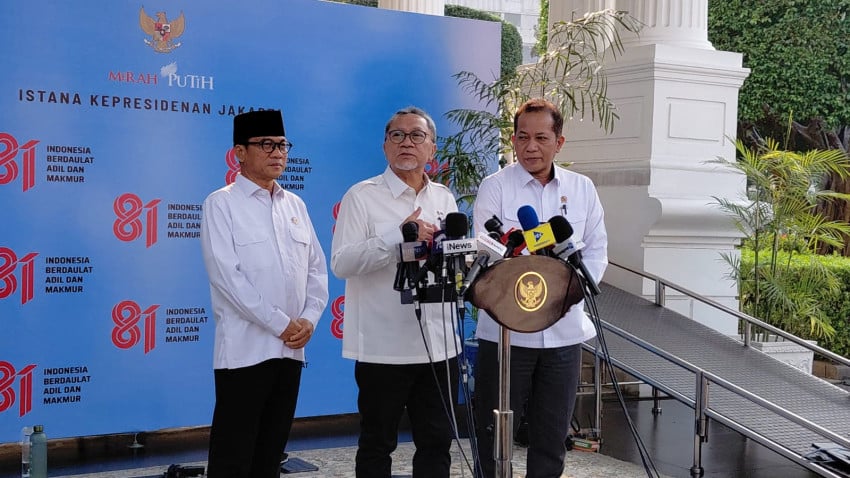
Coordinating Minister for Food Affairs, Zulkifli Hasan, provided a comprehensive briefing to the press following the conclusion of the session. He noted that the meeting commenced at 12:30 PM WIB and concluded around 4:00 PM WIB, indicating the depth and complexity of the issues addressed. According to Zulkifli, the President’s primary directive was to ensure that the Red and White Cooperatives—comprising Village, Urban Ward, and Fishermen variants—receive unconditional support from every ministry and state institution. This unified front is intended to eliminate the historical silos that have often hindered the progress of rural development programs in previous decades.
The Dual Mandate of Koperasi Merah Putih
Central to President Prabowo’s vision for the KDKMP is a dual-function mandate that distinguishes these cooperatives from traditional entities. Zulkifli Hasan explained that the Red and White Cooperatives are designed to serve as both critical government infrastructure and as strategic "off-takers" for local production. As government infrastructure, these cooperatives will act as the primary distribution nodes for state subsidies, agricultural inputs, and social assistance programs. By utilizing a cooperative framework, the government aims to ensure that aid reaches the intended beneficiaries with minimal leakage and administrative overhead.
The second function—serving as an off-taker—is perhaps the most significant economic intervention proposed by the administration. In this capacity, the KDKMP will be legally and financially empowered to purchase crops, livestock, and fishery products directly from local producers at stable, floor-guaranteed prices. This mechanism is designed to insulate small-scale farmers and fishermen from the volatility of market prices and the predatory practices of unregulated middlemen. By securing the supply chain at the source, the government believes it can simultaneously protect the livelihoods of producers and stabilize food prices for consumers in urban centers.
Chronology and Intensity of the Deliberations
The three-and-a-half-hour duration of the meeting reflects the sense of urgency within the Presidential Palace. Observers noted that the lengthy session involved not only the Coordinating Minister for Food but also several other key cabinet members responsible for the economy, rural development, and security. The timeline of the meeting suggests a rigorous vetting of the operational guidelines for the cooperatives.
- 12:30 PM WIB: The meeting began with a presentation on the current state of rural economic indicators and the identified gaps in the existing cooperative system.
- 01:30 PM WIB: President Prabowo reportedly led a discussion on the integration of technology within the KDKMP, emphasizing the need for a digital dashboard to monitor inventory and transactions in real-time.
- 02:45 PM WIB: The focus shifted to the role of the TNI and Polri in supporting logistics and providing the necessary security for the distribution of food stocks, particularly in remote and border regions.
- 04:00 PM WIB: Ministers began exiting the palace, with Zulkifli Hasan remaining to summarize the key outcomes for the media.
The intensity of the meeting highlights the President’s personal involvement in the details of the program. Rather than delegating the implementation entirely to lower-level officials, Prabowo appears to be taking a hands-on approach to ensure that the KDKMP does not suffer from the management failures that plagued previous iterations of village cooperatives (KUD) in the late 20th century.
Mobilizing TNI and Polri for Economic Stability
One of the more striking elements of the President’s directive is the explicit inclusion of the TNI and Polri in the cooperative ecosystem. While traditionally associated with defense and internal security, these institutions are being called upon to provide a "backbone" for the Red and White Cooperatives. The rationale behind this move is twofold: logistical capability and institutional integrity.
The TNI, with its extensive territorial command structure reaching down to the village level (Babinsa), possesses an unparalleled logistical network. In regions where commercial logistics are non-existent or prohibitively expensive, the military can facilitate the transport of goods from KDKMP hubs to regional markets. Similarly, the Polri, through its community policing units (Bhabinkamtibmas), will play a role in ensuring that the cooperative’s assets are protected and that the distribution of subsidized goods remains free from corruption or local monopolies.
Critics and analysts have noted that while this involvement ensures efficiency, it also necessitates a clear legal framework to prevent the "securitization" of the economy. The administration, however, maintains that the involvement of security forces is a temporary and supportive measure intended to provide the stability necessary for the cooperatives to achieve self-sufficiency.
Supporting Data and Economic Context
The push for the KDKMP comes at a time when Indonesia is navigating a complex global food landscape. Data from the Central Bureau of Statistics (BPS) and the Ministry of Agriculture indicates that while Indonesia has made strides in rice production, the supply chains for other essential commodities—such as corn, soybeans, and beef—remain vulnerable.
According to recent economic reports, the "price gap" between what a farmer receives at the farm gate and what a consumer pays at a traditional market in Jakarta can be as high as 300% for certain horticultural products. This discrepancy is largely attributed to a fragmented distribution network dominated by multiple layers of intermediaries. By positioning the Red and White Cooperatives as the primary off-taker, the government aims to reduce this gap, effectively increasing the farmer’s income while lowering the consumer’s cost of living.
Furthermore, the government plans to revitalize over 80,000 village-level entities to house these cooperatives. The initial funding for the KDKMP is expected to be drawn from a combination of the State Budget (APBN), village funds (Dana Desa), and low-interest credit lines from state-owned banks (Himbara).
Official Responses and Cross-Ministry Coordination
The reaction from the cabinet following the meeting was one of uniform alignment, reflecting the President’s firm stance. Zulkifli Hasan emphasized that this is not merely a "Food Ministry" program but a national priority. "The President was very clear," Zulkifli stated. "This is a collective effort. The Ministry of Home Affairs will handle the administrative alignment with local governments, the Ministry of Villages will oversee the social mobilization, and the Ministry of Cooperatives will provide the technical expertise."
The Ministry of Finance is also expected to play a crucial role in drafting the fiscal incentives for these cooperatives. Sources close to the palace suggest that tax breaks and simplified reporting requirements are being considered to encourage young professionals to return to their villages and manage these modern cooperative units. This "brain gain" for rural areas is seen as essential for moving the cooperatives beyond simple manual labor into value-added processing and digital marketing.
Broader Impact and Long-term Implications
The successful implementation of the Red and White Cooperatives could represent a paradigm shift in Indonesia’s economic development model. For decades, the focus has been on large-scale industrialization and urban-centric growth. The KDKMP model pivots back to the "People’s Economy" (Ekonomi Kerakyatan) enshrined in the Indonesian Constitution, but with a modern, technocratic twist.
If the cooperatives can effectively serve as off-takers, the impact on rural poverty could be profound. By guaranteeing a market for produce, the government provides farmers with the financial predictability needed to invest in better seeds, fertilizers, and machinery. This, in turn, boosts national productivity and moves Indonesia closer to its goal of food self-sufficiency.
Moreover, the KDKMP serves as a strategic buffer against global economic shocks. In the event of a global food crisis or a disruption in international shipping, a robust domestic network of cooperatives with localized stockpiles ensures that the population remains fed. This "fortress economy" approach to food security is a hallmark of the Prabowo administration’s broader geopolitical strategy, which emphasizes self-reliance and national strength.
As the meeting concluded, the message from the Presidential Palace was clear: the era of fragmented rural development is over. The Red and White Cooperatives are no longer just a proposal; they are a mandated priority. The coming months will be critical as the government moves from the planning phase in Jakarta to the execution phase in tens of thousands of villages across the archipelago. The success of this 3.5-hour deliberation will ultimately be measured not by the length of the meeting, but by the stability of food prices and the prosperity of Indonesia’s rural heartlands in the years to follow.
