

The global smartphone market has recorded one of its weakest quarters in over a decade during Q2 CY2026, a downturn primarily fueled by a sharp increase in the cost of crucial memory components like DRAM and NAND. This surge in component pricing stems from memory manufacturers strategically reallocating significant portions of their production capacity to meet the escalating demands of artificial intelligence (AI) data centers, consequently driving up smartphone manufacturing expenses at a time when consumer price sensitivity is at an all-time high. Amidst this challenging economic landscape, two industry giants, Apple and Samsung, demonstrated remarkable resilience, not only weathering the storm but emerging stronger, securing increased market share while many competitors faced significant setbacks.
A Market in Contraction: Q2 CY2026 Performance
The second calendar quarter of 2026 witnessed a substantial contraction in global smartphone shipments, painting a stark picture of the market’s struggles. According to Counterpoint Research, worldwide smartphone shipments plummeted by an alarming 11 percent year-on-year (YoY), marking the weakest Q2 performance observed since 2013. This figure underscores a profound shift from earlier periods of robust growth, reflecting a maturing market now grappling with a confluence of economic headwinds. While other market intelligence firms presented slightly varying figures, the consensus pointed to a significant decline. Omdia, another prominent market research institution, estimated a more moderate, yet still concerning, 4 percent decrease in shipments. International Data Corporation (IDC), a key market tracker, provided a more concrete shipment volume, reporting 277.5 million units for Q2 CY2026, which represented a 6.7 percent YoY decline. These figures, regardless of their specific magnitudes, unequivocally highlight a period of unprecedented challenge for the smartphone industry, reminiscent of the early 2010s when the market was still in its nascent stages of rapid expansion.
The year 2013, often cited as a benchmark for market performance, was characterized by an entirely different dynamic. It was a period of explosive growth driven by the widespread adoption of smartphones, particularly in emerging markets, and the rapid transition from feature phones to sophisticated mobile computing devices. The market then was defined by innovation, falling average selling prices, and eager consumers. Fast forward to Q2 CY2026, and the landscape has dramatically altered. Global economic uncertainties, including persistent inflation across major economies, rising interest rates impacting consumer borrowing, and a general tightening of household budgets, have collectively contributed to a significant reduction in discretionary spending. Consumers are increasingly holding onto their existing devices for longer periods, extending upgrade cycles beyond the traditional two-year norm, and meticulously scrutinizing price-to-value propositions before making new purchases. This amplified price sensitivity, coupled with the rising cost of production, created a perfect storm for smartphone manufacturers.
The Core Catalyst: AI’s Impact on Memory Supply
At the heart of the smartphone industry’s current predicament lies a fundamental shift in the global memory market. Dynamic Random-Access Memory (DRAM) and NAND flash memory are indispensable components in every smartphone, dictating performance, storage capacity, and overall user experience. Historically, the memory market has been cyclical, experiencing periods of oversupply and undersupply. However, the current squeeze is driven by a new, powerful force: artificial intelligence. The burgeoning demand for AI, particularly generative AI, requires immense computational power and vast amounts of data processing, which translates directly into an insatiable need for high-bandwidth memory (HBM) and large-capacity, high-performance NAND storage within AI data centers.
Memory manufacturers, recognizing the strategic importance and potentially higher profit margins associated with AI-centric components, have begun a significant pivot. This involves retooling existing fabrication plants, investing heavily in new research and development for AI-specific memory solutions, and, crucially, reallocating existing production lines away from traditional consumer electronics components. This strategic shift, which gained considerable momentum from late 2025 into early 2026, has seen major memory producers like Samsung, SK Hynix, and Micron increasingly prioritize AI server demand, which often commands higher prices and more stable long-term contracts. The implications for smartphone manufacturers have been immediate and severe. The reduced supply of standard DRAM and NAND, coupled with robust demand from other sectors, has sent component prices skyrocketing. Some smartphone manufacturers are now reportedly paying four to five times more for the same memory components than they were just a year ago, an unsustainable increase that directly impacts their bill of materials and, subsequently, their retail pricing strategies. This re-prioritization by memory suppliers is not merely a short-term tactical move but a strategic pivot reflecting the long-term growth trajectory anticipated for the AI industry, positioning memory as a critical enabler for the next generation of computing.
Divergent Paths: Apple and Samsung’s Market Resilience
Despite the turbulent market conditions, Apple and Samsung demonstrated remarkable resilience, managing to not only maintain but expand their market presence. All three leading research firms—Counterpoint, Omdia, and IDC—concurred on this pivotal outcome: these two tech titans successfully gained market share while the majority of their competitors experienced declines.
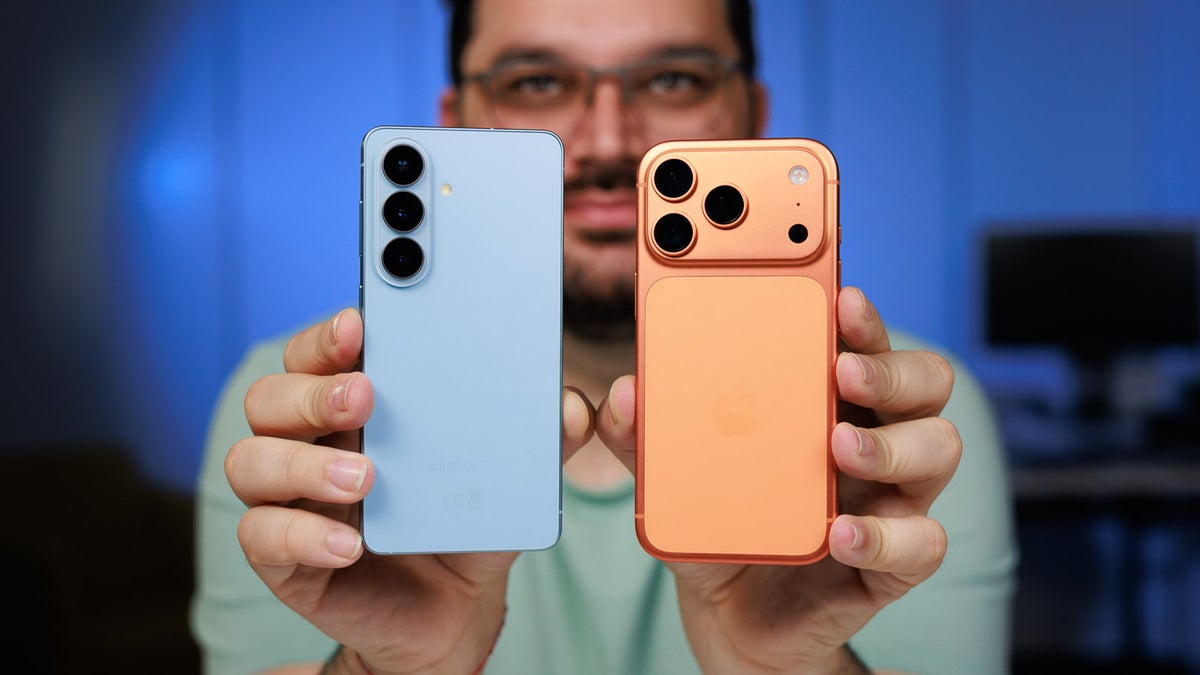
Samsung, the South Korean conglomerate, reaffirmed its position as the global market leader in Q2 CY2026. Counterpoint Research data placed Samsung’s market share at a commanding 24 percent, while Omdia’s estimates were slightly lower at 22 percent. Regardless of the precise figure, Samsung’s achievement was significant, marking the strongest growth among the top five smartphone brands. This performance underscores Samsung’s diversified product portfolio, which spans the entire spectrum from entry-level Galaxy A series devices to the premium Galaxy S and foldable Z series, allowing them to capture demand across various price points. Their robust supply chain, coupled with extensive internal manufacturing capabilities for many components, including memory (Samsung is also a major memory producer), provided a crucial buffer against external supply shocks and allowed for greater control over component costs and availability.
Apple, the Cupertino-based technology behemoth, also delivered an exceptional performance. The company recorded a 3 percent year-on-year increase in iPhone shipments, a notable feat in a contracting market. This modest yet significant growth propelled Apple’s market share to a record 20 percent for a second quarter, which Omdia highlighted as the company’s strongest Q2 performance in its history. Apple’s success can be attributed to several factors, including its unwavering brand loyalty, the sustained demand for its premium iPhone 17 series, and a strategic decision to maintain stable pricing for its flagship smartphone line during the quarter, a move that set it apart from many competitors. The premium segment, where Apple predominantly operates, also tends to be more insulated from general economic downturns compared to the mass-market segments, as consumers in this tier often prioritize brand experience and ecosystem benefits over minor price fluctuations.
The Mid-Range Squeeze: Challenges for Chinese OEMs
In stark contrast to the success of Apple and Samsung, major Chinese smartphone manufacturers such as Xiaomi, OPPO, and Vivo faced severe headwinds during Q2 CY2026. All three brands recorded double-digit year-on-year declines in shipments and consequently lost significant market share. Their struggles highlight the disproportionate impact of rising memory costs on segments below the premium tier, where these companies traditionally hold dominant positions.
The reason for this disparity becomes glaringly clear when examining the cost structure of smartphones, particularly the contribution of memory components. According to Runar Bjørhovde, a principal analyst at Omdia, memory and storage now account for over 60 percent of the production cost for entry-level smartphones and more than 30 percent for premium devices. This significant cost burden is exacerbated at the lower end of the market, where margins are already razor-thin. Omdia’s detailed analysis provides further insight into this crucial aspect of smartphone economics:
- For smartphones priced under $100, memory components can constitute approximately 64 percent of the total production cost. This staggering proportion leaves virtually no room for manufacturers to absorb rising memory prices without incurring substantial losses or significantly increasing retail prices.
- For devices retailing between $100 and $400, memory costs can still represent a substantial 59 percent of the total production cost. This segment, often referred to as the "mid-range," is a high-volume market where fierce competition dictates aggressive pricing strategies.
- As the price point increases, the relative contribution of memory to the overall bill of materials decreases. For smartphones priced between $600 and $800, memory accounts for around 28 percent, falling to slightly over a quarter for devices exceeding $800. In these premium segments, other high-value components like advanced processors, sophisticated camera modules, and high-end display technologies contribute more significantly to the overall cost, thereby diluting the impact of memory price fluctuations.
This cost structure directly explains the widening gap between market leaders and challengers. Manufacturers like Xiaomi, OPPO, and Vivo, whose sales are heavily concentrated in the sub-$400 price segments, find themselves in an untenable position. They face limited flexibility: either absorb the drastically increased component costs, thereby accepting significantly reduced or even negative profit margins, or raise their retail prices, risking alienation of their price-sensitive customer base and losing competitiveness in a crowded market. For instance, Omdia’s analysis for Q1 CY2026 revealed that more than half of Xiaomi’s global shipments were in the sub-$200 price segment, precisely where memory inflation has the most devastating impact. Shilpi Jain, a senior analyst at Counterpoint, further emphasized that sustaining previous price levels for low-end and mid-range smartphones, which constitute the majority of global shipments, has become exceedingly difficult, forcing these brands to navigate unprecedented market headwinds.
Strategic Pricing and Supply Chain Fortification
The differing fortunes of market players can largely be attributed to their strategic approaches to pricing and their inherent advantages in securing vital components.
Apple’s Calculated Restraint: Apple distinguished itself by being the only major smartphone manufacturer to refrain from increasing iPhone prices during Q2 CY2026. This strategic decision was instrumental in sustaining demand for its iPhone 17 series in key markets, even as competitors like Xiaomi, OPPO, and Vivo were compelled to repeatedly adjust their pricing upwards. This move by Apple demonstrates a clear commitment to protecting its most strategic product line, maintaining its premium brand image, and ensuring a strong sales pipeline ahead of its next major product cycle. Such a decision would have been made after careful consideration of market elasticity for the iPhone, brand loyalty, and the potential long-term impact on its ecosystem. However, Apple’s restraint was not universal across its entire hardware portfolio. On June 25, the company did implement price increases for other products, including iPads, Macs, MacBooks, and various home products. This was a direct response to CEO Tim Cook’
