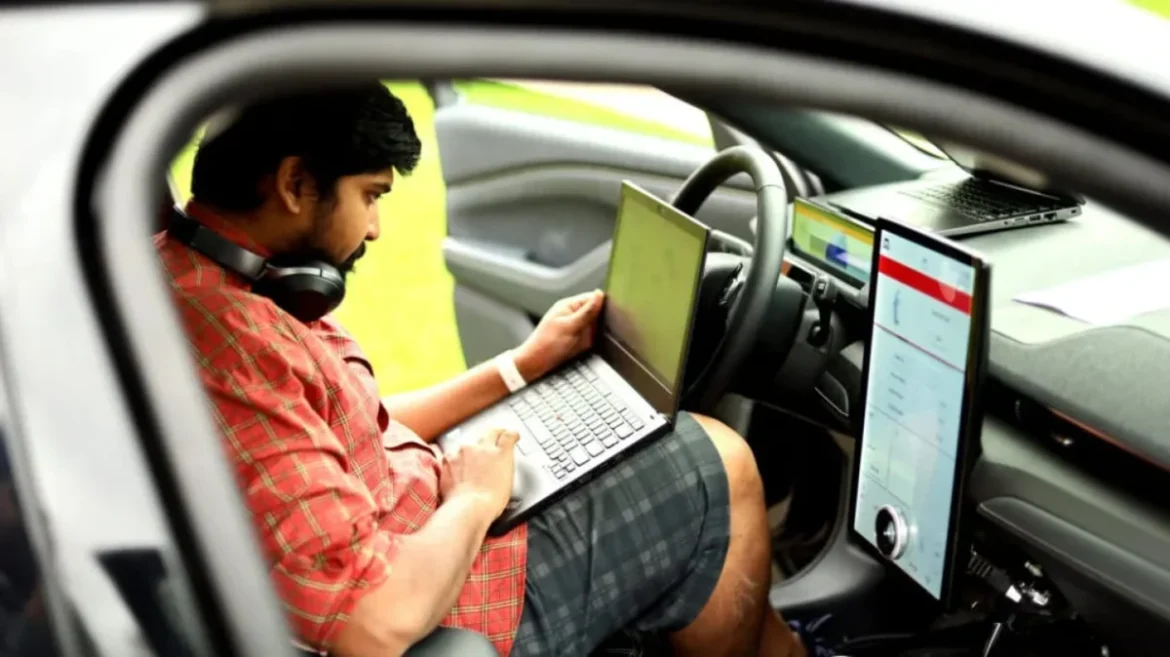
New York, VIVA – As of Wednesday, July 22, 2026, an increasing number of new vehicles sold globally are equipped with advanced internet connectivity. This technological leap enables manufacturers to deliver critical over-the-air (OTA) software updates, introduce novel features, and rectify software bugs without requiring a visit to a service center. However, this convenience introduces a complex debate: how secure are these perpetually connected vehicles, and are they susceptible to malicious hacking? While many envision cinematic scenarios where a hacker remotely seizes control of a vehicle’s steering or brakes, cybersecurity experts assert that such high-stakes, direct remote takeovers are considerably less probable than often depicted on screen. The more realistic and pervasive threats, according to industry analyses, revolve around large-scale operational disruptions and significant data privacy breaches.
Modern automobiles are intricate networks of electronic control units (ECUs) managing everything from engine performance and braking systems to steering and infotainment. These systems are typically compartmentalized and fortified with multiple layers of security protocols designed to prevent unauthorized external access. Consequently, a hacker cannot simply infiltrate a vehicle’s network and instantly commandeer critical safety functions like steering or braking. Achieving access to safety-critical systems necessitates bypassing sophisticated security architectures meticulously engineered by manufacturers.
The Evolution of Automotive Connectivity and Its Security Implications
The automotive industry has undergone a profound transformation, transitioning from purely mechanical and electrical systems to highly integrated, software-defined vehicles (SDVs). This evolution has been driven by consumer demand for advanced infotainment, seamless navigation, sophisticated driver-assistance systems (ADAS), and vehicle-to-everything (V2X) communication capabilities. The global market for connected cars has surged, with projections indicating that by 2030, nearly all new vehicles will feature some form of internet connectivity. This widespread integration, while offering unparalleled convenience and new functionalities, simultaneously expands the attack surface for cyber threats.
Initially, connectivity in vehicles was limited to basic telematics services like emergency calls or stolen vehicle tracking. Today, vehicles are essentially mobile data centers, constantly transmitting and receiving information. This data flow facilitates everything from predictive maintenance and real-time traffic updates to remote diagnostics and personalized in-car experiences. The underlying software infrastructure, often comprising millions of lines of code, forms the backbone of these advanced functionalities. However, every line of code represents a potential vulnerability, and every network connection an entry point for malicious actors.
Understanding the Real Threats: Beyond Hollywood Scenarios
While the idea of a remote attacker seizing control of a moving vehicle makes for compelling cinema, cybersecurity professionals emphasize that the technical hurdles to achieve such a feat are immense. Critical systems like steering, braking, and powertrain control are often isolated on separate, highly secured networks within the vehicle, sometimes even employing hardware-level security modules that are extremely difficult to compromise remotely. Furthermore, modern vehicle architectures increasingly incorporate intrusion detection and prevention systems (IDPS) that monitor network traffic for anomalies, secure boot processes that verify software integrity at startup, and robust cryptographic measures to protect communications.
Instead, the more pressing and realistic cyber risks to connected vehicles manifest in different forms:
-
Large-Scale Operational Disruption: This is identified as a primary concern. Imagine a scenario where a widespread cyberattack targets a specific automaker’s backend servers or a critical third-party service provider. Such an attack could render a large fleet of vehicles unable to start, disrupt electric vehicle charging processes, or disable essential digital services that rely on internet connectivity. For instance, an attack on a manufacturer’s authentication server could prevent thousands or even millions of vehicles from authenticating their key fobs or digital keys, effectively immobilizing them. Similarly, disruption to over-the-air update servers could prevent critical security patches from being deployed, leaving vehicles vulnerable. The economic and societal impact of such a large-scale operational failure, particularly on logistics, public transport, or ride-sharing fleets, could be catastrophic, costing billions in lost revenue, recovery efforts, and reputational damage.
-
Data Privacy Breaches: Connected vehicles are prodigious data collectors. They gather an extensive array of information, including real-time location data, detailed travel histories, driving habits (speed, acceleration, braking patterns), infotainment usage, diagnostic information, and even biometric data for driver authentication. This data is invaluable for manufacturers for product improvement and for service providers offering personalized experiences. However, it also represents a goldmine for cybercriminals. A breach could expose sensitive personal information, leading to identity theft, targeted advertising, or even physical tracking. Furthermore, insurance companies could potentially use granular driving data to adjust premiums, raising concerns about fairness and transparency. The protection of this data is a significant and growing challenge, requiring robust encryption, anonymization techniques, and strict adherence to data protection regulations like GDPR in Europe and CCPA in California.
-
Financial and Economic Impacts: Beyond direct operational disruption, cyberattacks can have profound financial repercussions. Ransomware attacks targeting vehicle systems or manufacturer networks could extort significant sums. The costs associated with investigating breaches, remediating vulnerabilities, notifying affected customers, and defending against lawsuits can be staggering. Moreover, a major cybersecurity incident could severely damage an automaker’s brand reputation and erode consumer trust, leading to decreased sales and long-term market share erosion.
-
Supply Chain Vulnerabilities: The automotive supply chain is vast and complex, involving numerous third-party suppliers for hardware components, software modules, and connectivity services. A vulnerability introduced at any point in this chain – from a compromised chip manufacturer to an insecure software library – can propagate throughout the entire ecosystem, affecting millions of vehicles. This makes supply chain cybersecurity a critical focus area for automakers, demanding rigorous vetting and continuous monitoring of all partners.
Industry Responses and Regulatory Frameworks
The automotive industry is not passive in the face of these evolving threats. Automakers are investing heavily in cybersecurity, adopting a "security by design" philosophy that integrates robust security measures from the earliest stages of vehicle development. Key initiatives include:
- Dedicated Cybersecurity Teams: Establishment of specialized teams focused on threat intelligence, vulnerability assessment, penetration testing, and incident response.
- Secure Coding Practices: Implementing stringent secure coding guidelines and conducting regular code reviews to minimize software vulnerabilities.
- Hardware-Level Security: Incorporating hardware security modules (HSMs) and secure elements (SEs) to protect cryptographic keys and sensitive data.
- Network Segmentation: Isolating critical vehicle functions on separate, protected networks within the vehicle to prevent lateral movement by attackers.
- Intrusion Detection and Prevention Systems (IDPS): Deploying in-vehicle systems that continuously monitor for suspicious activity and can automatically respond to detected threats.
- Bug Bounty Programs: Collaborating with ethical hackers to identify and report vulnerabilities, offering rewards for responsible disclosure.
- Over-the-Air (OTA) Updates for Security Patches: Leveraging connectivity to rapidly deploy security patches and firmware updates to address newly discovered vulnerabilities across entire fleets, a significant advantage over traditional recall methods. This capability allows manufacturers to respond to threats in near real-time, drastically reducing the window of vulnerability.
Regulatory bodies are also stepping up. The United Nations Economic Commission for Europe (UNECE) World Forum for Harmonization of Vehicle Regulations (WP.29) has introduced groundbreaking regulations (UN Regulation No. 155 on Cybersecurity and Cybersecurity Management System, and UN Regulation No. 156 on Software Update and Software Update Management System). These regulations, which came into effect in 2021 and are becoming mandatory for type approval in many regions by 2024, require automakers to implement a certified cybersecurity management system (CSMS) and a software update management system (SUMS) throughout the entire vehicle lifecycle. This represents a significant shift, mandating a proactive and continuous approach to automotive cybersecurity. Additionally, the ISO/SAE 21434 standard provides a comprehensive framework for cybersecurity engineering in road vehicles, guiding manufacturers in developing secure systems.
The Role of Consumers and Future Outlook
While automakers and regulators play a primary role, consumers also have a part in maintaining vehicle security. This includes promptly installing available software updates, being cautious about connecting unverified third-party devices to their vehicle’s OBD-II port, and understanding the data collection policies of their vehicle.
Looking ahead, the cybersecurity landscape for connected vehicles will continue to evolve rapidly. The advent of highly autonomous vehicles will introduce new complexities, as these systems rely even more heavily on complex software and external connectivity, including V2X communication for cooperative driving. Artificial intelligence and machine learning will be deployed both by attackers to find vulnerabilities and by defenders to identify and thwart attacks. The ongoing "arms race" between malicious actors and cybersecurity professionals means that vigilance and continuous adaptation are paramount.
In conclusion, while the dramatic image of a hacker remotely steering a car captures public imagination, the more insidious and impactful threats to connected vehicles lie in large-scale operational disruptions and the pervasive risk of data breaches. The automotive industry, in conjunction with global regulatory bodies, is implementing comprehensive strategies to mitigate these risks, focusing on robust security architectures, continuous monitoring, and rapid patch deployment through OTA updates. As vehicles become increasingly intertwined with the digital world, ensuring their cybersecurity is not merely a matter of convenience but a critical imperative for public safety, economic stability, and consumer trust in the transportation ecosystem of the future.