
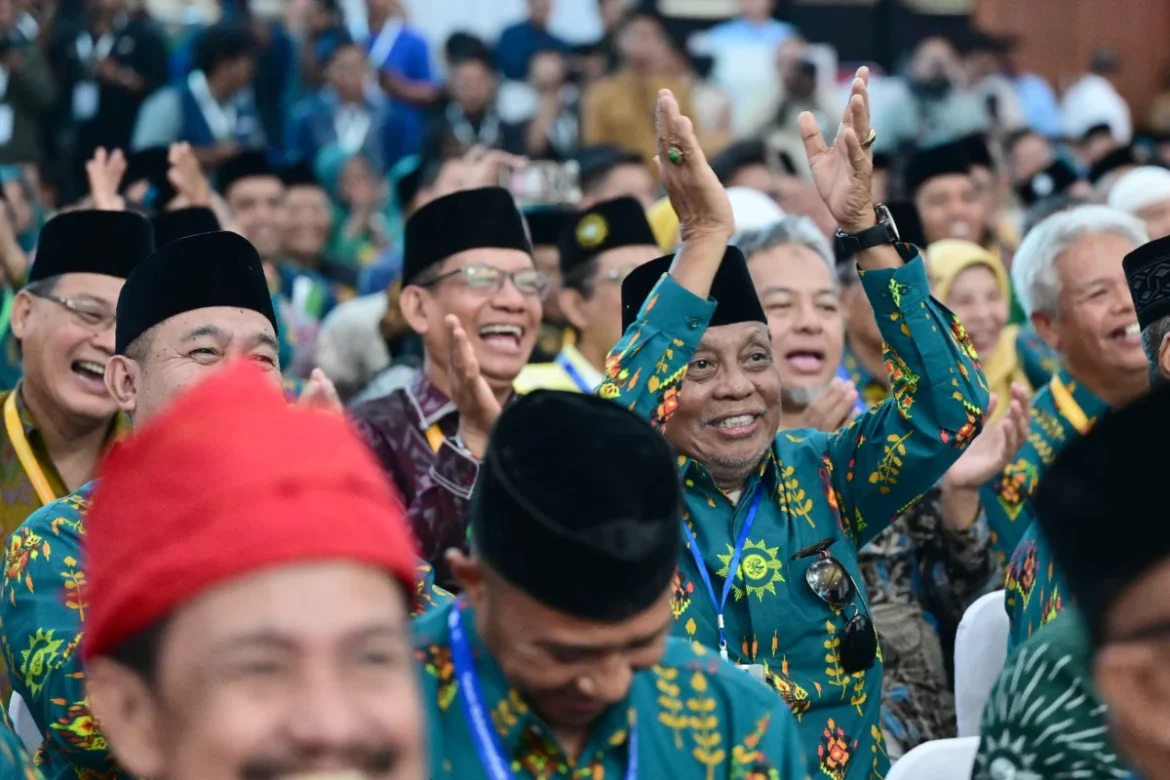
Every year as November 18 approaches, millions of members, sympathizers, and leaders of Muhammadiyah—one of Indonesia’s largest and most influential Islamic socio-religious organizations—prepare to commemorate its founding anniversary, commonly known as Milad. This nationwide celebration typically features a diverse array of public engagements, including traditional Qur’anic study gatherings (pengajian), philanthropic social services, artistic cultural showcases, educational seminars, and community development projects. Amidst the festive atmosphere and collective reflections on organizational history, a recurring theological question inevitably surfaces within certain conservative discourse circles: What is the exact Islamic legal ruling (hukm) regarding the celebration of an organizational anniversary?
This inquiry touches upon a sensitive boundary within Islamic jurisprudence, specifically whether commemorating a milestone such as Milad constitutes an impermissible religious innovation (bid’ah) or falls under the permissible category of worldly worldly affairs and social transactions (muamalah). To address these theological concerns and provide official guidance to its vast membership, the Central Board of Muhammadiyah through its legislative and theological arm, the Majelis Tarjih dan Tajdid, has issued comprehensive clarifications. According to the scholarly body, celebrating a birth anniversary—whether referring to historical figures like Prophet Muhammad SAW or modern civil institutions like Muhammadiyah—is fundamentally an issue of independent legal reasoning (ijtihadiyah). Because there are no specific, explicit textual commands in the Qur’an or Hadith mandating or expressly forbidding institutional anniversaries, the legal determination reverts to foundational principles of Islamic law and the overarching objective of maximizing public benefit (maslahah).
Background and Historical Context of Muhammadiyah Milad
To fully understand the theological discourse surrounding the commemoration of Milad, one must examine the historical genesis of Muhammadiyah itself. Founded on November 18, 1912 (corresponding to 8 Zulhijjah 1330 Hijriah) in the historic city of Yogyakarta by Kiai Haji Ahmad Dahlan, a pioneering Islamic reformer and royal court official, the organization emerged as a direct response to the socio-religious and educational backwardness of indigenous Muslims under Dutch colonial rule. KH Ahmad Dahlan sought to purify Islamic practices from local syncretism while simultaneously modernizing religious education, healthcare delivery, and social welfare systems through institutionalized charitable efforts (amal usaha).
Over more than a century of existence, Muhammadiyah has grown into a massive civil society network operating thousands of schools, universities, hospitals, orphanages, and economic enterprises across the Indonesian archipelago. The annual Milad commemoration was not part of the foundational rituals established by KH Ahmad Dahlan in 1912; rather, it evolved organically over decades as a cultural and organizational tradition to mark historical continuity, evaluate institutional performance, reinforce organizational solidarity, and renew the commitment of members to the movement’s founding ideals of modernist Islamic reform (tajdid) and societal upliftment (da’wah).
The Jurisprudential Framework: Muamalah and the Principle of Permissibility
In addressing the permissibility of Milad, the Majelis Tarjih dan Tajdid draws a sharp methodological distinction between ritual acts of worship directed explicitly to God (ibadah mahdhah) and worldly social interactions and institutional arrangements (muamalah). While acts of worship strictly require explicit textual authorization from foundational Islamic texts—following the legal maxim that all worship is prohibited unless expressly commanded—matters of muamalah operate under a fundamentally different juristic paradigm.
Drawing upon the formal fatwa framework previously utilized for national commemorations such as Independence Day (HUT Republik Indonesia) in 2018, Tarjih applies the established jurisprudential maxim:
"The original ruling in matters of social transactions and worldly affairs is permissibility."
(Al-aslu fi al-mu’amalah al-ibahah).
This principle dictates that any organizational practice, cultural expression, or administrative routine that does not violate explicit moral or legal injunctions of the Sharia is inherently permissible. Consequently, the Milad commemoration does not require a specific scriptural text ordering its execution. As long as the activities organized under its banner remain aligned with Islamic values, the event is entirely legitimate.
Furthermore, Tarjih anchors its justification in scriptural mandates that encourage collective virtue, citing Surah Ali ‘Imran (3:104):
"And let there be [arising] from you a nation inviting to [all that is good], enjoining what is right and forbidding what is wrong, and those will be the successful."
According to the official legal opinions published in the Tanya Jawab Agama (Religious Question and Answer series), the Milad commemoration serves as an effective institutional vehicle to invite people toward righteousness, deepen communal faith, propagate Islamic values, and foster social welfare. However, the legal status is not static; Tarjih emphasizes that if a Milad celebration deviates into excess, polytheistic practices (shirk), moral transgression (ma’siyah), or tangible harm (madarrah), its legal ruling can immediately shift from permissible to prohibited.
Cultural Expressions, Tumpeng Traditions, and Avoidance of Excesses
A critical aspect of the Tarjih’s rulings involves the incorporation of local Indonesian cultural traditions into organizational milestones. A prime example is the traditional practice of cutting the tumpeng—a cone-shaped yellow rice dish adorned with various side dishes, deeply rooted in Nusantara culture, particularly among Javanese communities.
Majelis Tarjih views the tumpeng cutting ceremony as an acceptable cultural tradition (urf) governed by the secondary legal maxim:
"The original ruling regarding all things (habitual and cultural) is permissibility."
(Al-aslu fi al-ashya’ al-ibahah).
As long as the preparation, presentation, and consumption of the tumpeng remain free from superstitious rituals, offerings to unseen spirits, or extravagant wastefulness, the cultural practice is entirely lawful. However, Tarjih explicitly cautions against attributing any sacred or religious obligation to the tumpeng itself. It must never be viewed as an indispensable religious rite or a mandatory pillar of the Milad celebration.
Conversely, certain modern celebratory habits have faced direct institutional discouragement. The practice of blowing out candles on a birthday cake, often imported from Western cultural customs, has been evaluated by scholars as lacking any basis or guidance within Islamic traditions. While not categorized as a major sin, Tarjih advises Muhammadiyah members to avoid blowing out candles, preferring cleaner, culturally resonant, and spiritually aligned expressions of gratitude.
Additionally, Tarjih repeatedly issues stern warnings against immoderate spending, lavish displays of wealth, and temporal arrogance during anniversary events. The organization maintains that Milad must never be treated as an obligatory religious ritual akin to mandatory Islamic holidays like Eid al-Fitr or Eid al-Adha. It remains an organizational tradition, subordinate to ethical boundaries and financial prudence.
Official Responses, Societal Impact, and Modern Implications
The authoritative clarifications issued by the Majelis Tarjih dan Tajdid have had profound implications for how Muhammadiyah structures its nationwide celebrations. Rather than descending into prolonged theological debates over the legitimacy of celebrating organizational birthdays—a common friction point between traditionalist and modernist Islamic factions in Southeast Asia—the clear-cut fatwa has provided operational clarity and institutional confidence.
Leadership figures across regional, branch, and sub-branch levels of Muhammadiyah utilize the framework to design impactful, community-oriented anniversary programs. In recent years, Milad celebrations have shifted away from purely ceremonial or inward-looking gatherings toward large-scale humanitarian initiatives. These include massive blood donation drives, free health clinics for underprivileged communities, environmental cleanup campaigns, educational scholarship distributions, and public symposia addressing contemporary socio-economic challenges in Indonesia.
Independent socio-religious analysts note that this pragmatic yet deeply principled approach allows Muhammadiyah to maintain its foundational identity as a modernist reform movement while engaging constructively with local Indonesian culture. By framing organizational milestones through the lens of maslahah (public interest) and da’wah (Islamic outreach), the organization bridges the gap between strict scriptural adherence and dynamic social adaptation.
A Fact-Based Analysis of the Broader Implications
The handling of the Milad debate by Muhammadiyah offers a compelling case study in the flexibility of Islamic jurisprudence when interpreted through structured institutional bodies like the Majelis Tarjih. Several key analytical takeaways emerge from this precedent:
- De-escalation of Sectarian Tension: By applying established classical legal maxims to modern organizational phenomena, Tarjih successfully prevents minor cultural differences from escalating into divisive theological polarization among its members.
- Prioritization of Substance over Form: The explicit guideline that the success of Milad is measured by its societal impact—rather than the grandeur of its ceremonies—reinforces Muhammadiyah’s historical commitment to tangible philanthropy (amal usaha).
- Preservation of Cultural Identity: The nuanced acceptance of cultural traditions like the tumpeng demonstrates that Islamic modernism, as practiced by Muhammadiyah, does not require the eradication of indigenous cultural heritage, provided those customs remain free of theological contamination.
- Institutional Accountability: By framing the anniversary as a moment for internal evaluation, the leadership utilizes the celebration not merely for self-congratulation, but as a critical juncture for auditing organizational performance, governance transparency, and community service delivery.
Conclusion: Evaluating the True Purpose of Milad
Ultimately, the official stance of the Majelis Tarjih dan Tajdid establishes that celebrating the Milad of Muhammadiyah is legally permissible, provided the execution remains anchored in ethical boundaries, moderation, and constructive purpose. The core consideration is not the aesthetic form of the celebration, but its substantive content and ultimate objectives.
As Muhammadiyah continues to navigate the complexities of the 21st century—addressing digital transformation, global economic shifts, and evolving social dynamics—its annual anniversary serves as a vital institutional checkpoint. As envisioned by its modern leadership and historical founders, Milad should never be reduced to a hollow annual ritual marked by excessive pageantry. Instead, it must remain a vibrant momentum for rigorous self-evaluation, renewed intellectual vitality, and expanded philanthropic dedication to the broader community, ensuring that the movement continues to fulfill its mission as a blessing for humanity (rahmatan lil ‘alamin).
